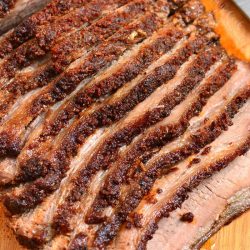
Beef Brisket In The Oven
Juicy beef brisket is rubbed with an amazing dry rub and baked in the oven until tender.
Servings: 8
Calories: 408kcal
Instructions
- NOTE: Be prepared to start the brisket a day before cooking it. Giving it time to soak up the flavors and tenderize from the dry rub overnight will give you a much better result.
Meat rub and refrigerating:
- Mix dry rub ingredients. (This recipe for dry rub will cover a 6 lb brisket.)
- Take brisket flat out of the package, lay it on a cutting board and pat it dry with a paper towel.
- Spread a generous amount of dry rub on top, flip the brisket over and spread a generous amount of dry rub over that side. Make sure there is a good amount of seasoning and rub it all over all the sides of the brisket. Massage the rub into every nook and cranny and make sure it’s nicely coated all over.
- Wrap rubbed brisket in a couple of layers of foil, covering it tight. Place wrapped brisket in a pan or a dish just in case some juices leak out, so that it doesn’t leak all over the refrigerator.
- Refrigerate the brisket overnight or up to 12 hours. Take the brisket out of the refrigerator an hour before cooking it, unwrap and let it get to room temperature.
Baking the brisket:
- Preheat oven to 300°F and place a rack inside the large roasting pan. Lay a couple of sheets of foil that are long enough to loosely cover the brisket, criss-cross, on top of the rack. (You can layer the bottom of the roasting pan with aluminum foil to catch whatever drippings might leak through.)
- Place the brisket, fat cap up, in the middle of aluminum foil prepared in the roasting pan. Bring the aluminum foil together and close it, covering the brisket loosely, leaving a little space between the brisket and the foil.
- UPDATE: Place in the oven and bake for about 1 hour and 15 minutes per pound, until the brisket reaches about 180°F. Use a meat thermometer to measure the thickest part of the brisket. (My 4.5 lb. brisket takes about 5 1/2 hours but there are many factors that can affect exact time. Meat itself will take different time and brisket can also stall at a certain temperature in the oven much like a smoker. Use a leave-in meat thermometer to monitor the temperature of your brisket and that way you won't have to keep opening the oven .)
- Open the foil and place it back in the oven. Bake brisket for another 45 minutes to an hour.
Let it rest:
- Take the brisket out onto the cutting board, tent it with a sheet of foil, and let it rest for 30 minutes.
- Make sure to cut the brisket against the grain.
Notes
- Plan ahead for best results: For the most flavorful and tender beef brisket, apply the dry rub and refrigerate overnight. This extra time allows the seasoning to penetrate the meat and helps tenderize it.
- Brisket cut matters: This recipe is written for a flat cut of beef brisket. Choose one with a visible fat cap for juicier results. Cooking time may vary depending on thickness and fat content.
- Cook low and slow: Oven temperature and time are key. Brisket should be cooked slowly until it reaches the proper internal temperature, don’t rush it, or it may turn out tough.
- Use a meat thermometer: Brisket is done when it’s tender and reaches the correct internal temperature, not just by time alone. Every brisket cooks a little differently.
- Rest before slicing: Let the brisket rest after baking so the juices redistribute. Skipping this step can cause the meat to dry out.
- Slice against the grain: Always slice beef brisket against the grain for the most tender texture.
- Foil alternatives: Parchment paper can be used instead of aluminum foil if preferred.
- Adjust seasoning to taste: If you’re sensitive to spice, reduce the heat in the dry rub to suit your preference.
- Leftovers & reheating: Brisket reheats best in the oven, wrapped, to maintain moisture and tenderness.
Nutrition
Calories: 408kcal | Carbohydrates: 2g | Protein: 53g | Fat: 19g | Saturated Fat: 6g | Cholesterol: 158mg | Sodium: 202mg | Potassium: 871mg | Vitamin A: 115IU | Vitamin C: 0.5mg | Calcium: 56mg | Iron: 6.4mg