
Beef Brisket Recipe In The Oven
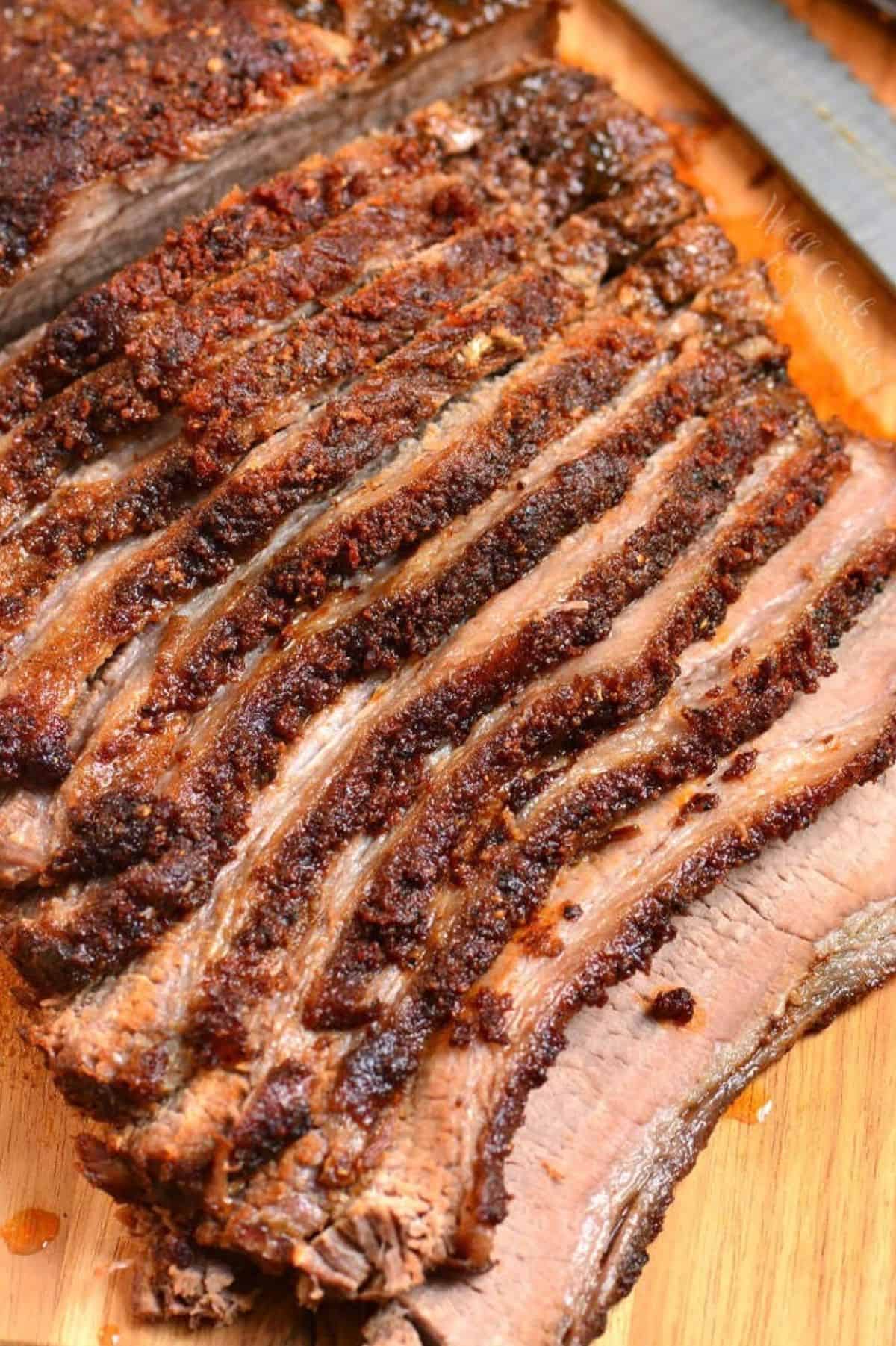
This beef brisket made in the oven is about as close as you can come to Texas-style smoked brisket without actually using a smoker. Juicy beef brisket is rubbed with an amazing dry rub and baked in the oven until tender. Learn how to make a great beef brisket right in your kitchen.
For this brisket and many other meats, I use my favorite Dry Rub recipe. Try making corned beef brisket in the oven as well, you won’t be disappointed. If you just love Beef Brisket in the oven, you must try my French Onion Beef Brisket.
What Is Beef Brisket?
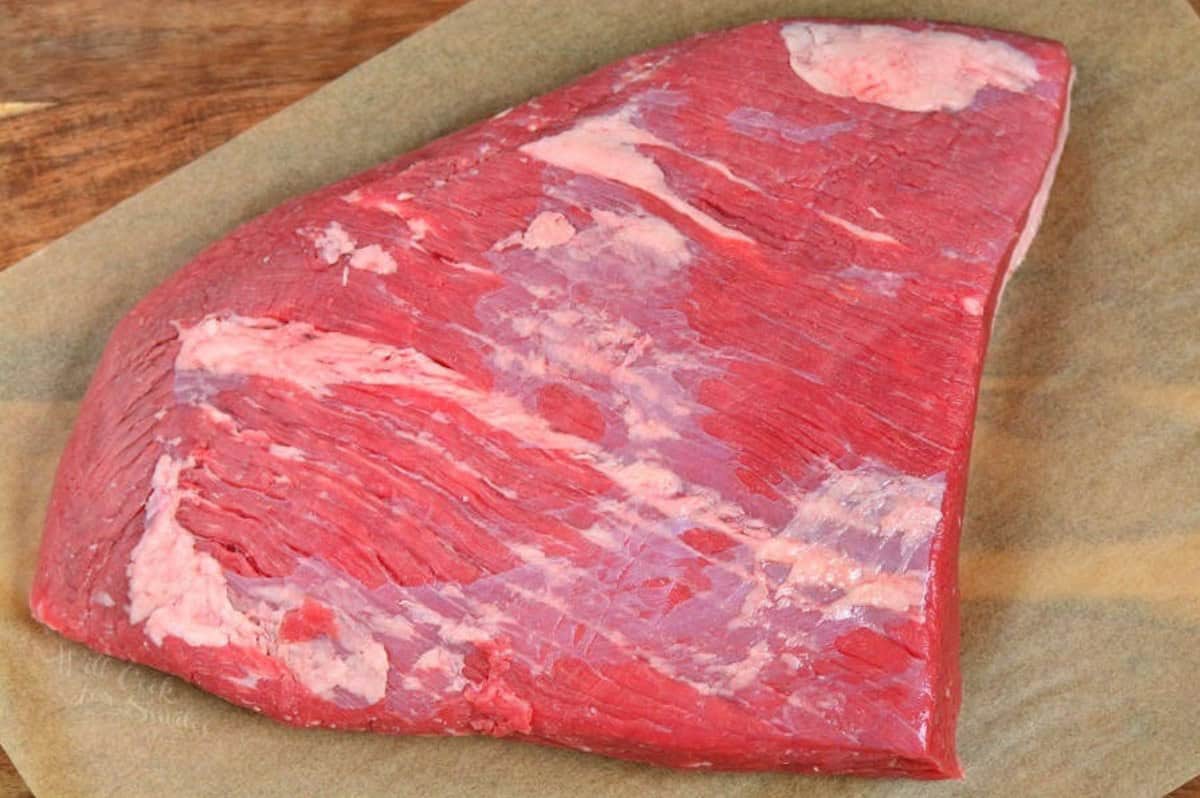
Beef brisket comes from the lower chest area of the cow. It’s a very tough cut of meat because it comes from the area where there is a lot of muscle and tendons. Because it’s a tough cut of meat, brisket should be cooked at low temperature for a long period of time.
There are two basic parts of the whole beef brisket. The bottom part of the brisket is called a “flat” and it doesn’t usually contain much fat at all. Top part of the brisket is called a “point” and it is mostly fat with very little meat on it.
Ideally, the whole brisket is cooked at the same time because the fat juices from the top point part seeps into the flat. This makes brisket flat meat juicier. Unfortunately, many grocery stores don’t carry the whole brisket but only carry the flat. (For the whole brisket, check your butcher shops.)
Because flat is much more common, I normally work with that cut. Try to get beef brisket that has a little more fat on top, in the fat cap. (Flat brisket cut still had a small fat cap on top.)
Of course, for best results and for a true Texas-style brisket, it should be cooked in a smoker. Since not everyone has a availability and time to slow cook the brisket in the smoker, I want to share my recipe for making the beef brisket in the oven.
Cooking Instructions For Juicy Beef Brisket
Note: Be prepared to start the brisket a day before cooking it. Giving it time to soak up the flavors from the dry rub overnight will give you a much better result.
Before Cooking
Let’s start with making our favorite dry rub, that should take a whole 5 minutes to make.
Take brisket flat out of the package, lay it on a cutting board and pat it dry with a paper towel.
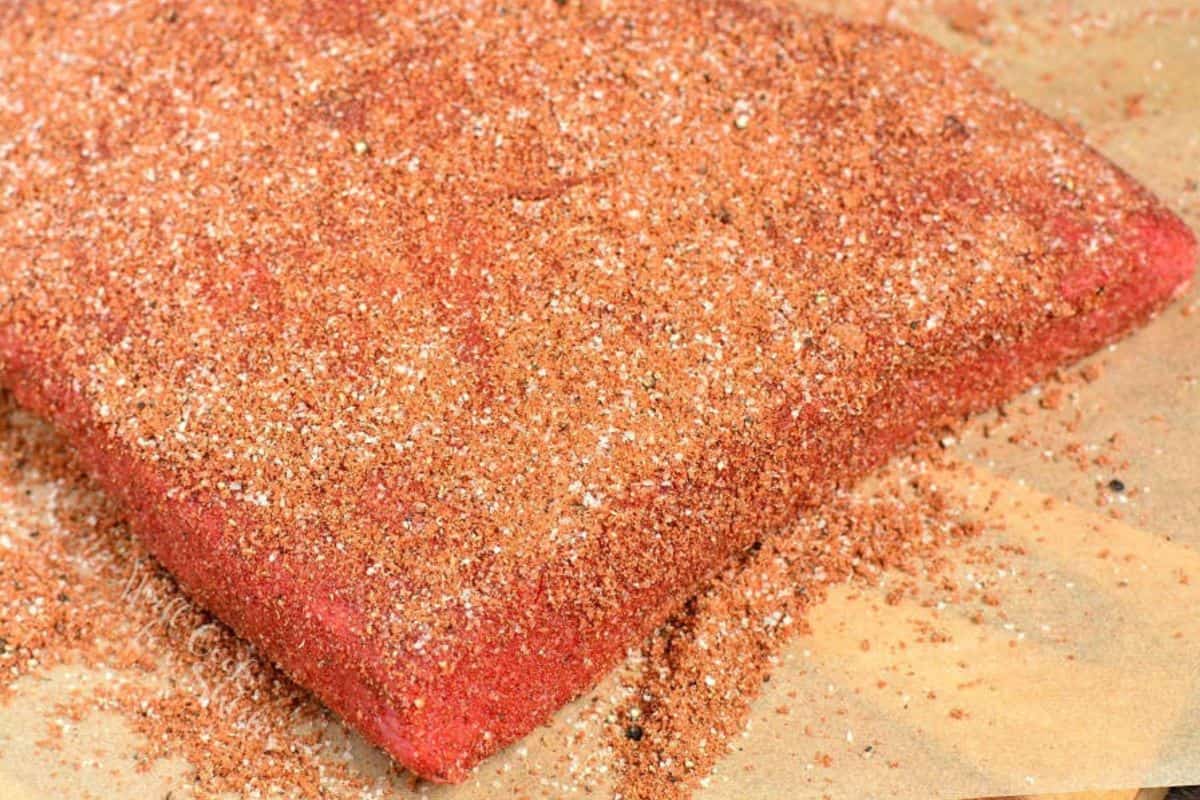
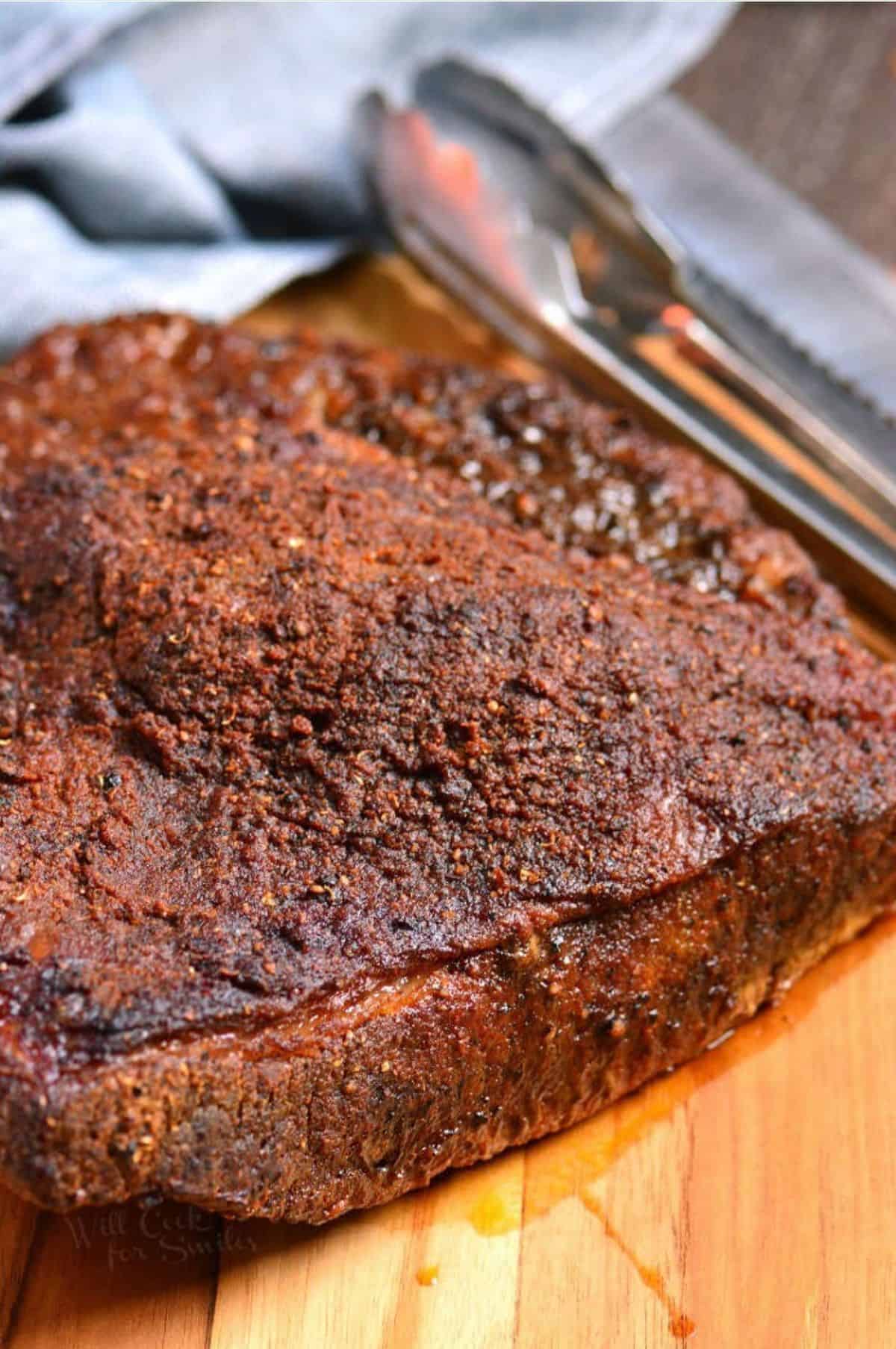
Spread a generous amount of dry rub on top, flip the brisket over and spread a generous amount of dry rub over that. Make sure there is a good amount of seasoning and rub it all over all the sides of the brisket. Massage the rub into every nook and cranny and make sure it’s nicely coated all over.
Wrap rubbed brisket in a couple of layers of foil, covering it tight. Place in a pan or a dish just in case some juices leak out, so that it doesn’t leak all over the refrigerator.
Refrigerate the brisket overnight or up to 12 hours. Take the brisket out of the refrigerator an hour before cooking it, unwrap and let it get to room temperature.
Cooking Brisket
Preheat oven to 300°F and place a rack inside the large roasting pan. Lay a couple of sheets of foil that are long enough to loosely cover the brisket, crisscross, on top of the rack. (You can layer the bottom of the roasting pan with aluminum foil to catch whatever drippings might leak through.)
Place the brisket, fat cap up, in the middle of aluminum foil prepared in the roasting pan. Bring the aluminum foil together and close it, covering the brisket loosely, leaving a little space between the brisket and the foil.
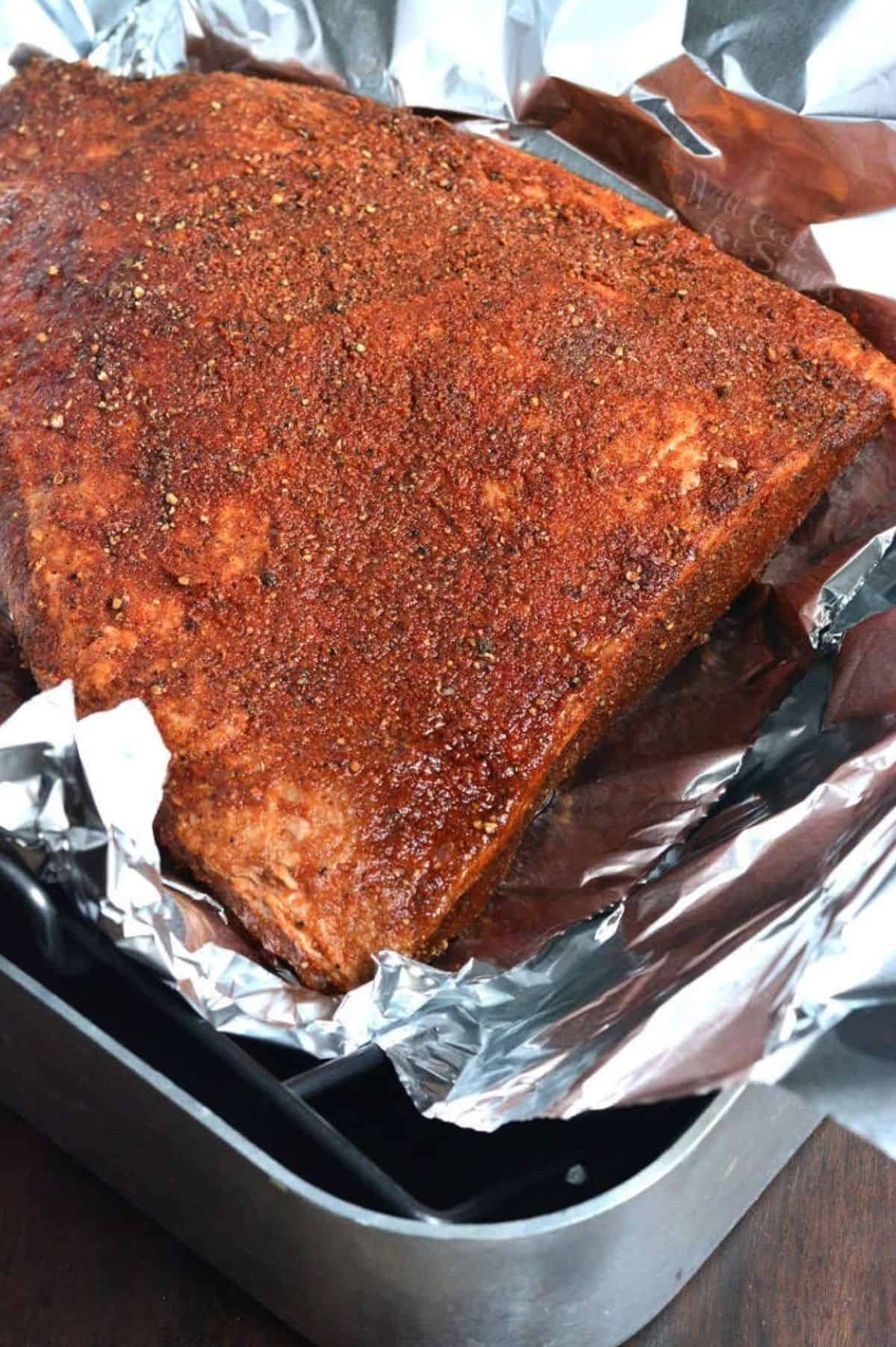
Place in the oven and bake for about an hour and 15 minutes per pound, until the brisket reaches 185°F. Use a meat thermometer to measure the thickest part of the brisket.
Open the foil and bake brisket for another 45 minutes to an hour, until internal temperature reaches 200-202°F.
Take the brisket out onto the cutting board, tent it with a sheet of foil, and let it rest for 30 minutes.
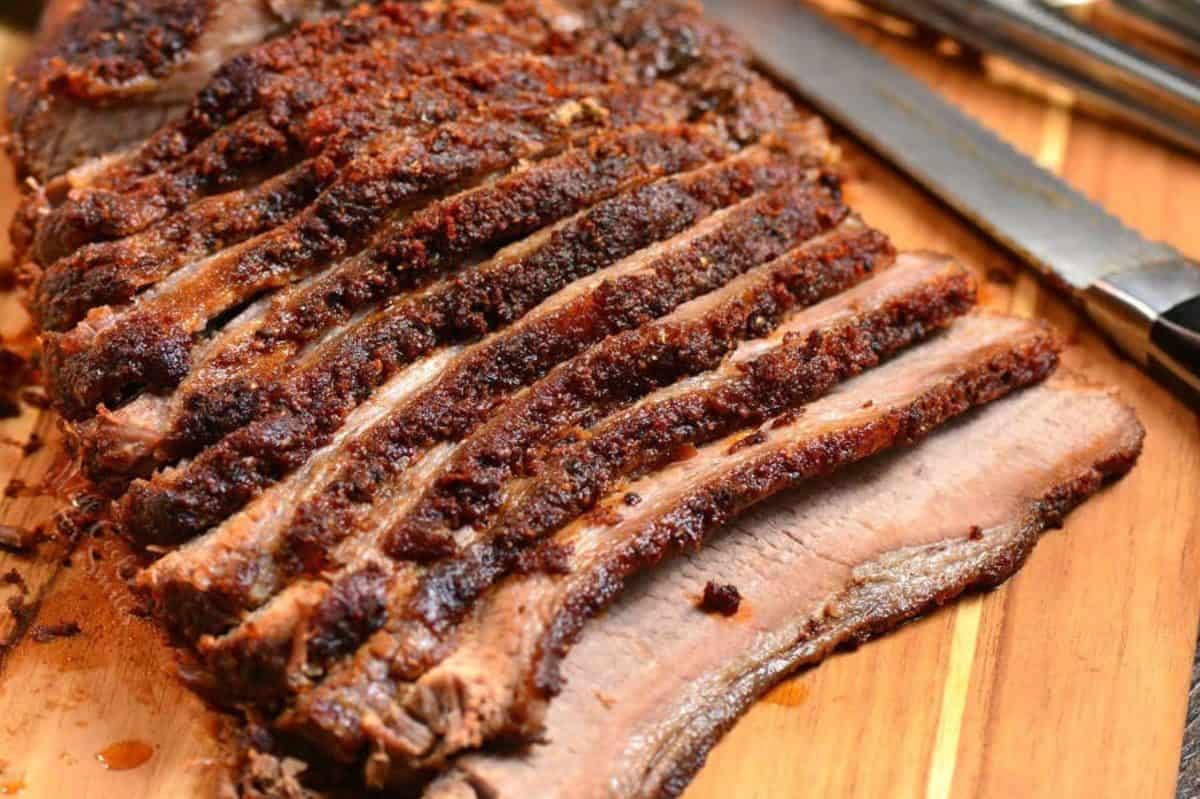
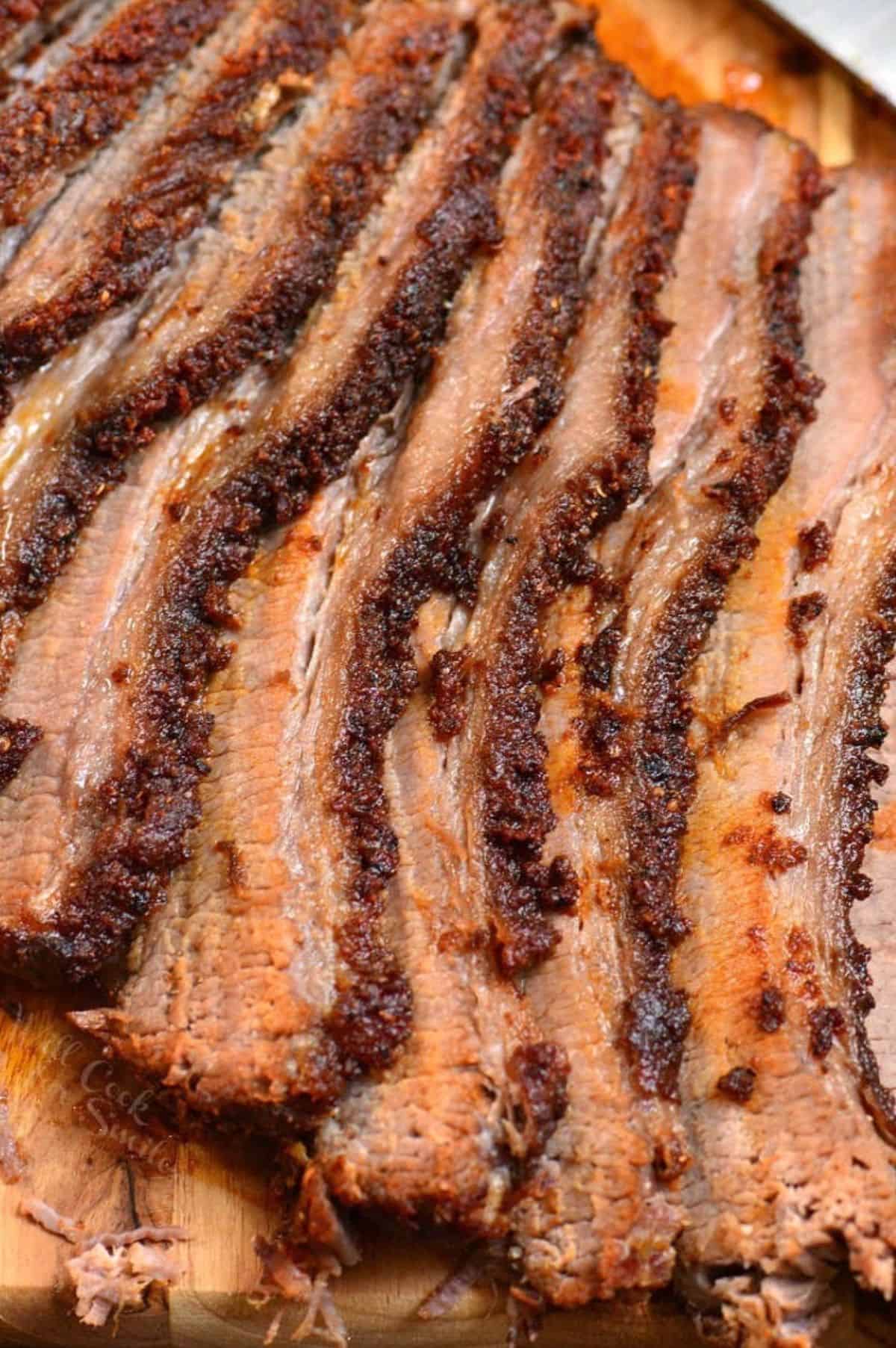
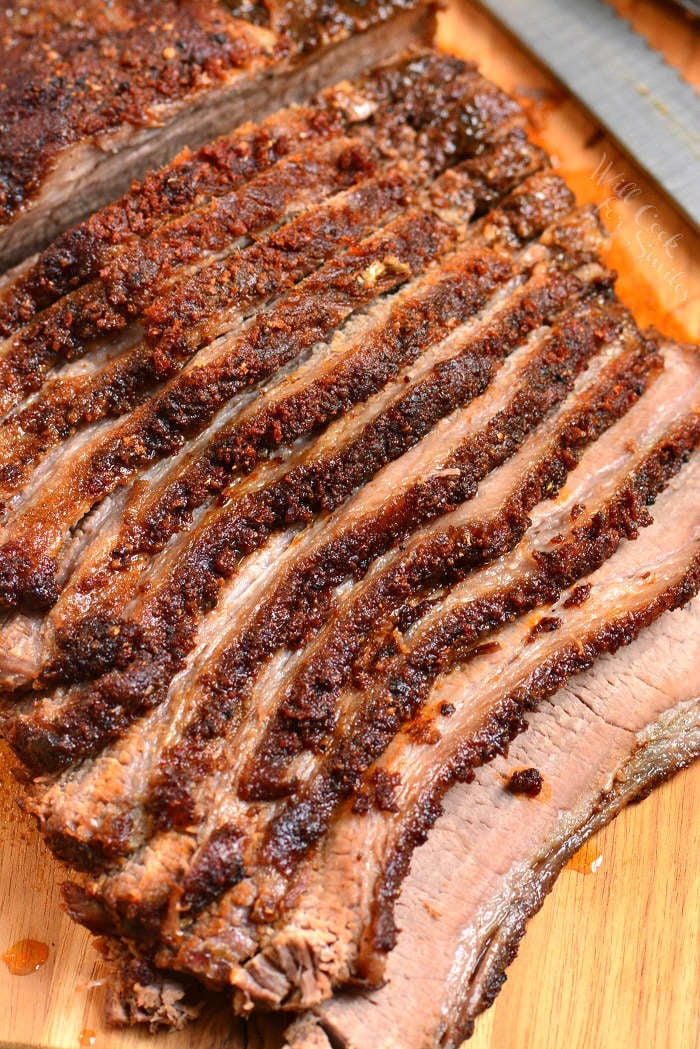
Make sure to cut the brisket against the grain.
Beef Brisket Serving Size
Wondering how much brisket to get? That’s the story of my life. Recommended serving size for brisket is 1/2 lb of uncooked meat per person.
It’s also very subjective because it highly depends on the sides that you’re servings with it. Lighter sides will not fill guests as much, so more brisket will be needed per person. Heartier sides, will be more filling.
To me, recommended servings never seems enough so I get an extra pound or two of meat. It’s better to have meat leftover than not have enough.
Storing Instructions
If you have leftover brisket, store it covered in the refrigerator, covered tightly.
Wrap cooled brisket in a sheet of parchment paper and then wrap it in some aluminum foil.
Keep in the refrigerator for 3-5 days.
Best Way To Reheat It
Brisket is nicely reheated in the oven.
Preheat oven to 350°F. Slice cold brisket and wrap the slices in foil.
Reheat the foil packets in the oven for 15-20 minutes, depending on how thick the slices are and how many slices there are in the foil. You can place foil wrapped brisket directly on the oven rack or on a baking sheet.
Note: the little fat layer on top won’t have the crunch once it’s been reheated.
Some More Beef Recipes To Try
Making Corned Beef Brisket In The Oven
Tips for Grilling The Perfect Steak
Beef Brisket with Balsamic Sauce
Bacon Wrapped Mustard Beef Brisket
DID YOU MAKE THIS RECIPE? PLEASE leave a 🌟 star rating! Let me know how you liked it by leaving the 📝 comment below or share and tag me on social media @willcookforsmiles. DON’T FORGET to subscribe to my newsletter!
Beef Brisket Recipe In The Oven
Instructions
- NOTE: Be prepared to start the brisket a day before cooking it. Giving it time to soak up the flavors and tenderize from the dry rub overnight will give you a much better result.
Meat rub and refrigerating:
- Mix dry rub ingredients. (This recipe for dry rub will cover a 6 lb brisket.)
- Take brisket flat out of the package, lay it on a cutting board and pat it dry with a paper towel.
- Spread a generous amount of dry rub on top, flip the brisket over and spread a generous amount of dry rub over that side. Make sure there is a good amount of seasoning and rub it all over all the sides of the brisket. Massage the rub into every nook and cranny and make sure it’s nicely coated all over.
- Wrap rubbed brisket in a couple of layers of foil, covering it tight. Place wrapped brisket in a pan or a dish just in case some juices leak out, so that it doesn’t leak all over the refrigerator.
- Refrigerate the brisket overnight or up to 12 hours. Take the brisket out of the refrigerator an hour before cooking it, unwrap and let it get to room temperature.
Baking the brisket:
- Preheat oven to 300°F and place a rack inside the large roasting pan. Lay a couple of sheets of foil that are long enough to loosely cover the brisket, criss-cross, on top of the rack. (You can layer the bottom of the roasting pan with aluminum foil to catch whatever drippings might leak through.)
- Place the brisket, fat cap up, in the middle of aluminum foil prepared in the roasting pan. Bring the aluminum foil together and close it, covering the brisket loosely, leaving a little space between the brisket and the foil.
- UPDATE: Place in the oven and bake for about 1 hour and 15 minutes per pound, until the brisket reaches about 180°F. Use a meat thermometer to measure the thickest part of the brisket. (My 4.5 lb. brisket takes about 5 1/2 hours but there are many factors that can affect exact time. Meat itself will take different time and brisket can also stall at a certain temperature in the oven much like a smoker. Use a leave-in meat thermometer to monitor the temperature of your brisket and that way you won't have to keep opening the oven .)
- Open the foil and place it back in the oven. Bake brisket for another 45 minutes to an hour.
Let it rest:
- Take the brisket out onto the cutting board, tent it with a sheet of foil, and let it rest for 30 minutes.
- Make sure to cut the brisket against the grain.
Video
Notes
- Plan ahead for best results: For the most flavorful and tender beef brisket, apply the dry rub and refrigerate overnight. This extra time allows the seasoning to penetrate the meat and helps tenderize it.
- Brisket cut matters: This recipe is written for a flat cut of beef brisket. Choose one with a visible fat cap for juicier results. Cooking time may vary depending on thickness and fat content.
- Cook low and slow: Oven temperature and time are key. Brisket should be cooked slowly until it reaches the proper internal temperature, don’t rush it, or it may turn out tough.
- Use a meat thermometer: Brisket is done when it’s tender and reaches the correct internal temperature, not just by time alone. Every brisket cooks a little differently.
- Rest before slicing: Let the brisket rest after baking so the juices redistribute. Skipping this step can cause the meat to dry out.
- Slice against the grain: Always slice beef brisket against the grain for the most tender texture.
- Foil alternatives: Parchment paper can be used instead of aluminum foil if preferred.
- Adjust seasoning to taste: If you’re sensitive to spice, reduce the heat in the dry rub to suit your preference.
- Leftovers & reheating: Brisket reheats best in the oven, wrapped, to maintain moisture and tenderness.
Nutrition
Would you like to save this recipe?
Categories:
4th Of July Recipes, Beef Recipes, Christmas Dinner Recipes, Father's Day Recipe Ideas, How To Techniques, Most Popular Recipes,All images and text ©Lyubov Brooke for ©Will Cook For Smiles. Please do not use my images without prior permission. If using my posts in collections and features, please link back to this post for the recipe.
Disclaimer: Nutrition information shown is not guaranteed to be 100% accurate as most ingredients and brands have variations.








I’ve always been intimidated by trying brisket without a smoker, so your method for getting that Texas-style result in a regular oven is a game-changer. That dry rub recipe sounds perfect. I actually found a great guide on choosing the right cut at cabligo.com that pairs well with your instructions. Can’t wait to try this next weekend!
Thank you so much!! 😊 That seriously means a lot! Brisket can definitely feel intimidating at first, especially without a smoker, but I promise the oven method is way more approachable than it seems and still turns out so tender and flavorful! That dry rub really does all the heavy lifting! And that’s awesome you found a guide to help pick the right cut, such a key step! I’m excited for you to try it this weekend… you’re going to love it! Let me know how it turns out!