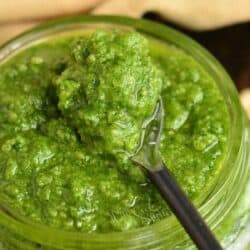
Classic Pesto Recipe
Pesto is a bright and flavorful sauce that you can add to just about anything. It's packed with simple but beautiful flavors of fresh basil, pine nuts, garlic, olive oil, and dry aged cheese like Parmesan, Parmigiano-Reggiano, or Pecorino.
Servings: 8 (Makes about 1 cup)
Calories: 252kcal
Ingredients
- 2 oz basil about 2 cups packed
- 2 garlic cloves
- 2 oz shredded Parmesan cheese about 2/3 cup
- 3 oz pine nuts
- 1/2 cup olive oil (+2 Tbsp)
- Salt
- a little more olive oil to drizzle over the top when divided into jars
Instructions
- In a food processor, add about half the oil.
- Add basil, pine nuts, cheese, garlic, and a pinch of salt to the blender and pour remaining olive oil over the top.
- Pulse several times to begin to blend. Scrape sides of the blender and pulse a few more times. You may need to scrape the sides again and pulse a few more times until all ingredients are well blended.
- Salt pro tip: don't use too much salt, remember that dry aged Italian cheeses tend to be quite salty. Start small and taste after pesto is blended to see if you need more.
Video
Notes
Pine nuts (and substitutes) - these nuts are preferred to use in pesto and the most traditional one. They have a subtle earthy, sweet flavor that is not overpowering. I do not toast my pine nuts because I truly saw no difference in taste when blended with other ingredients. Many people like to substitute walnuts but I find walnuts to have a strong flavor. I've successfully used cashews as a substitute but they tend to be creamier when blended.
Storing: Transfer homemade pesto into 2 or 3 small glass jars. After you fill the jar, drizzle a little olive oil over the top and close it tight with a lid. Store in the refrigerator for up to a week.
TIPS:
- Make sure your ingredients are fresh and the best. In a simple sauce like that, each ingredient count.
- Add half the oil in the beginning and the other half while pulsing.
- Pulse, don’t blend.
- Drizzle a little extra olive oil over the top of pesto after transferring it into a glass jar. I find it helpful to prevent the top of pesto getting dark. (Although, it is still completely safe even if it does get dark. That is simply oxidation.)
Nutrition
Calories: 252kcal | Carbohydrates: 2g | Protein: 4g | Fat: 26g | Saturated Fat: 4g | Polyunsaturated Fat: 5g | Monounsaturated Fat: 15g | Cholesterol: 5mg | Sodium: 115mg | Potassium: 94mg | Fiber: 1g | Sugar: 0.5g | Vitamin A: 432IU | Vitamin C: 2mg | Calcium: 100mg | Iron: 1mg