Turkey Stock

This post may contain affiliate links.
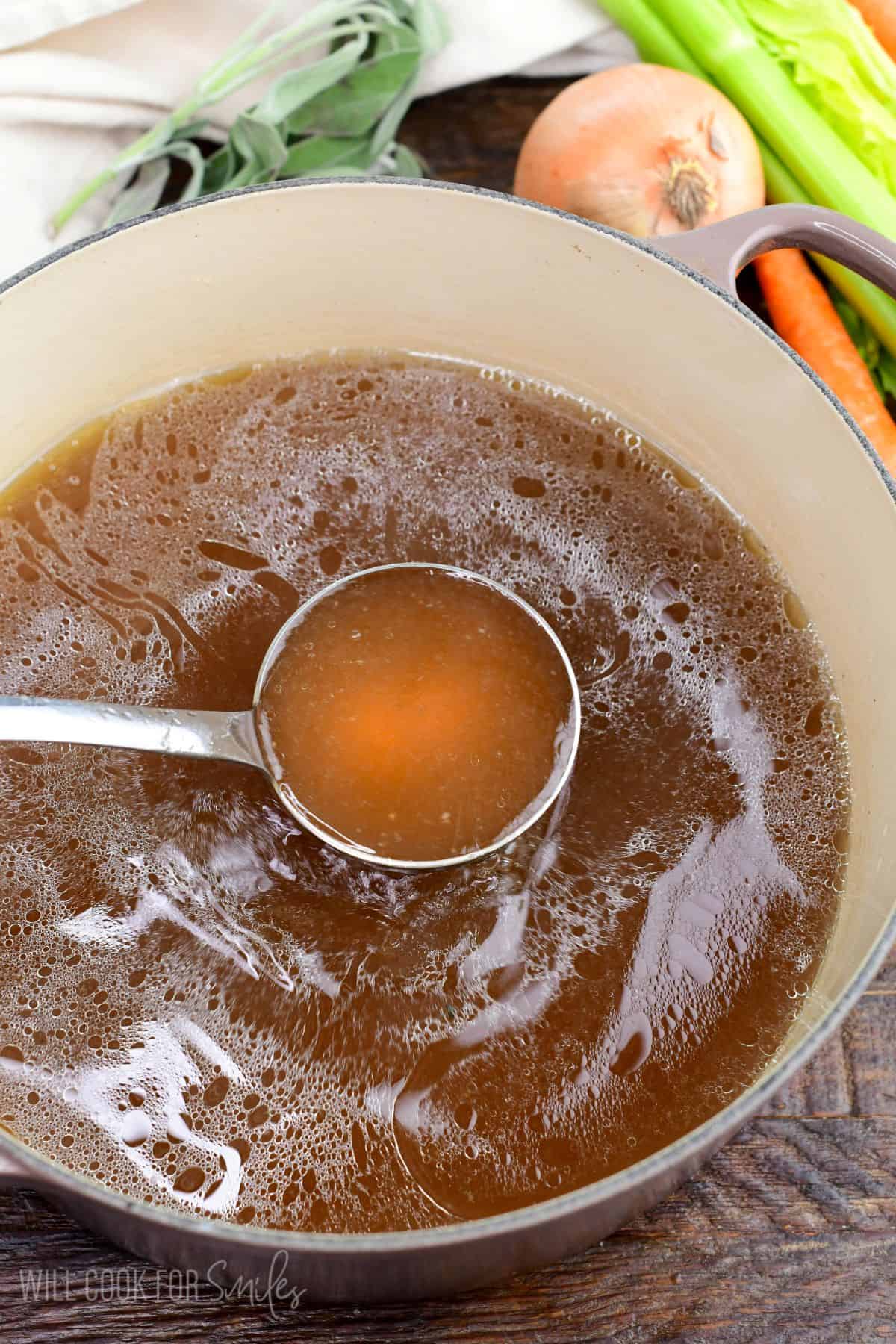
What I Love About My Easy Turkey Stock
Spatchcocking is my go-to way to cook turkey, so the backbone and neck always end up in a stock pot, and the carcass gets the same treatment after dinner.
- Two ways, one method. Raw backbone and neck or a leftover carcass, the ingredients and steps stay the same.
- Only 5 minutes of prep. Put everything into one pot and let it simmer on its own for about 2 hours.
- Classic poultry herbs. I use fresh thyme, sage, and parsley for a savory, herby flavor that fits right in with gravy and stuffing.
- Fresh stock for gravy on the same day. Start the stock with the raw backbone and neck as soon as you spatchcock the turkey.
- No salt in the pot. You get to season the gravy, soup, or dressing it goes into exactly the way you like.

Table of Contents
Key Ingredient Notes
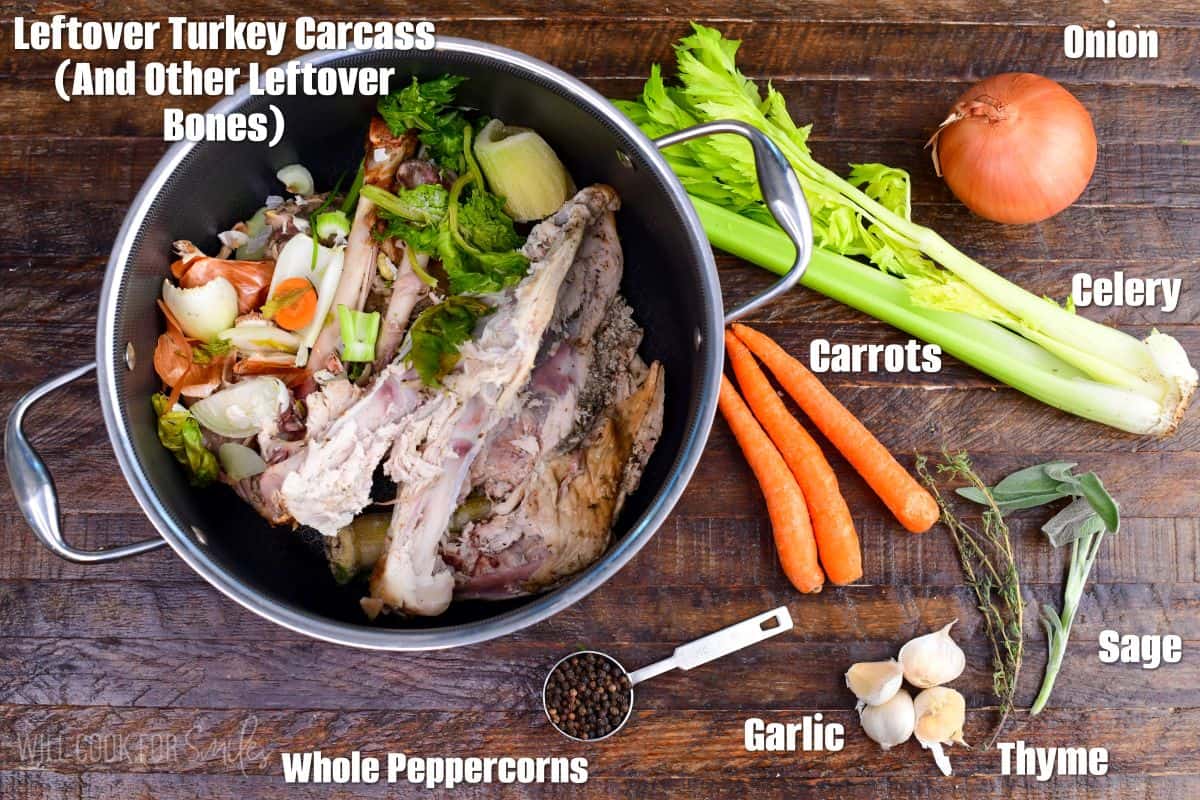
- Turkey parts: Use one leftover turkey carcass (and leftover turkey bones if any left unused) or the raw backbone and neck. The backbone comes off when you spatchcock a turkey, and most butchers will remove it for you and hand it back if needed.
- Vegetables: Onion, carrots, and celery are the classic base, plus a few smashed garlic cloves. I keep the vegetables simple so the turkey flavor stays front and center.
- Fresh herbs: Thyme, sage, and parsley are traditional poultry herbs that go beautifully with turkey. Use whole sprigs, since you strain everything out at the end. For dried herbs, use 1 tablespoon dried parsley and 1 teaspoon dried thyme.
- Whole peppercorns: Whole peppercorns give the stock a gentle pepper flavor, and you can strain them out easily with the rest of the solids.
Raw Turkey Backbone and Neck vs. Leftover Carcass
Both make a great stock, and each one fits a different moment in the holiday cooking.
- Raw backbone and neck: This is the one to make for gravy. Start it as soon as the backbone comes off, and you have fresh stock the same day. Simmering raw bones gives you a lighter-colored stock with a clean turkey flavor.
- Leftover carcass: Make this one after the meal, once you carve the turkey and put the leftovers away. With bones from a roasted bird, you get a darker stock with a deeper, roasted flavor. It’s perfect for leftover turkey soups.
How to Make Easy Turkey Stock
- Prep the turkey parts. For a leftover carcass, pick off any meat you want to keep. I use a 5 to 6 quart pot and the whole carcass fits fine, so breaking it into pieces is optional. The raw backbone and neck can go straight in.
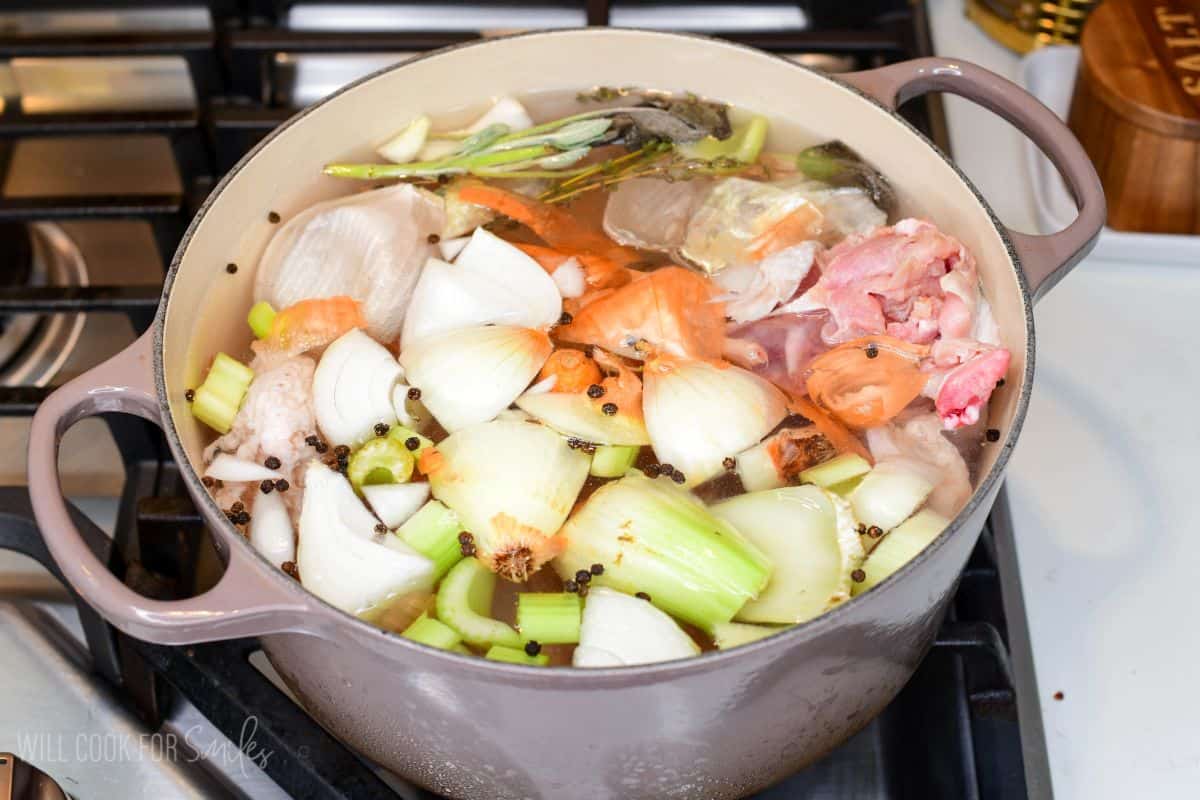
- Load the pot. A rough chop on the vegetables is all you need, since you discard them after straining. Cover everything with cold water by 1 to 2 inches, which usually takes 10 to 12 cups.
- Keep it at a bare simmer. After the pot comes to a gentle boil, lower the heat until you see just an occasional bubble. Skim off any foam on top as it simmers, especially in the first hour.
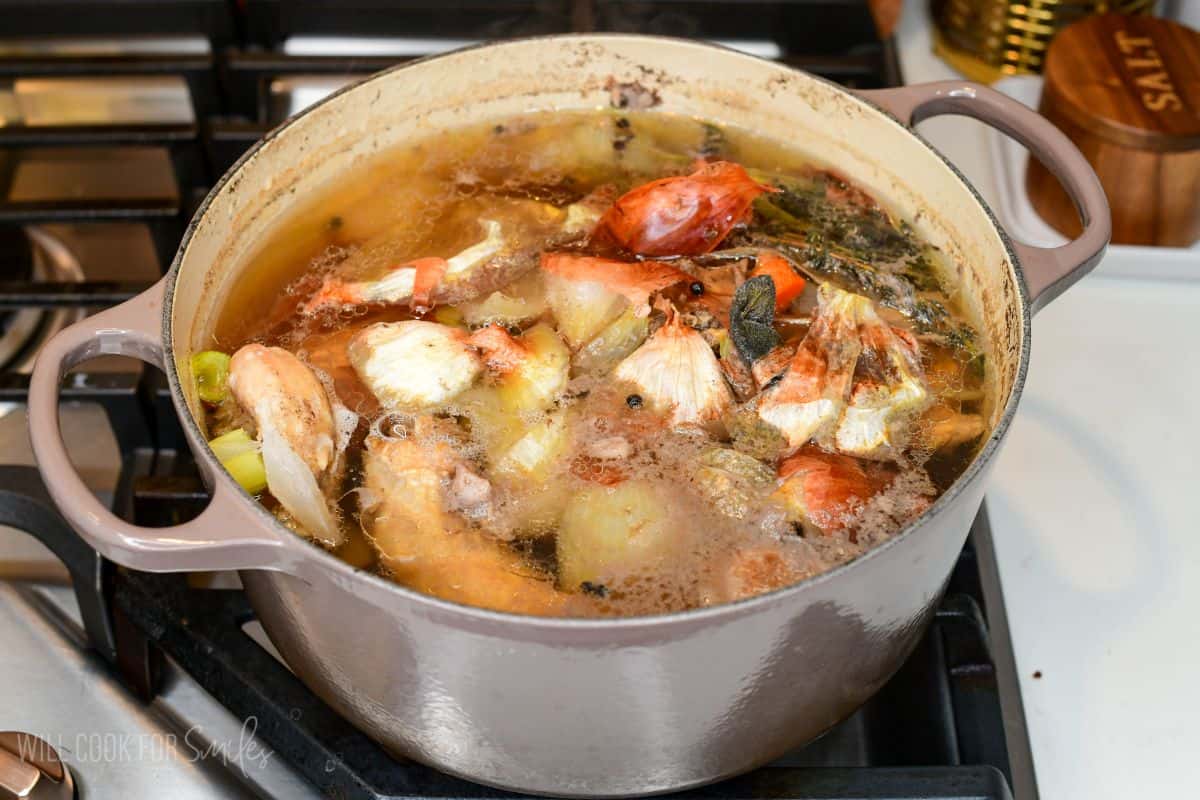
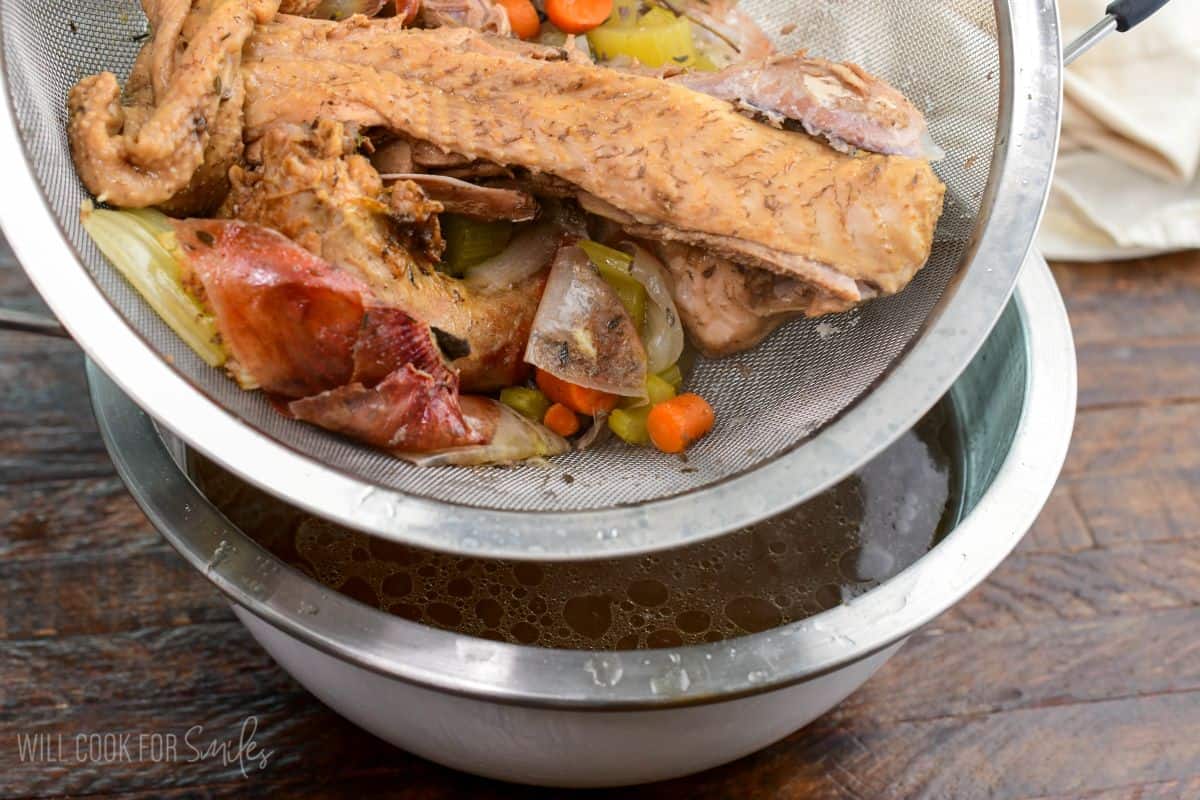
- Strain and drain. After straining, leave the solids in the strainer over the pot for 10 to 15 minutes so you collect every bit of liquid.
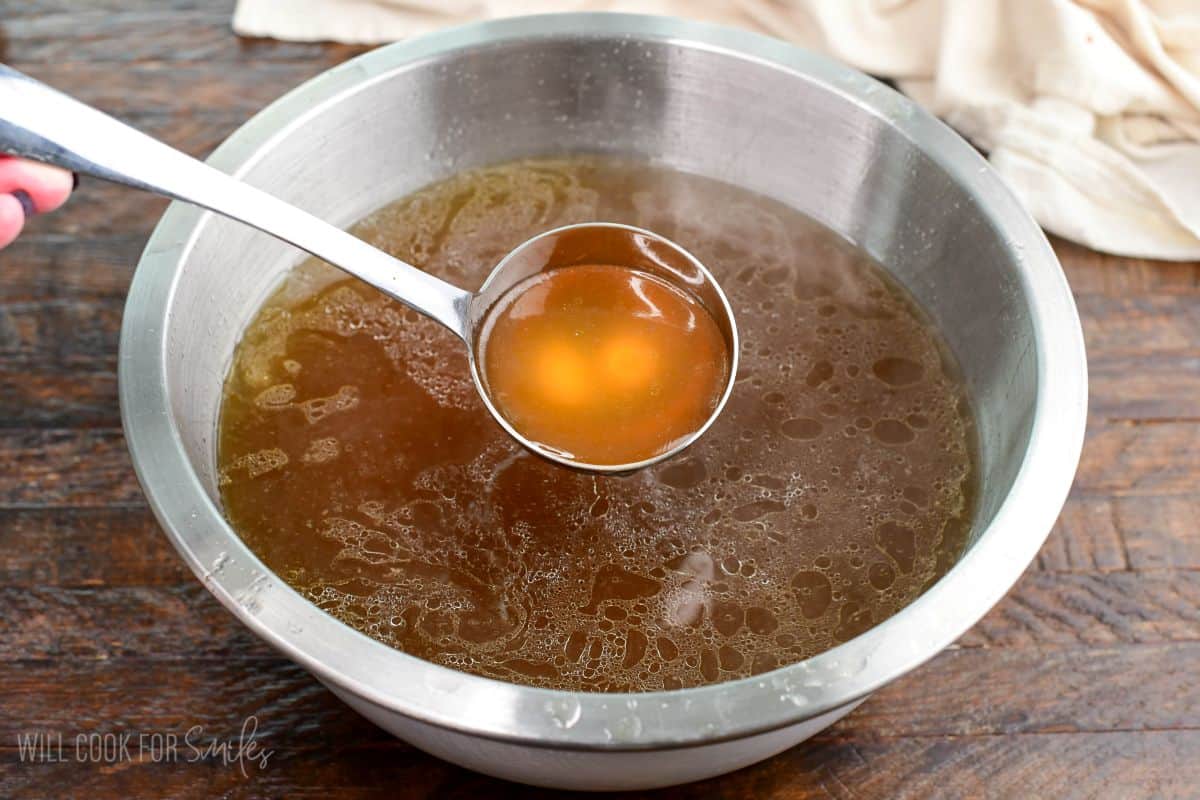
- Remove the fat (optional). Chill the stock in the refrigerator, then lift off the hardened layer of fat on top.
What to Make With Turkey Stock
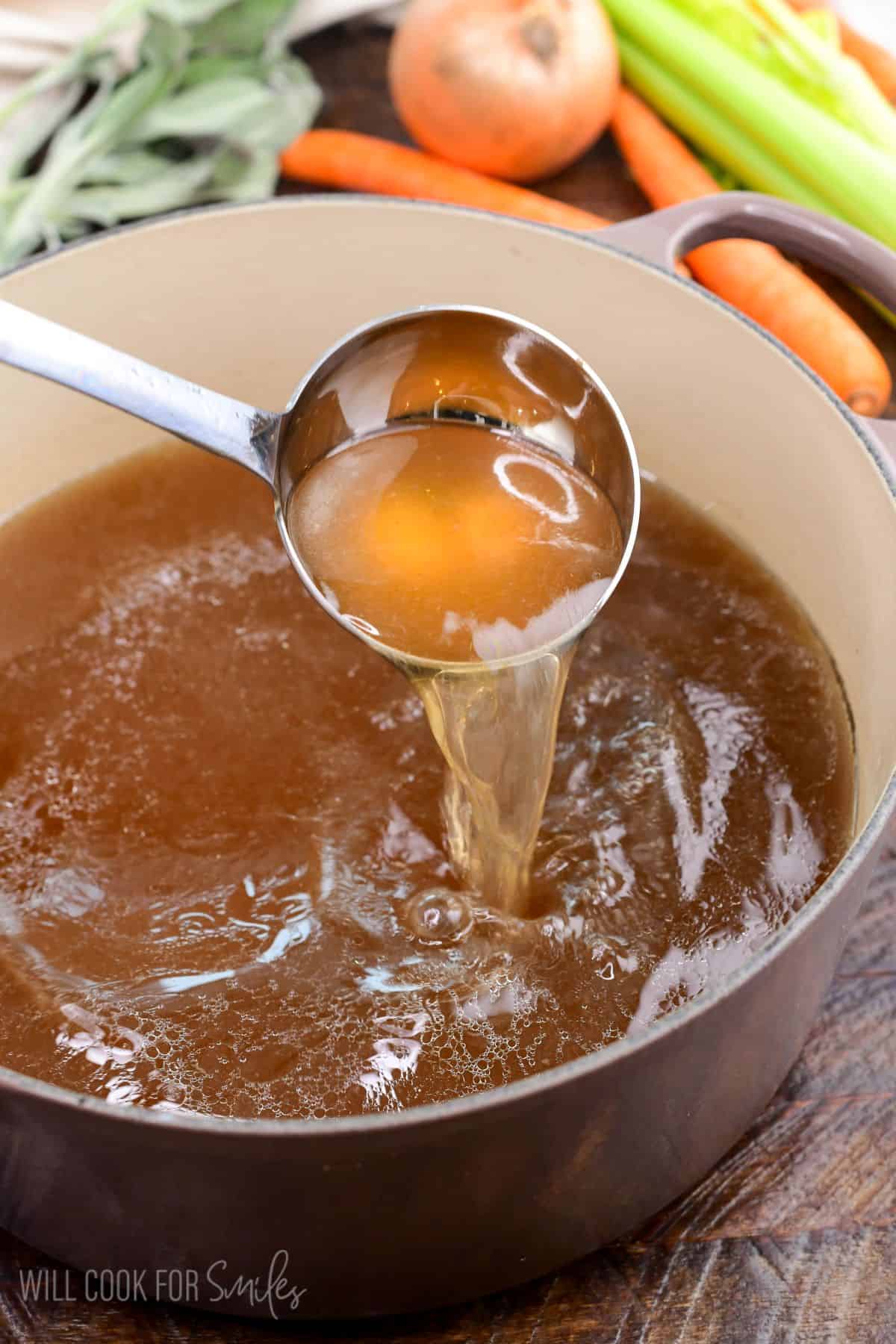
Use turkey stock anywhere a recipe calls for chicken stock. Here are a few of my favorite ways to use it:
- My pan drippings turkey gravy, which uses stock along with the drippings.
- Leftover turkey noodle soup with the carcass stock and the leftover meat.
- Southern cornbread dressing for the holiday table.
- In the pan under a spatchcock turkey, in place of the chicken stock.
How to Store, Freeze, and Reheat Easy Turkey Stock
- Cool: Cool the stock quickly before it goes into the refrigerator. Divide it into smaller, shallow containers, or set the pot in a sink of ice water and stir it now and then. If you put a big pot of hot stock straight into the refrigerator, the center stays warm for hours.
- Store: in the refrigerator in airtight glass jars for 1 to 2 days.
- Freeze: in freezer bags or airtight plastic containers for up to 3 months. Fill them no more than 3/4 full so the stock has room to expand. For small portions for sauces, freeze it in muffin pans or ice cube trays, then move the frozen cubes into freezer bags.
- Reheat: Thaw frozen stock overnight in the refrigerator, then warm it in a saucepan over medium heat until steaming. In a hurry, put the frozen stock straight into a pot over low heat and stir as it melts.
Easy Turkey Stock Recipe FAQs
You make turkey stock mostly from bones, like the backbone, neck, or carcass, while turkey broth comes from simmering turkey meat. Stock usually has more body from the bones. Many cooks use the two names interchangeably, though, and you can use them the same way in most recipes.
That’s a good sign! As the bones and joints simmer, their collagen breaks down into gelatin, and gelatin sets when it gets cold. The stock turns back into liquid as soon as you warm it up.
Cloudy stock usually means it boiled too hard. Boiling churns the fat and bits of protein back into the liquid. Keep the heat low with just an occasional bubble, and skim off the foam as it rises.
Cook it on high pressure for about 1 hour, then let the pressure release naturally, which can take 30 minutes or more. Keep everything below the fill line max (2/3) line on the inner pot. In a 6-quart Instant Pot, that may mean breaking up the carcass or cutting the recipe down.
Cook it on LOW for 10 to 12 hours with the lid on. Leave about an inch of space at the top, and break up the carcass if it doesn’t fit whole.
I don’t recommend adding the giblets because their flavor is too strong and bitter for the stock. If you like the flavor of liver, though, you definitely can add them.
If you don’t have time to make stock right after the holiday meal, freeze the carcass within 3 to 4 days of cooking the turkey. Pick off the meat, wrap the carcass airtight, and break it into pieces first if you need to save freezer space. It stays safe frozen, but for the best flavor, make your stock within about 4 months. A raw backbone and neck hold their quality longer, up to about 9 months.
More Recipes From Me
- Homemade Chicken Stock Recipe
- Beef Stock Recipe
- Vegetable Stock Recipe
- Turkey Tetrazzini Recipe
- Turkey Pot Pie
- Roasted Turkey Breast with Herb Butter and Gravy
DID YOU MAKE THIS RECIPE? PLEASE leave a 🌟 star rating! Let me know how you liked it by leaving the 📝 comment below or share and tag me on social media @willcookforsmiles. DON’T FORGET to subscribe to my newsletter!
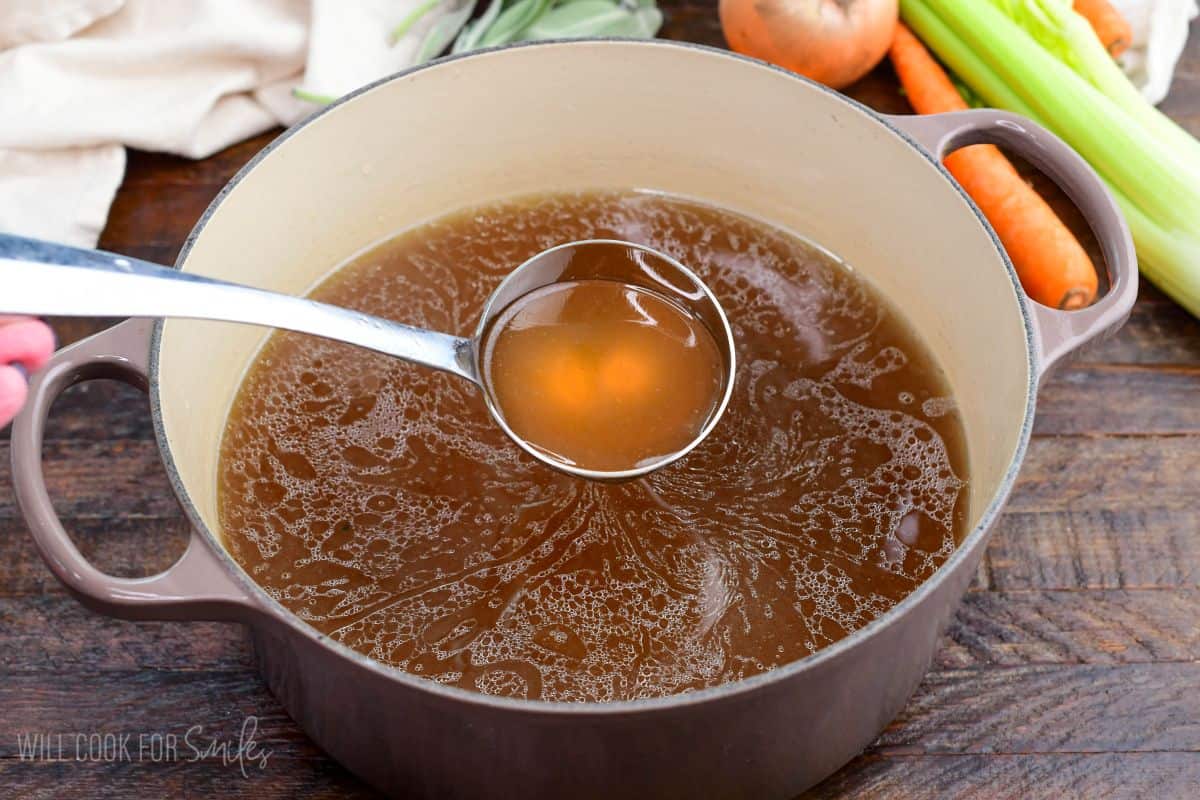
Easy Turkey Stock Recipe
Ingredients
- 1 Leftover turkey carcass OR raw turkey backbone and turkey neck
- 1 yellow onion chopped
- 3 carrots chopped
- 2 celery ribs chopped
- 4-5 garlic cloves smashed
- 1 Tbsp whole peppercorns
- 3-4 sprigs thyme
- 2-3 sprigs sage
- 3-4 sprigs parsley
- 10-12 cups water
Instructions
- Place the turkey carcass OR the turkey neck and backbone into a large pot.
- Add roughly chopped onion, roughly chopped carrots, roughly chopped celery stalks, whole peppercorns, smashed garlic cloves, and sprigs of fresh parsley, sage and thyme.
- Add cold water to fully cover everything by about 1-2 inches. (Note that everything will float, so don't let it fool you.)
- Bring the pot to a gentle boil, then reduce to a low simmer. Simmer uncovered for about 2 hours.Expert tip: skim off the foam and bits that float to the top, especially during the first hour.
- Strain the stock through a fine-mesh strainer and discard the solids. Use right away or let cool and store in the refrigerator for 1-2 days or freezer for up to 3 months.
Notes
- Dried herbs: if you need to use dried herbs instead of fresh, use1 tablespoon of dried parsley, 1 teaspoon of dried rubbed sage and 2 teaspoon of dried thyme.
- Keep it at a gentle simmer: just an occasional bubble, and skim off any foam that rises so the stock stays clear.
- Store: cool the stock quickly and refrigerate in airtight jars for 1-2 days.
- Freeze: in freezer bags or containers for up to 3 months, filled no more than 3/4 full.
Nutrition
All images and text ©Lyubov Brooke for ©Will Cook For Smiles. Please do not use my images without prior permission. If using my posts in collections and features, please link back to this post for the recipe.
Disclaimer: Nutrition information shown is not guaranteed to be 100% accurate as most ingredients and brands have variations.