
Perfect Prime Rib Recipe
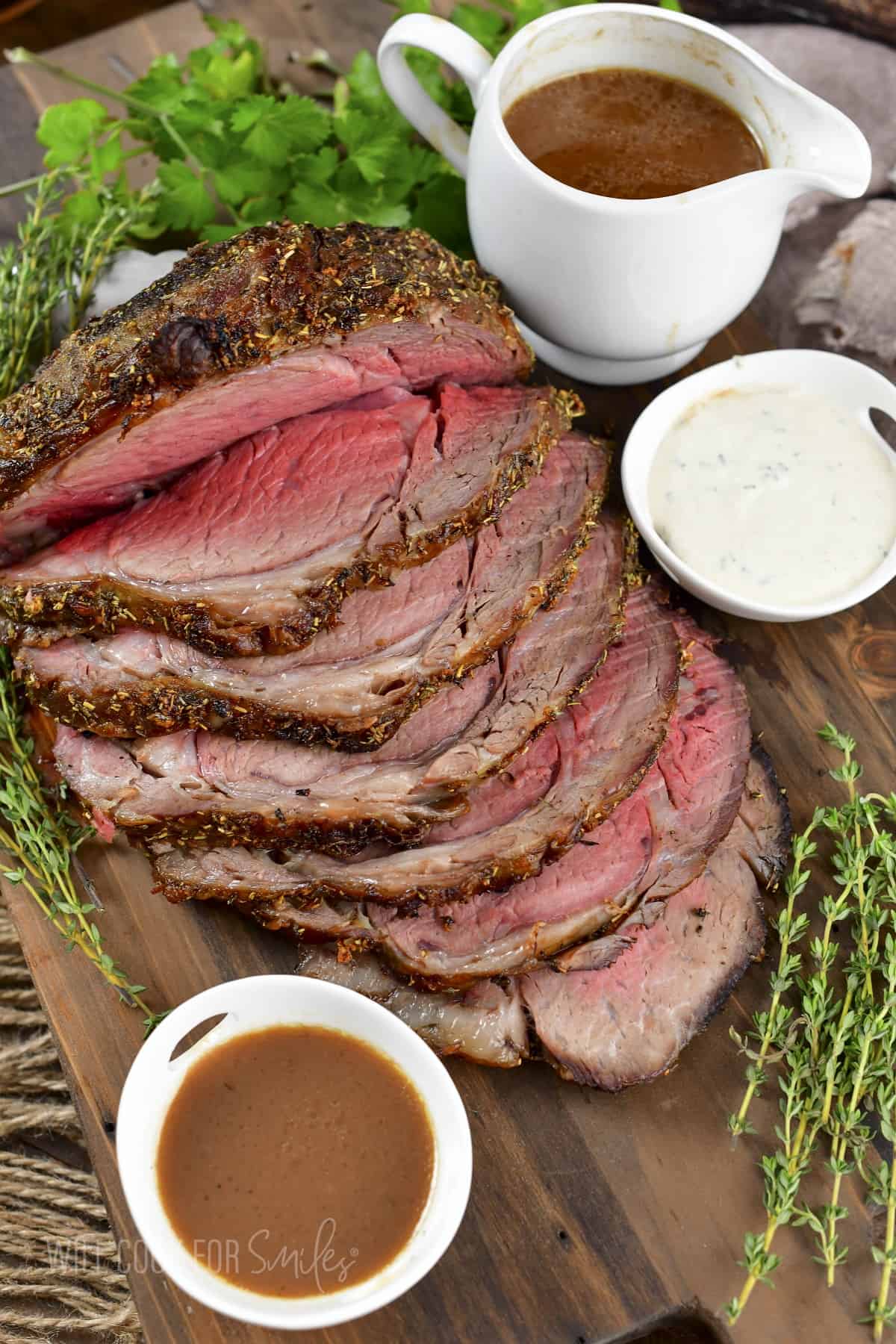
If prime rib feels intimidating, you’re in good company because it used to intimidate me too. After testing different techniques over the years and applying all my restaurant experience of working with all different cuts of beef, this simple process became my go-to because it gives you great results without stress.
Featured review

I finally got the nerve up to try this dish! This recipe made it so easy and there was zero guesswork! My entire family (12 of us) absolutely LOVED how it turned out for our Christmas dinner!!!! ~Donna
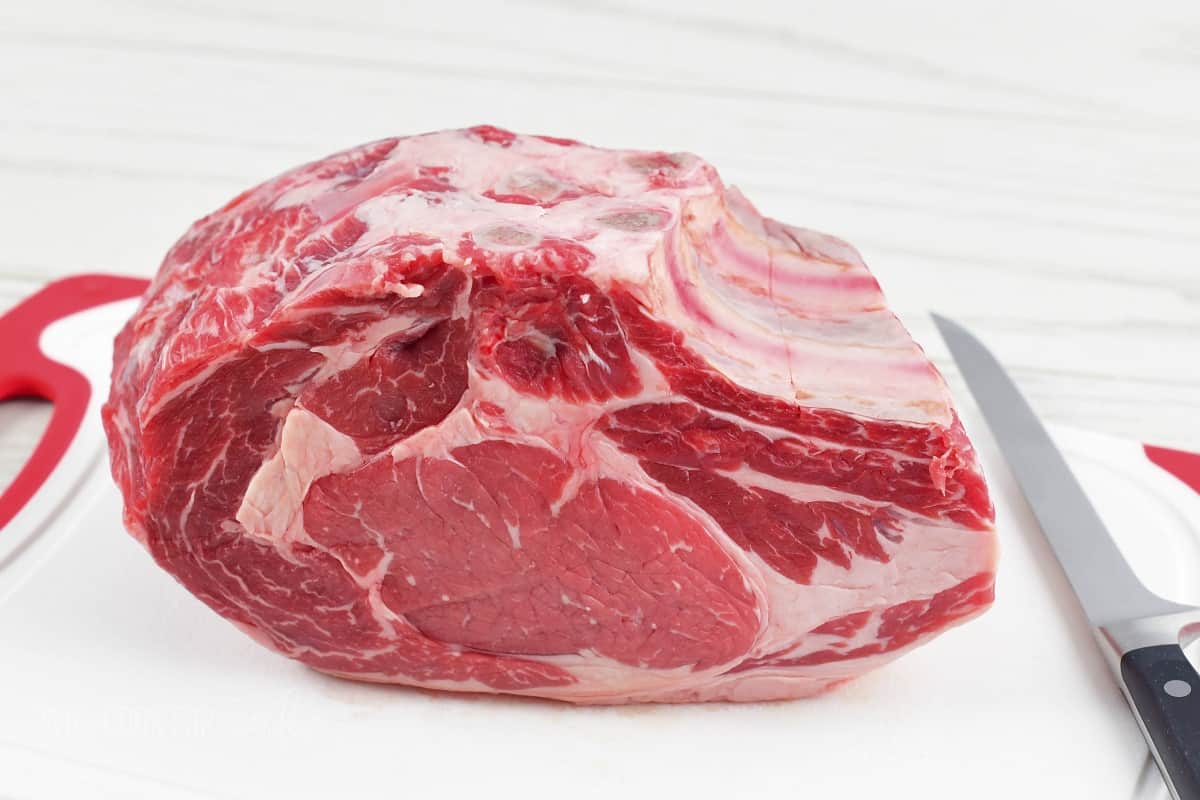
How to Choose a Prime Rib Roast
Prime rib is also known as the standing rib roast (because it is cooked “standing” on the ribs), although it’s not always cooked with a bone. Here are some things to remember when buying:
- When choosing the meat, always remember that it will taste as good as the the meat you choose. So choose a better quality meat for the best results. It’s called “prime rib” for a reason, because it features prime cut of beef.
- Keep at least half of the fat cap on the steak as well. Remember that fat will contribute a lot of flavor and tenderness to the meat during the cooking process.
- Choose a cut that has great marbleization throughout.
Prime Rib: Bone-On vs Boneless (Which Should You Choose?)
Personal recommendation (based on many trials) is that you get the prime rib roast without the bone. (If your only option at the store is to have it with the bone, you can ask the butcher to take the bone off and tie the roast for you.) Why it’s my personal recommendation to remove the bone:
- There hasn’t been much evidence to support the idea that keeping the prime rib on the bone will help with the flavor and the tenderness. (I’ve cooked it both ways and did not notice a difference in the tenderness or flavor.)
- Without the bone, you will get a beautiful sear and seasoning on the outside on all four sides.
- In order to carve and serve, you still will need to cut off the bone.
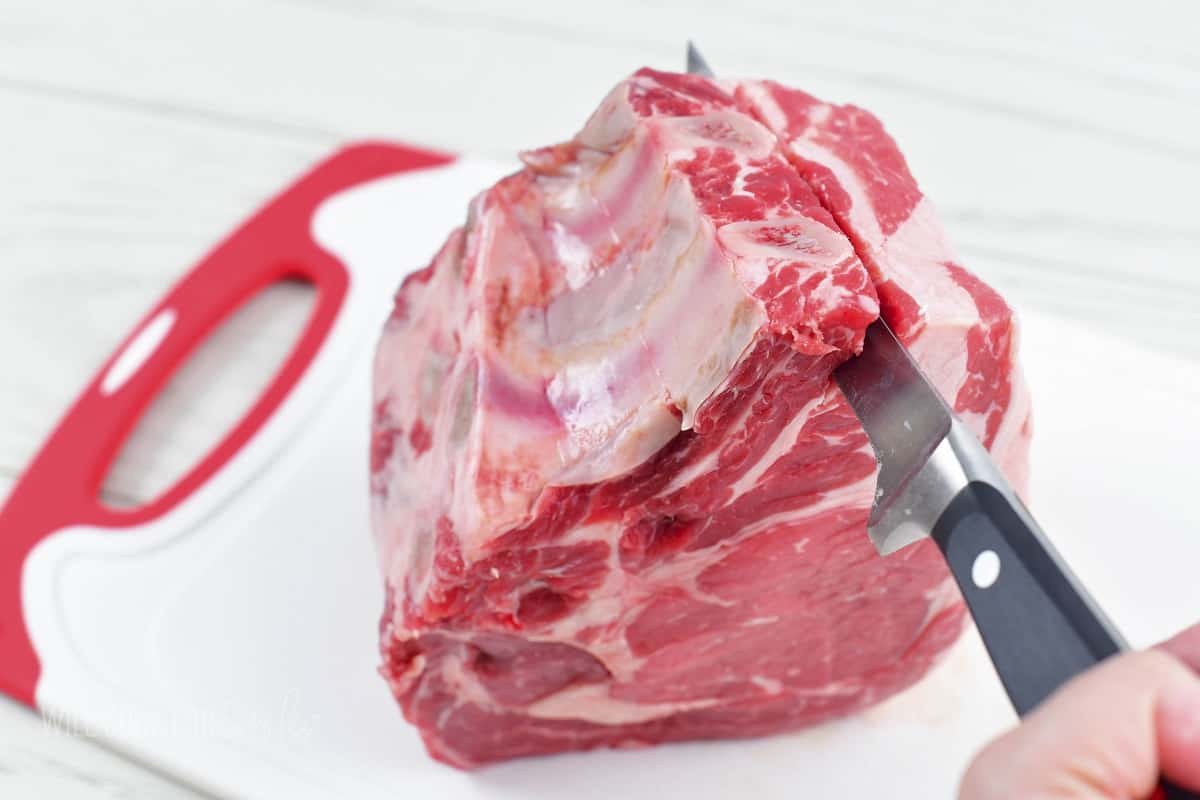
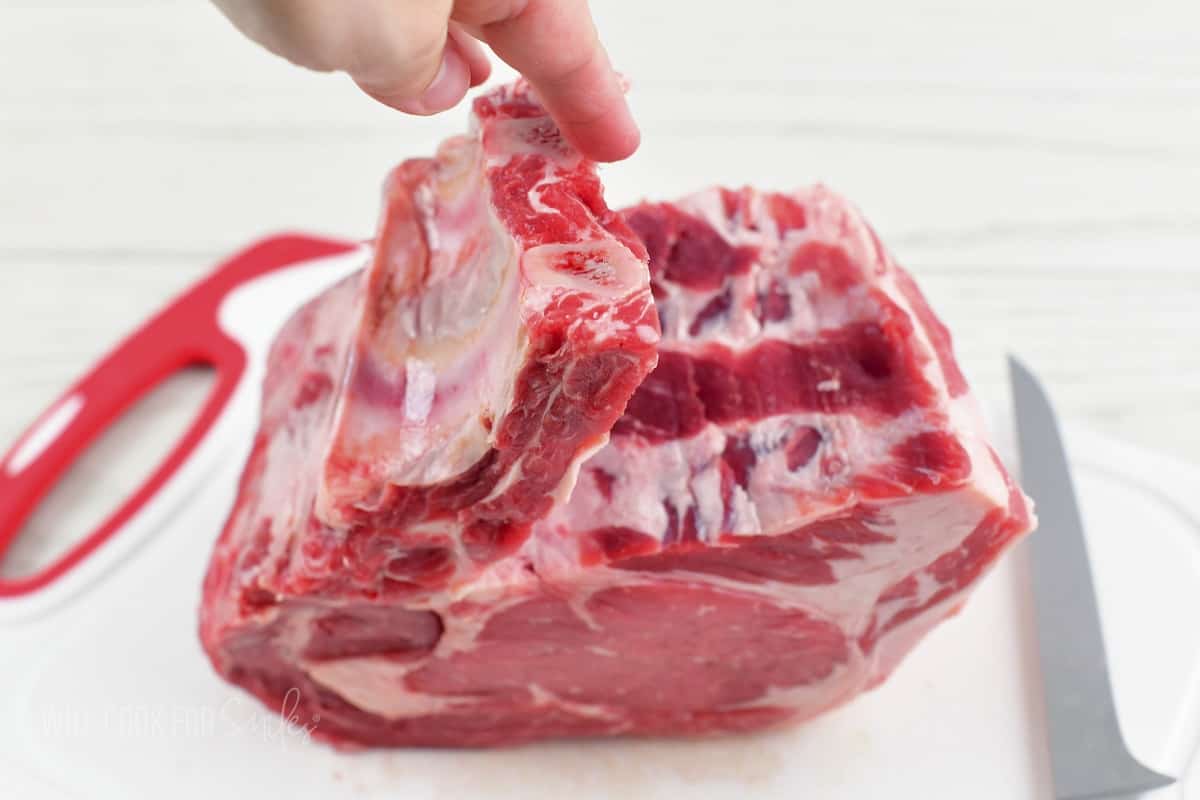
How To Cut The Bone Off Prime Rib
If you got the bone-in prime rib and need to remove it:
- Set the roast on its side so you can see where the bones curve.
- Run a sharp knife along the natural seam between the bone rack and the meat, letting the bone guide your blade.
- Keep your knife tight to the bones — you’re separating, not trimming away meat.
- Lift the roast slightly as you cut, which helps the bones release without sawing too hard.
TIP: don’t discard the rib but add it to the bottom of the roasting pan and hopefully it will add some juices to the pan drippings. (Or save it to use in beef stock later.)
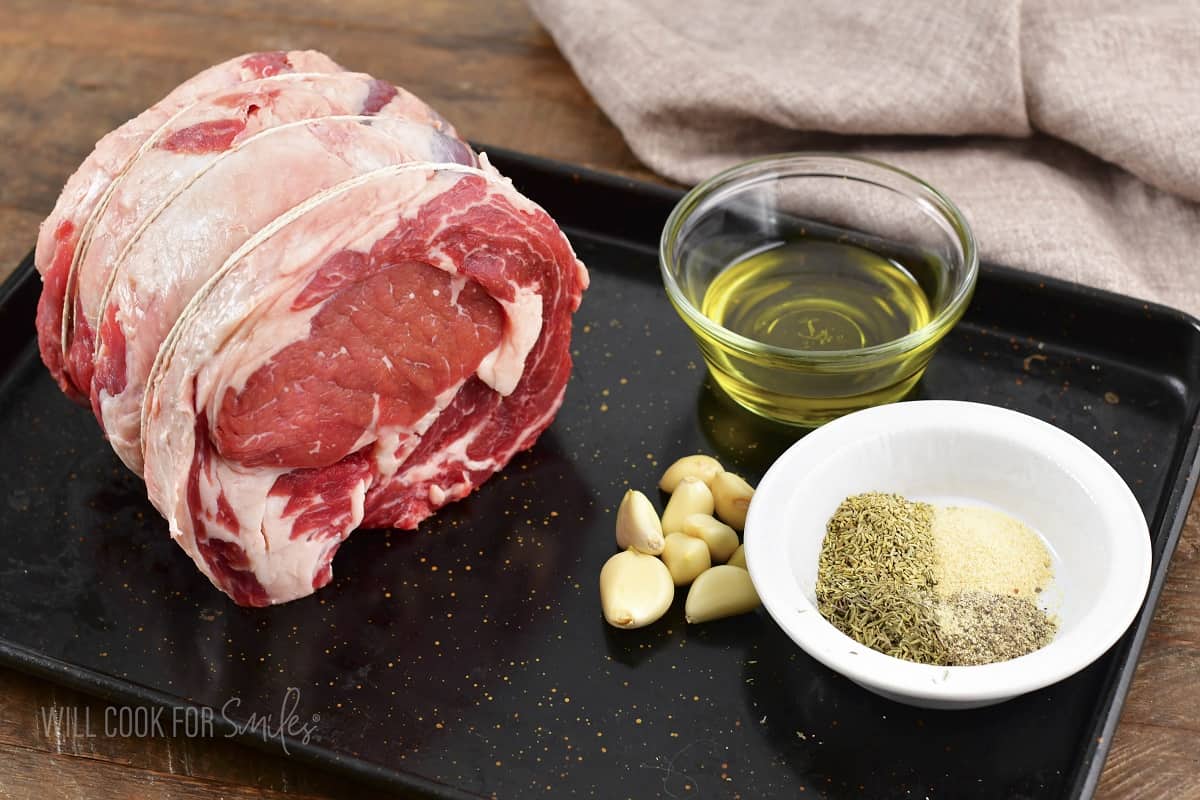
Seasoning for the Prime Rib
For my prime rib roast, I use a wet rub, which is a combination of oil and dried herbs and seasoning. I combine olive oil (or avocado oil) with fresh pressed garlic, dried rosemary and thyme, salt, pepper, and some garlic powder.
Tips For Preparing the Meat
The day before cooking prime rib, you will need to salt it generously and let it sit in the refrigerator.
- If you notice too much fat on the outside, you can cut off about half of it. You don’t want to cut off all of it or the meat will not be as juicy.
- Before salting, you will want to score the fat cap on top by slicing it in a crisscross pattern.
- Generously rub the meat all over with coarse salt. Make sure to get in between the cuts in fat and on the side where the ribs separate from the meat.
- Place it on the plate, cover tightly with plastic wrap and then aluminum foil, and refrigerate overnight or up to 18 hours.
How To Cook The Perfect Prime Rib
Make sure to pull the meat out of the refrigerator 2-3 hours before cooking and let it get to room temperature.
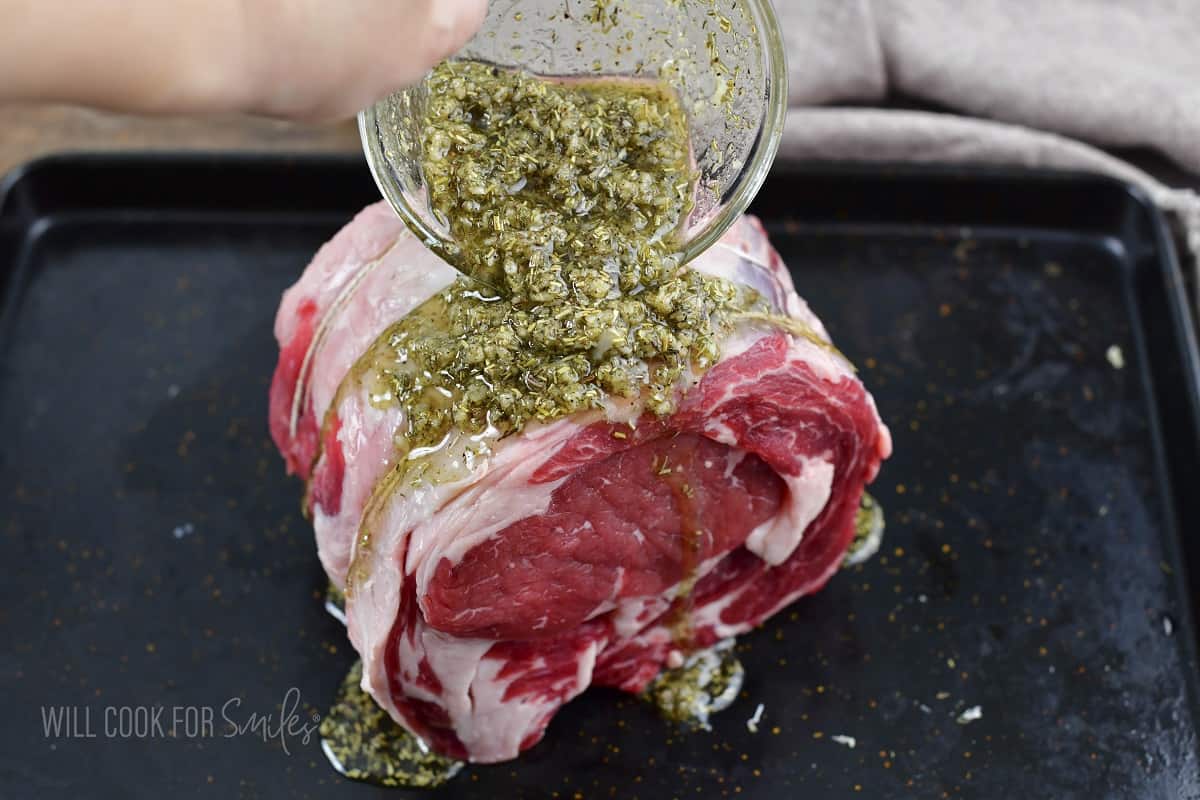
Seasoning: Combine pressed garlic, olive oil, dried herbs, black pepper, and garlic powder in a bowl and mix. (DON’T add the salt since it’s already salted.)
Place the salted prime rib into a rimmed baking sheet and pour the wet rub over it. Rub the whole piece of meat with the seasoning mix all over, on all the sides. Try to get it as even as possible.
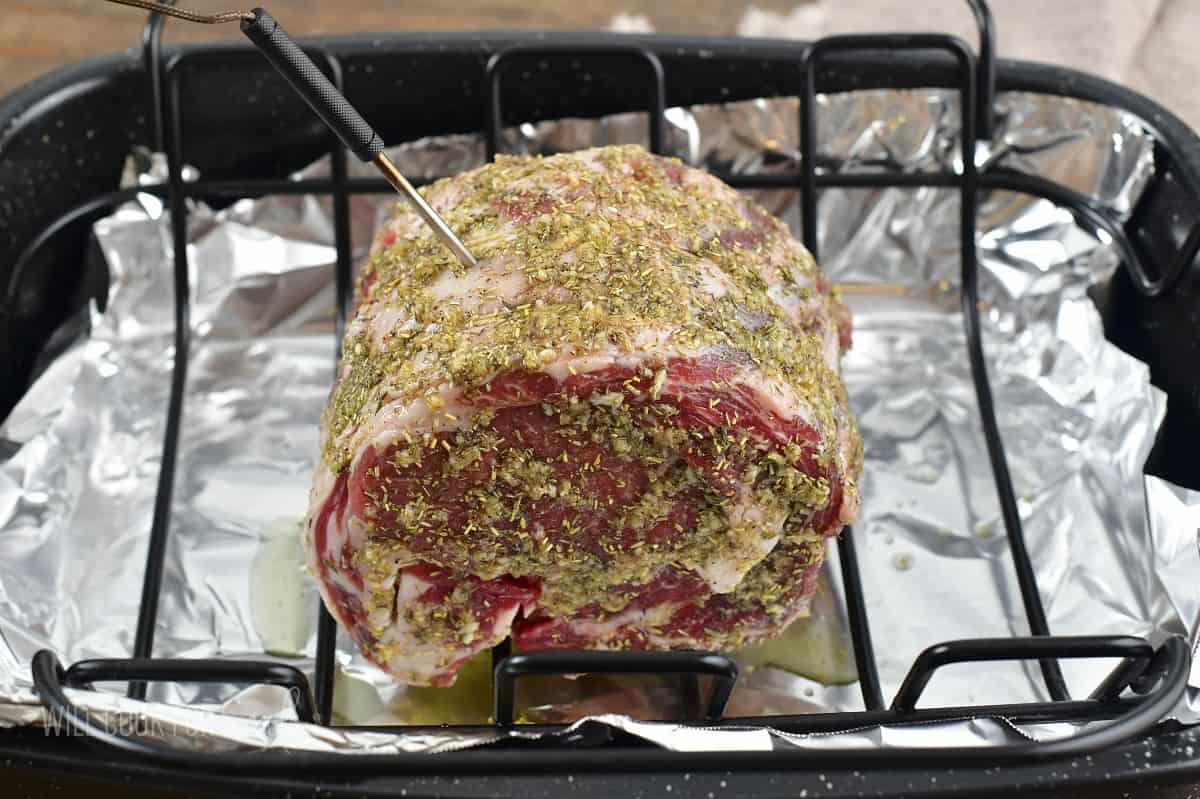
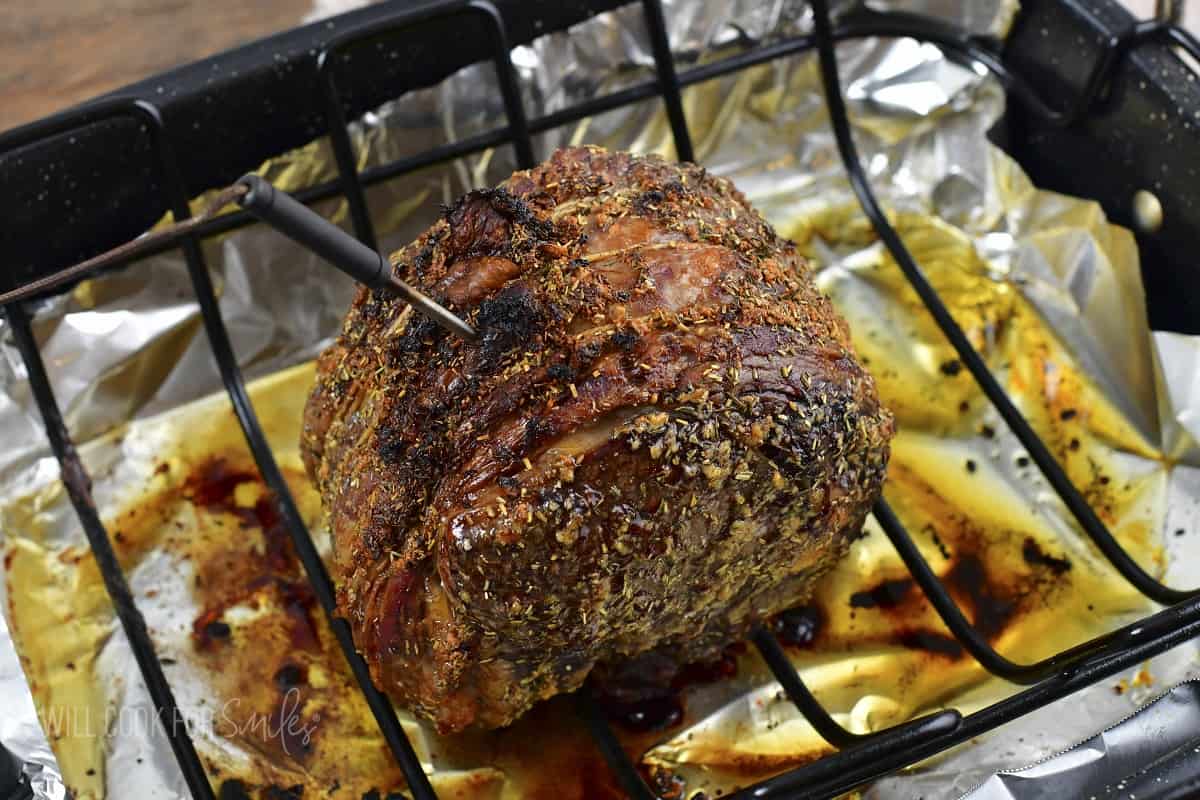
Place the seasoned prime rib roast in the prepared roasting pan, onto the inserted wire rack. Make sure to use the leave-in thermometer to track the temperature of the meat! Insert the probe into the middle of the meat to track the temperature of the very center.
Cooking: Preheat the oven to 500°F. Place the roasting pan into the oven and cook for 15-20 minutes to sear the meat. Lower the temperature to 250°F and cook until the roast reaches your desired temperature.
How To Tell If Prime Rib Is Done?
Leave-in meat thermometer is the best to use to track when your meat is done because you can read the internal temperature of the meat without opening the oven.
If not, take the prime rib out of the oven to measure internal temperature and keep the oven closed. This will prevent temperature drops in the oven.
Internal Temperature Chart
- Rare: 115–120°F
- Medium Rare: 125–130°F
- Medium: 135–140°F
- Medium Well: 145–150°F
Time-Per-Pound Chart Cooking at 250°F
Use these as general guidelines, always confirm doneness with a thermometer:
- Estimate 30–35 minutes per pound is a good rule for medium-rare.
- Note that small roasts cook faster per pound than large ones.
- Bone-in roasts may take slightly longer than boneless.
- 4–5 lb. roast: approximately 2.5 to 3 hours
- 6–7 lb. roast: approximately 3 to 3.5 hours
- 8–9 lb. roast: approximately 4 to 4.5 hours
- 10–12 lb. roast: approximately 5 hours
How To Cut the Prime Rib
Once the meat reached the temperature, take it out of the oven but do NOT cut into it yet.
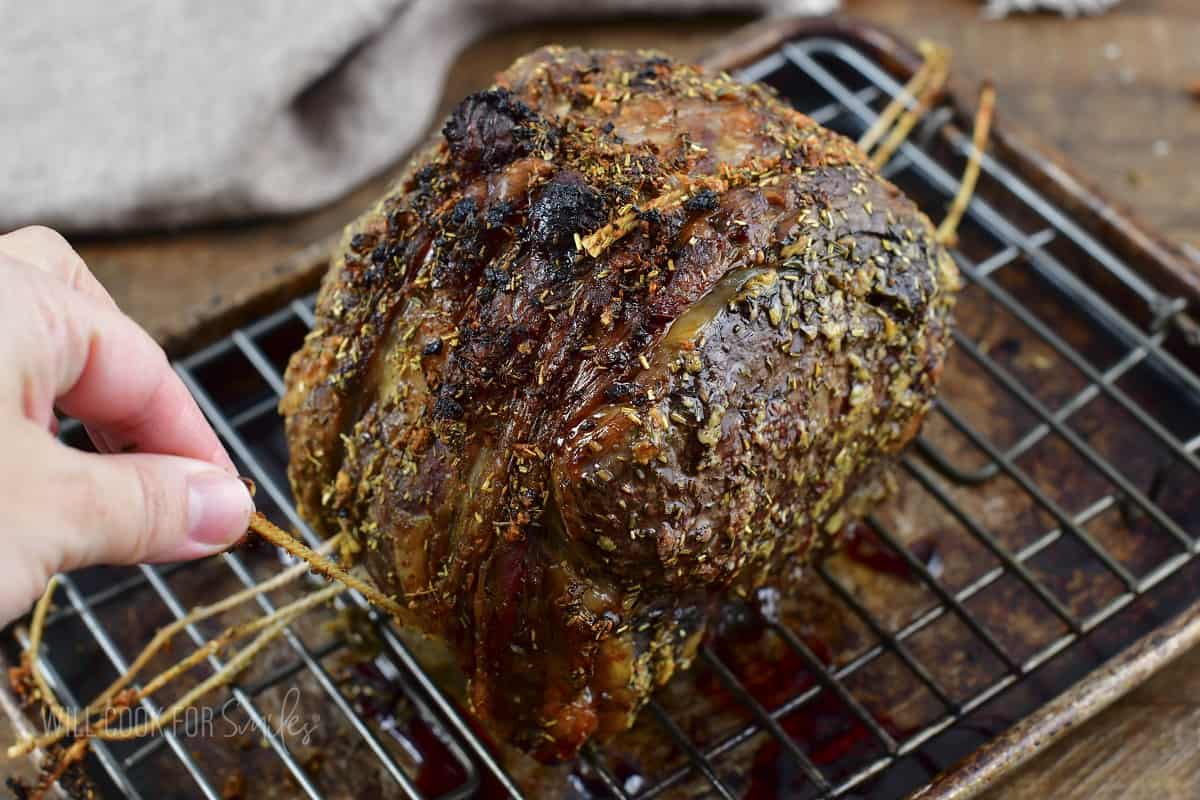
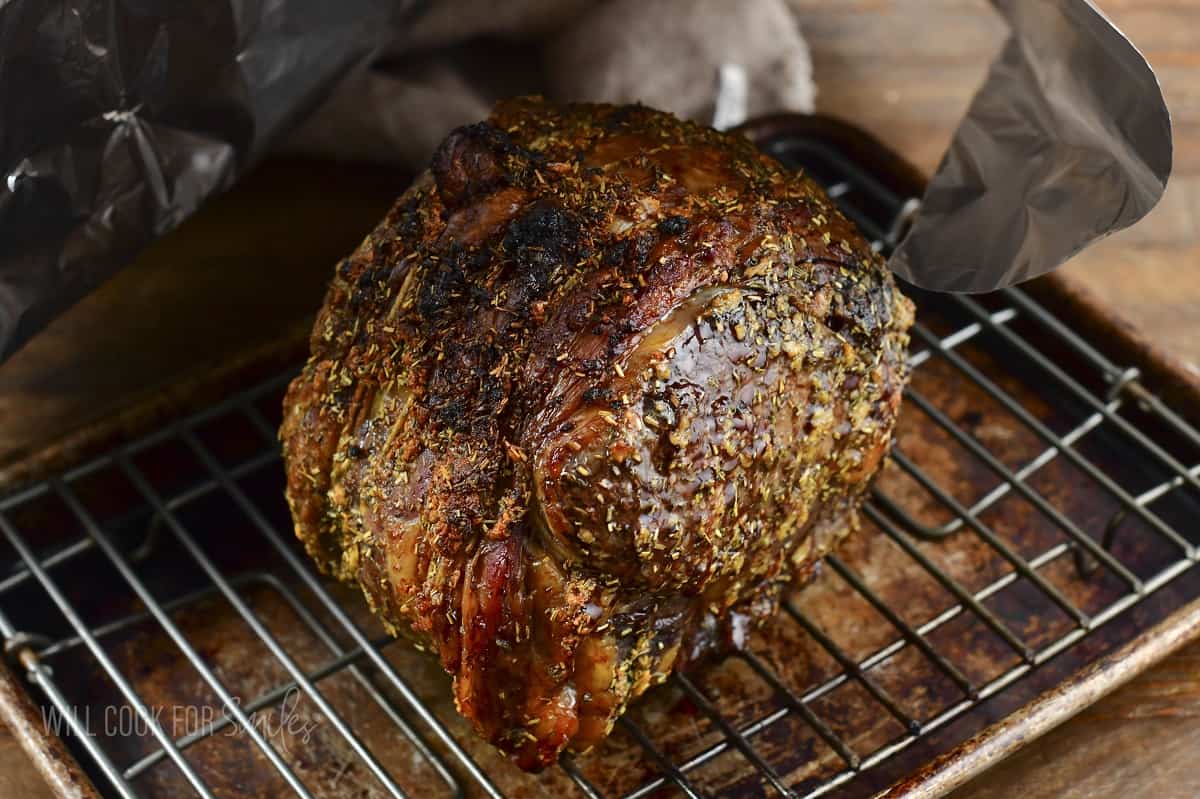
Place prime rib on the wire rack inside a rimmed pan, take off the cooking twine, and tent it with aluminum foil. Let it rest for about 20 minutes.
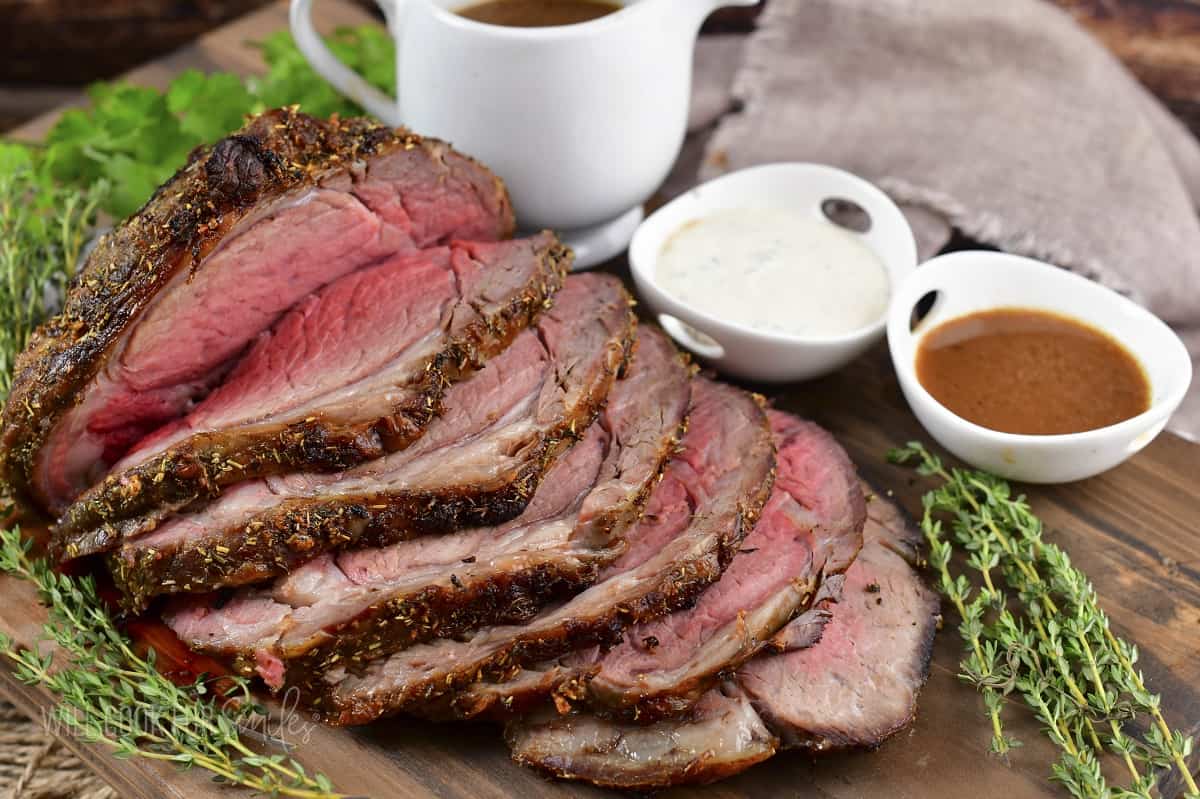
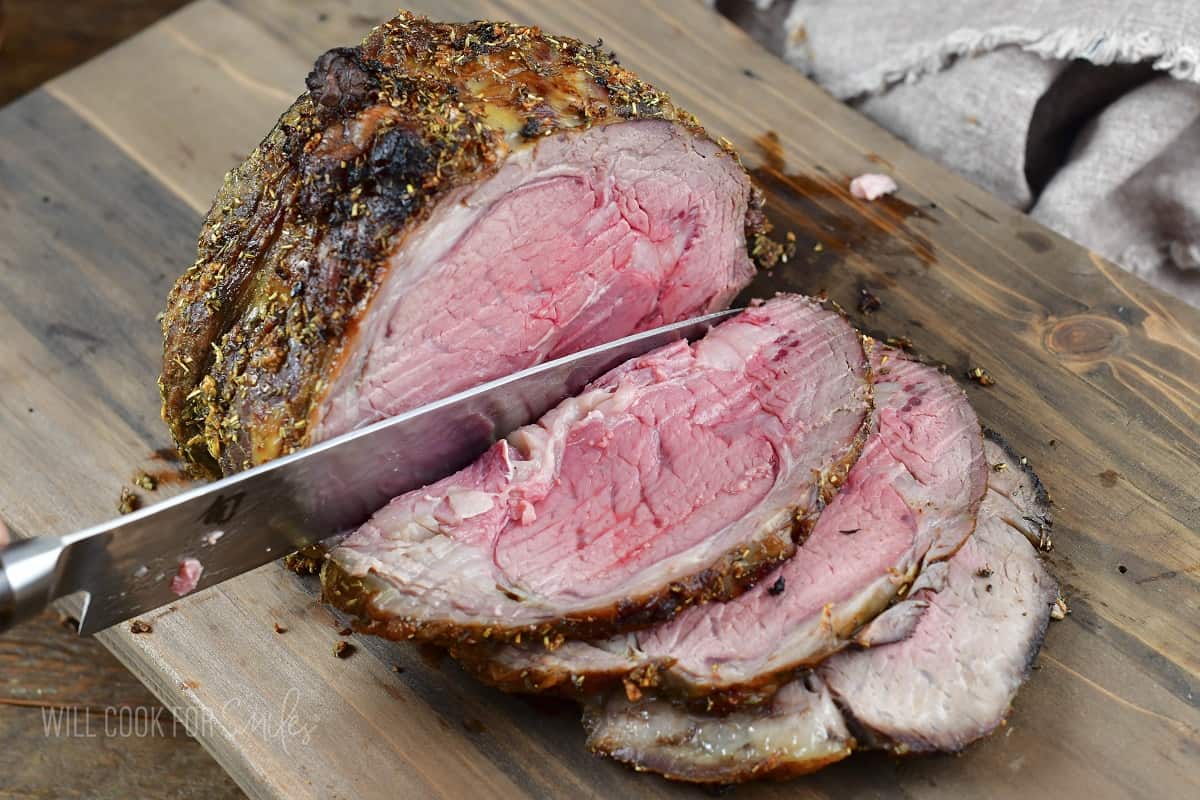
Using a long, sharp knife, slice the prime rib against the grain, into steaks that are about 1/2 an inch thick. (Or cut it thicker or thinned based on personal preference.)
How Much Prime Rib To Estimate Per Person?
When getting a boneless prime rib, estimate 1/2 – 3/4 lb. per person, depending on the type of dinner. For a large holiday dinner with many additional sides, 1/2 lb. per person will be plenty. For a light family dinner, estimate 3/4 lb. per person. You can carve thicker or thinner slices of steak as well, depending on the dinner.
For bone-in prime rib, estimate 3/4-1 lb per person when purchasing. Remember, it’s best to buy a little more than you think you need. It’s better to have leftover than not enough.
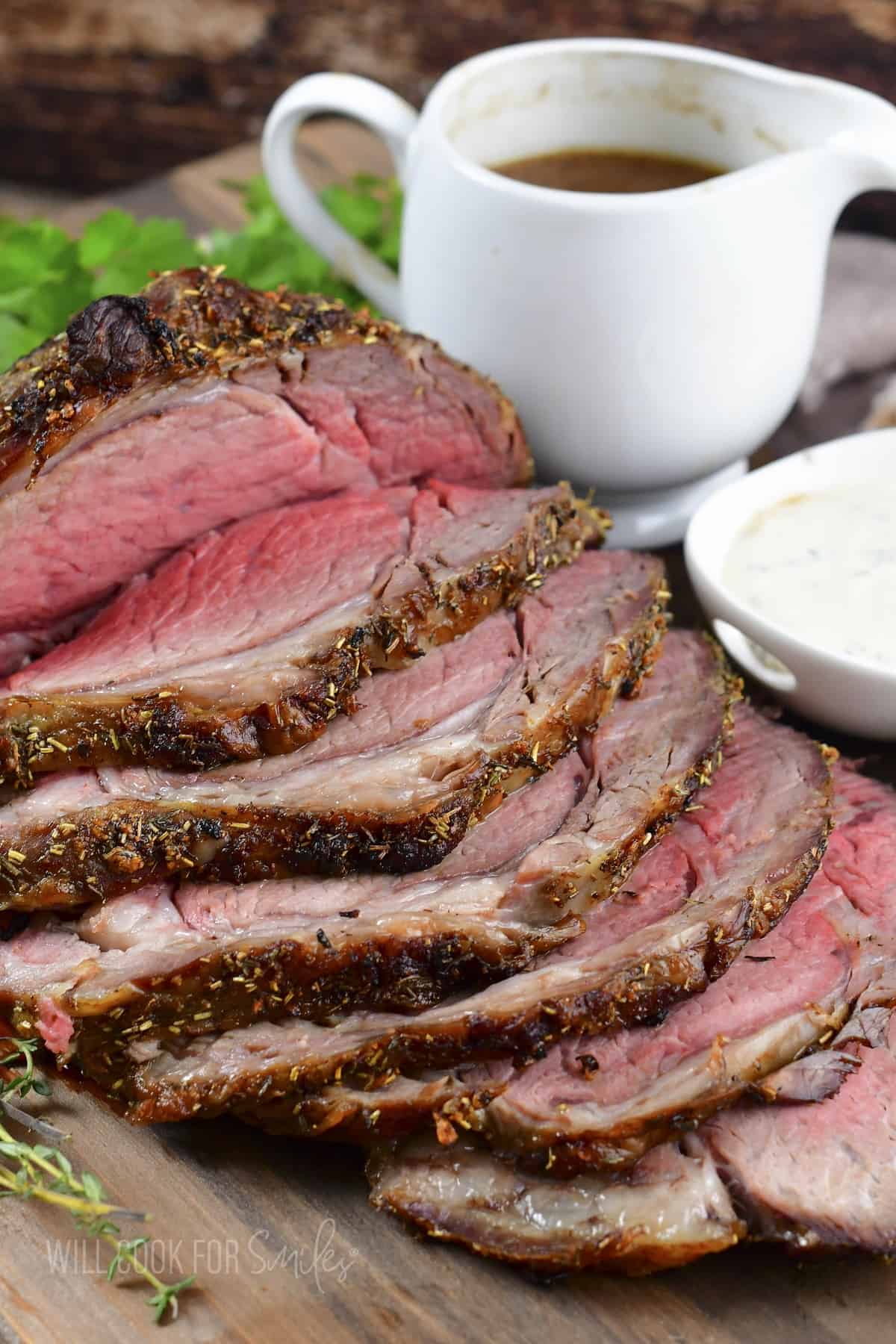
Storing and Reheating Instructions
Storage: Let leftover prime rib cool completely, then wrap it tightly in plastic wrap or place it in an airtight container. It will keep well in the refrigerator for 3–4 days.
Reheating: Prime rib can dry out quickly, so gentle heat is the key, so oven is best. Preheat oven to 325°F. Place slices in a small baking dish with a splash of beef broth and cover it tightly with foil. Warm for 10–15 minutes, just until heated through. This keeps the meat tender without overcooking it.
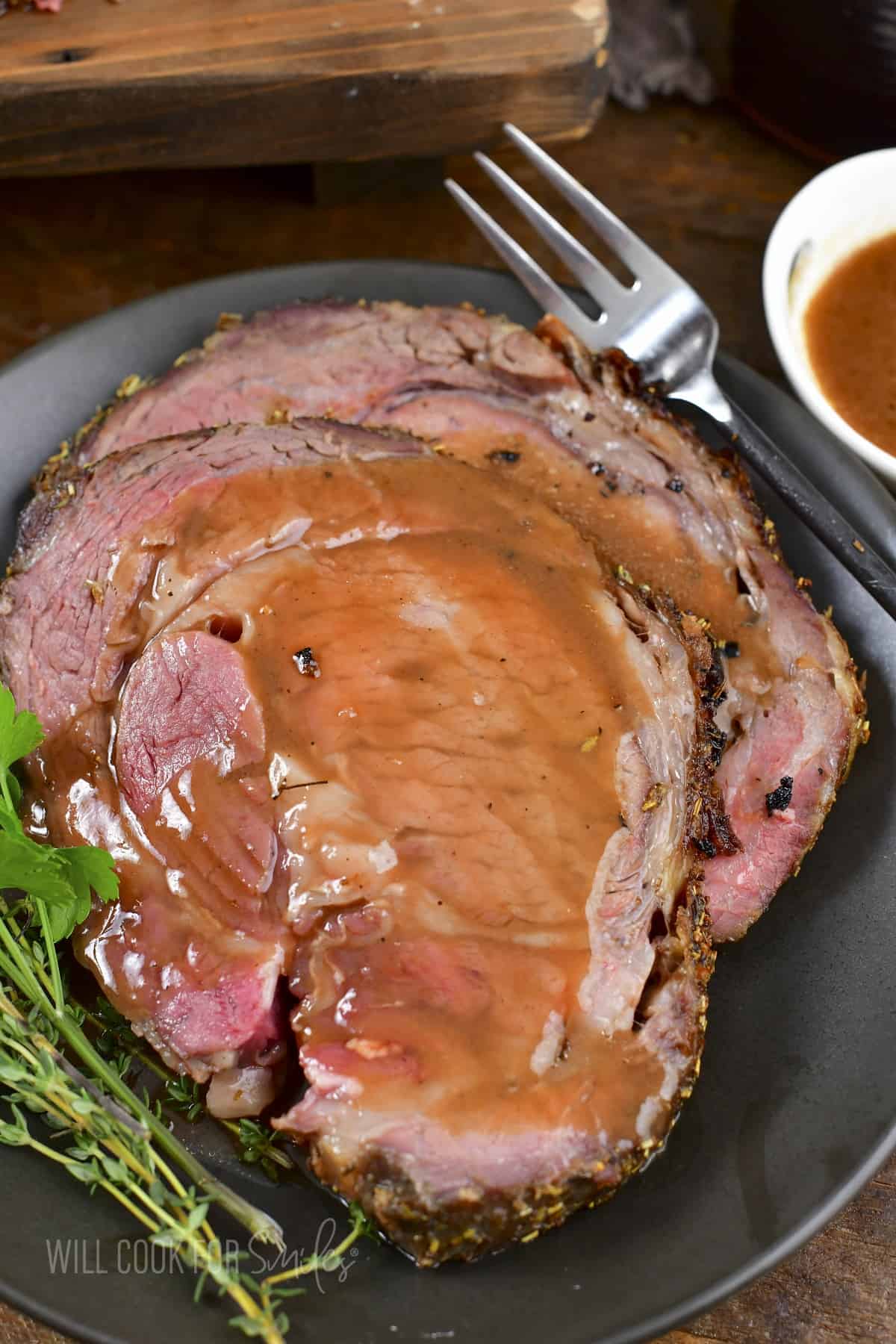
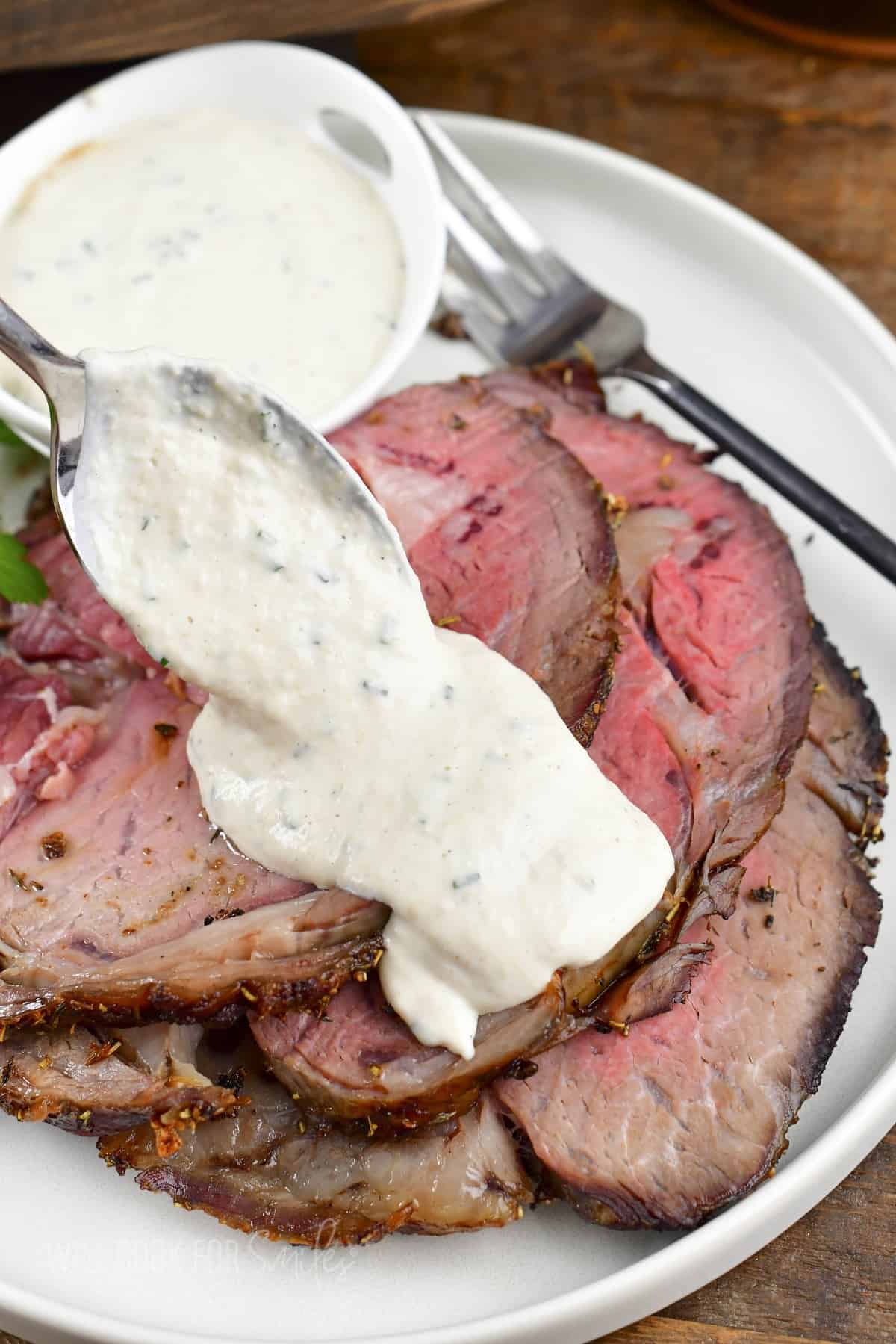
Serving Suggestions
- Prime rib steaks are great on their own but it’s commonly served with Au Jus or Horseradish Sauce.
- Our favorite vegetable options include sauteed mushrooms, Italian roasted asparagus, sauteed green beans, Balsamic roasted carrots.
- Potato option include classic mashed potatoes, roasted potatoes, scalloped potatoes, hashbrown casserole.
- Don’t forget the potato dinner rolls to soak up sauces and juices.
Frequently Asked Questions
What pan should I use?
Any heavy, oven-safe roasting pan works but make sure you an fit a wire rack in it. Or use a smaller roasting pan with a rack. For larger cuts, a larger roasting pan with a rack. Having a rack helps air circulate under the meat and promotes even cooking.
Do you cover prime rib while it cooks?
No. Leaving it uncovered helps the surface dry slightly, which creates a better crust as it roasts. Covering the meat traps steam and prevents browning.
How long should prime rib rest before slicing?
Aim for 20–30 minutes. Resting allows the juices to settle back into the meat instead of running out onto the cutting board. This will ensure an juicy and tender prime rib.
What internal temperature should I aim for?
For medium-rare, take the roast out of the oven at 120–125°F, then let it rest. The temperature will rise a few degrees as it sits. A digital thermometer is the most reliable way to achieve your preferred doneness.
If you’ve made my prime rib recipe and found a lot of good information here, PLEASE leave a 🌟 star rating! Let me know how you liked it by leaving the 📝 comment below as well. Don’t forget to subscribe to my newsletter!
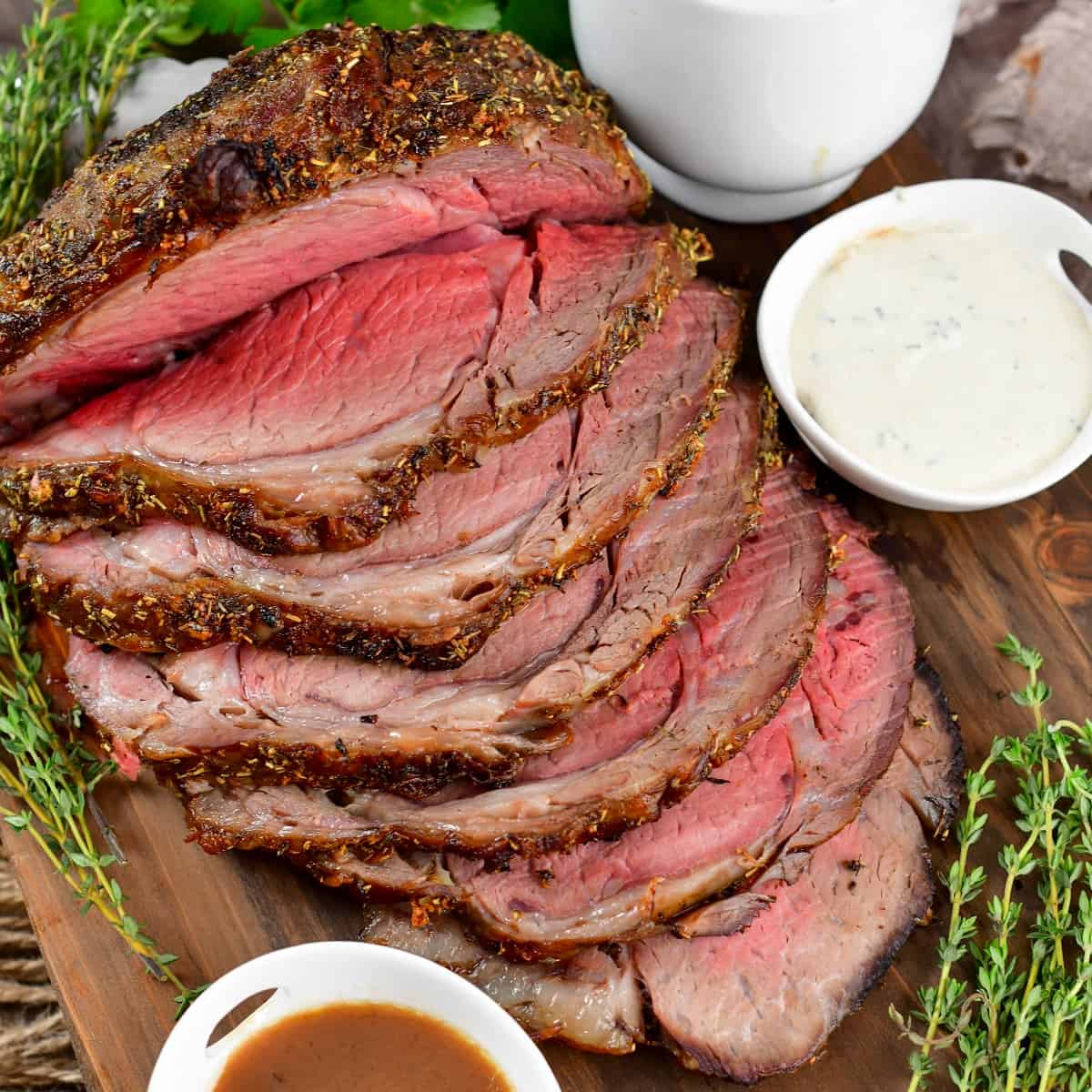
Prime Rib Recipe
Ingredients
Prime Rib:
- 4.5 lbs prime rib roast
- 3-4 tbsp coarse salt depending on the size of the meat
Seasoning:
- 3-4 tbsp olive oil
- 8-10 garlic cloves pressed
- 2 tsp dried crushed rosemary
- 2 tsp dried thyme
- 1 tsp fresh cracked black pepper
- 1 tsp garlic powder
Instructions
Prepare Prime Rib:
- Separate the ribs from the meat. (You can ask the butcher to separate the ribs from the meat and tie the roast or you can do it yourself at home.)
- To Separate The Rib Bone:Stand the prime rib on the cutting board, rib bone up.Using a pairing knife, carefully slice along the rib bone to separate the bone from the roast. Try to get as close to the bone as you can and follow the curve of the bone!TIP: don’t discard the rib but add it to the bottom of the roasting pan and hopefully it will add some juices to the pan drippings.
- If you have a large fat cap, you can cut some of it off, about half of it, but not all. (You need some fat to keep the prime rib tender and juicy.) Score the leftover fat cap on top by slicing it in a crisscross pattern.
- Generously rub the meat all over with coarse salt. Make sure to get in between the cuts in fat and on the sides.
- Use kitchen twine to tie the prime rib. Slide the twine under the roast and then pull it tight together, cross and make another loop around the prime rib about an inch away. Depending on the size of your prime rib, you would need to tie in 3-5 places, about an inch apart.
- Place it on the plate, cover tightly with plastic wrap and aluminum foil. Refrigerate overnight or up to 18 hours.
Cooking Prime Rib:
- Make sure to pull the meat out of the refrigerator 2-3 hours before cooking and let it get to room temperature.
- Preheat oven to 500°F and place a wire rack inside a roasting pan. (You can line the bottom of the roasting pan to easier catch the drippings and to make clean up a breeze.)
- Since you already salted the meat the day before, you don’t need to add more salt. So combine pressed garlic, olive oil, dried herbs, black pepper, and garlic powder in a bowl and mix.
- Place the salted prime rib into a rimmed baking sheet and pour the wet rub over it. Rub the whole piece of meat with the seasoning mix all over, on all the sides. Try to get it as even as possible.
- Transfer prime rib into the prepared roasting pan. Make sure to use the leave-in thermometer to track the temperature of the meat! Insert the probe into the middle of the meat to track the temperature of the very center. (If you don't have one, you will need to take the prime rib out of the oven to check the temperature.)
- Place the roasting pan into the oven and cook at 500°F for 15-20 minutes. Lower the temperature to 250°F and cook until the roast reaches your desired temperature.
- Let it cook until the temperature reaches 120°F for medium-rare or 130°F to be closer to medium. (Remember that the temperature of the meat keeps going up about 5° while it's resting.)
- My 4.5 lb. roast took about 2 hours and 15 minutes to get to the medium-rare temperature. It's hard to give an exact time because thickness of roasts does vary and therefore, relying on the time in not the best indicator of doneness. Thermometer is the best way to tell if your meat is done.
- TIP: If you do not have a leave-in thermometer, take the prime rib out of the oven to measure internal temperature and close the oven. This will prevent temperature drops in the oven.
Carving Prime Rib:
- Once the meat reached the temperature, take it out of the oven and place it on the cutting board. Cut the twine off the prime rib. Tent it with aluminum foil loosely and let it rest for about 20 minutes.
- Slice the prime rib using a long, sharp knife against the grain, into steaks that are about 1/2 an inch thick. You can carve a little thicker or a little thinner depending on the sides you serve…and how much you love your guests.
Video
Nutrition
There are many main dish choices for holidays, like roast beef and beef tenderloin but prime rib is a favorite for so many families!
Originally published on Will Cook For Smiles in December 2022.
Would you like to save this recipe?
Categories:
Beef Recipes, Christmas Dinner Recipes, Dinner Recipes, Easter Recipes, New Year's Eve Recipes,All images and text ©Lyubov Brooke for ©Will Cook For Smiles. Please do not use my images without prior permission. If using my posts in collections and features, please link back to this post for the recipe.
Disclaimer: Nutrition information shown is not guaranteed to be 100% accurate as most ingredients and brands have variations.








I finally got the nerve up to try this dish! This recipe made it so easy and there was zero guesswork! My entire family (12 of us) absolutely LOVED how it turned out for our Christmas dinner!!!!
Thank you so much for sharing this, Donna! I’m thrilled to hear that you gave the recipe a try and that it turned out to be such a hit for your Christmas dinner! Cooking for 12 is no small feat, so I’m so glad this recipe made it easy for you. It makes my day to know your entire family enjoyed it. 🙂
Can;t wait to try your recipe.I have always made this dish for my family on Christmas. I have always mixed all of my herbs and salt combined and used as a rub two days before I am ready to cook it. I thought that the infusion of herbs into the surface meat helped it to taste better throughout the cooking process. It always comes out very moist and flavorful. But this year, I am going to try your method of adding the salt first and then the herbs on the actual cooking day. I will be interested in seeing how the flavor changes. I also serve my roast with yorkshire pudding. Happy holidays to you and yours!
I hope it turned out to your liking! 🙂