
Homemade Gnocchi

This post may contain affiliate links.
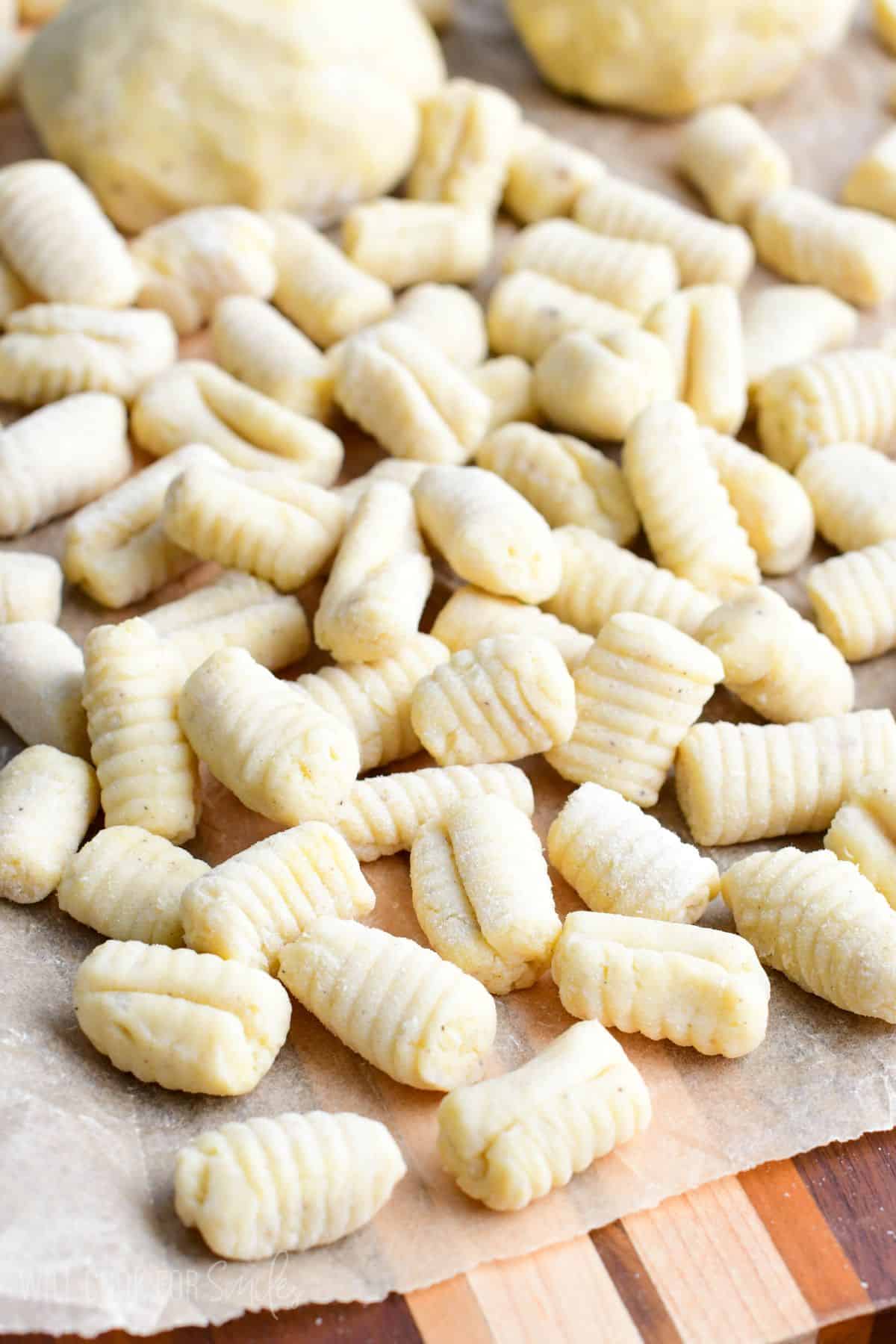
What Is Gnocchi?
Gnocchi (pronounced NYOH-kee) are small, soft Italian dumplings made with potatoes, flour, and egg. The name comes from the Italian word for “lumps,” a fitting name for these little pillows. You cook and serve them just like pasta, but the potato gives them a tender, pillowy texture that’s all their own. So gnocchi is really part pasta and part potato.
What I Love About My Homemade Gnocchi
Homemade gnocchi has been a family favorite in my kitchen for years, and here’s why I keep making it.
- Potatoes and pasta in one bite. It’s the perfect compromise for a potato lover and a pasta lover sitting at the same table.
- A fun project to share with kids. My daughter loves rolling the dough into ropes, cutting the little pillows, and she’s become a real pro at rolling them on the gnocchi board. Rolling and cutting is easy enough for little hands.
- Freezer-friendly. I make a big batch, freeze whatever we don’t eat, and cook it straight from the freezer on busy nights.
- Endless ways to use it. Toss it with sauce, add it to soup, bake it into a casserole, or sauté it in butter until golden.
- You know exactly what’s in it. Homemade gnocchi tastes fresher and more balanced, and it’s made with only potatoes, flour, egg, salt, and pepper, with no preservatives.
Table of Contents
Ingredients Notes and Tips

Idaho Potatoes – use Idaho (aka Russet) potatoes for the gnocchi. Some stores may label them as “baking potatoes” as well. Don’t substitute them with any other potatoes! Russet potatoes are the best choice here because they are soft and fluffy and fall apart easy.
Flour – all purpose flour will word just fine here. If you need to make your gnocchi gluten free, use gluten free all purpose flour. Use your favorite 1:1 gluten free flour blend, you can use it as an equal substitute for the all-purpose flour in this recipe. (Don’t use almond or coconut flour.)
Seasoning – seasoning it simply, just use salt and pepper. This way, you will be able to use it in any recipe and it will be able to take on the flavors of the dish.
Tools for Making Gnocchi
- Large work surface: clear off a big section of counter, because you’ll need room to knead, roll, and cut.
- Pastry scraper (bench scraper): use it to work the flour and egg into the potatoes and to cut the dough. A metal spatula works too.
- Fork: use it to mash the potatoes and to add ridges to the gnocchi. A gnocchi board also works for ridges, but you don’t need one.
- Large pot and slotted spoon: gnocchi are delicate, so scoop them out with a slotted spoon or spider instead of pouring them into a colander.
- Parchment paper and cutting boards or baking sheets: you’ll use these to freeze the gnocchi in a single layer. As well as freezer bags to transfer them into.
- Gnocchi board: this is optional but if you want to have that familiar ridged shape, you can use it.
Tips For The Best Results
Boil potatoes – I’ve tried other cooking methods, like baking potatoes and making them in Instant Pot, but boiling results in the smoothest dough and the best gnocchi texture. Just make sure your potatoes are not too hot and not completely cold. (Just warm is best.)
Use freshly cooked potatoes not pre-made – don’t use cold potatoes and those that have been make ahead of time because the don’t mash as well or as smooth and you will be likely to end up with lumps in the gnocchi dough.
Have a lot of clean working surface area – make sure to clear out a large work surface area, you will need it to work the dough.
Don’t use too much flour – don’t add too much flour, the dough should be moist but not sticky. So add a couple of tablespoons of extra flour at a time to the work surface while kneading the dough. I don’t usually use more than 1/4 cup of additional flour besides what goes into potatoes.
Rolling gnocchi is optional – why do I say that? Because you will be cursing me out after rolling like your 50th piece. It’s just such a pain to roll them all, I tend to give up half way through and call them “rustic.” Save yourself the sanity and and a lot of time, and simply cut the gnocchi either into little pillows or even on a bias.
Cook gnocchi right away or freeze – don’t try to refrigerate uncooked homemade gnocchi, that will only end in disaster. You will want to cook them right away or freeze them in batches. Uncooked gnocchi freezes very well. (see instructions below)
How To Make Homemade Gnocchi
- Peel potatoes and cut out all the dark spots and eyes. Boil potatoes until fork-tender but not overdone to where it’s all falling apart. Drain off all the water and transfer potatoes into a bowl. Mash each potato with a fork until it looks like small coarse crumbs. (Don’t over-mash it.)

- When potatoes are cooled enough to be handled, place them in a mount on your work surface. Add flour, salt, and pepper over the top. Make a well in the potato/flour mount and crack the egg in the middle.
- Use a pastry scraper (or even a metal spatula) to work flour, potatoes, and egg together, until incorporated enough to knead. Knead the dough, adding a little more flour if the dough is too tacky, until smooth. Don’t add too much flour, the dough should be moist but not sticky.

- Split the dough into several, workable pieces and roll each into about 1/2 inch – thick, long rope-like logs. Cut each into about 3/4 – inch pieces.

- You can use a form to roll each piece of gnocchi with a design or leave it in a shape of a little pillows as they are cut. If you choose to roll the gnocchi, don’t push too hard, they are very soft and delicate.
- Cook gnocchi right away or freeze it.

Ways to Cook Homemade Gnocchi
Boil: bring a large pot of salted water to a boil, using plenty of water so the gnocchi have room to move. Drop in the gnocchi a few at a time so they don’t stick together, and stir gently once. Once they float to the top, cook for about 1 more minute, then use a slotted spoon to transfer them straight into your sauce or onto a plate.
Sauté (after boiling): for golden, lightly crisp edges, boil the gnocchi first, then sauté them. Melt butter in a pan over medium-high heat, add aromatics like garlic and fresh herbs if you like, and toss in the gnocchi. Cook until you see some browning. Check you my easy gnocchi recipe for details.
Sear (no boiling needed): you can sear the gnocchi without having to boil them first. Preheat the pan over medium or slightly below heat and add some oil. Add the gnocchi and spread them out. Add a tablespoon or so of water, cover the pan, and let the gnocchi cook untouched for about 2 minutes. Then toss them to turn them over and cover for another minute or so. Add in some butter and, if you wish, garlic and herbs. Toss and let them cook another 30 seconds or so.
From frozen: don’t thaw frozen gnocchi. Drop them straight into boiling water and cook them the same way as fresh. They’ll take a little longer to float.
For soup: in many soups, like chicken gnocchi soup, you can add uncooked gnocchi right to the pot and cook them together for about 4 to 5 minutes. If you’re only reheating the soup, boil the gnocchi first and stir them in right before serving.
Freezing Homemade Gnocchi
Uncooked gnocchi freezes very well. Line large cutting boards with parchment paper and spread a little bit of flour all over the bottom. Spread out uncooked gnocchi in one even layer (don’t crowd them) and freeze for about an hour or two. (Set a time so you don’t forget.) Once completely frozen, portion them into a freezer friendly, zip-lock bag. Freeze for up to 3 months.
Cooking Frozen Gnocchi: don’t thaw gnocchi before cooking, add them to the boiling water frozen. Cook the same way as fresh.
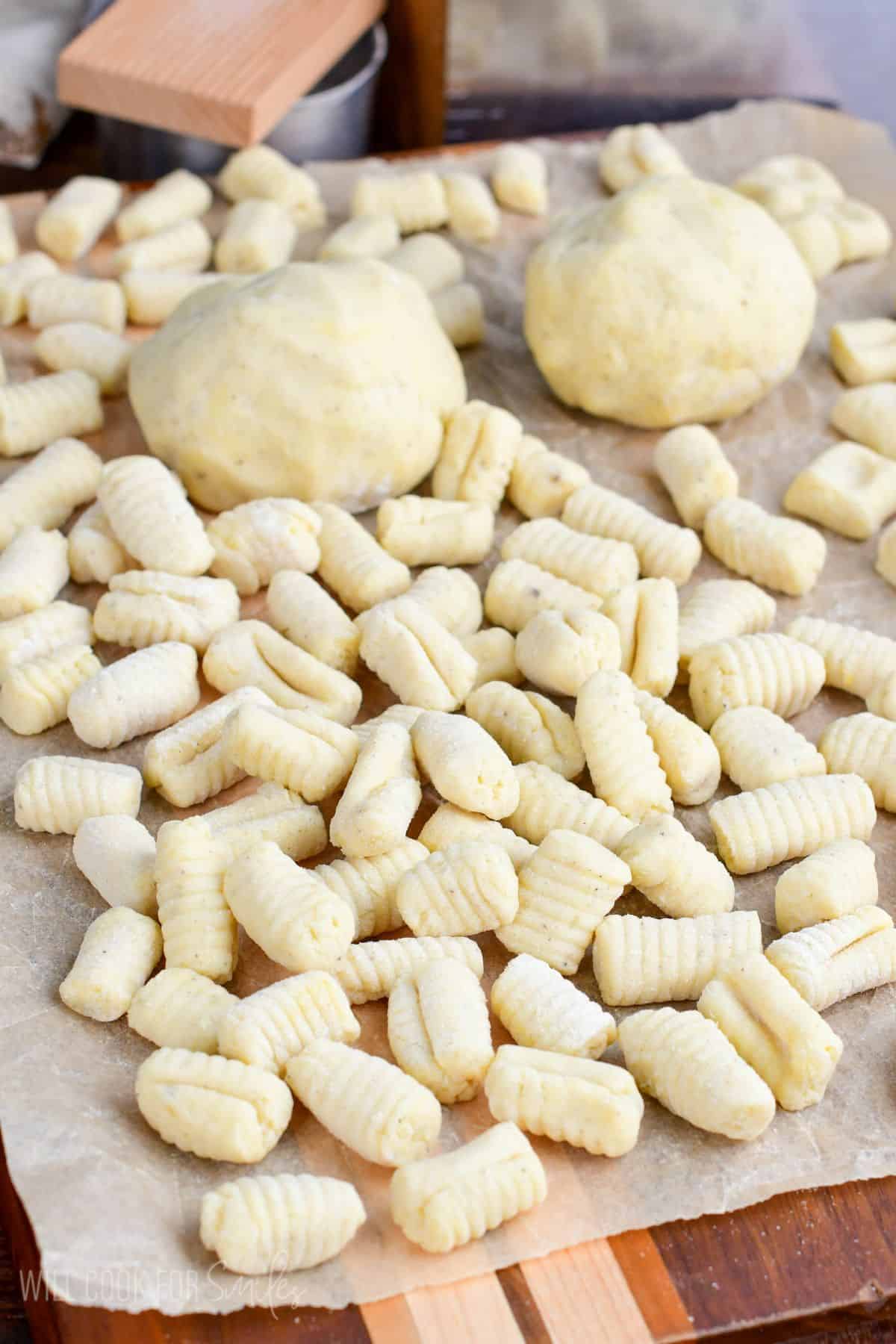
Ways to Serve Homemade Gnocchi
Gnocchi works with almost any sauce you love, and here are a few of my favorite ways to serve it.
- With a creamy sauce: toss gnocchi with my classic Alfredo sauce for a rich, restaurant-style dinner, or make pumpkin Alfredo gnocchi in the fall.
- With pesto: toss the gnocchi with homemade basil pesto or sun-dried tomato pesto off the heat to keep the pesto bright.
- With tomato sauce: my creamy tomato gnocchi with pancetta, sun-dried tomatoes, and basil is a weeknight favorite.
- In soup: add gnocchi to soup for an extra hearty bowl, like my Olive Garden chicken gnocchi soup copycat or Italian meatball gnocchi soup.
- Sautéed in butter: sauté boiled gnocchi in butter with garlic and fresh herbs, then finish with freshly grated Parmesan.
- As a side dish: serve buttered gnocchi next to spatchcock chicken, oven cooked steak, or roasted pork tenderloin.
Troubleshooting Your Homemade Gnocchi
Gnocchi is simple, but a few small details make a big difference in texture. If your gnocchi turned out gummy, mushy, or sticky, or fell apart in the water, here’s what to look for.
- Sticky dough: this usually means too much moisture. I always boil my potatoes, drain off all the water, and let them cool to warm or room temperature before making the dough, because hot potatoes still hold a lot of steam (aka moisture). If the dough still sticks to your hands, work in a little more flour until it feels soft and no longer sticky, with just enough flour to roll it easily.
- Mushy or wet gnocchi: check your potatoes. Idaho (russet) potatoes are the best ones to use, and at the most, Yukon gold. Waxier potatoes hold too much moisture. Also boil the potatoes just until fork-tender, not until they fall apart.
- For even less moisture, you can boil the potatoes whole in their skins instead. Keep them whole, and pick potatoes that are about the same size so they cook evenly. They’ll take longer to cook, and you’ll need to peel them once they’re cool enough to handle. Crumble to cool.
- Gummy or dense gnocchi: this usually means too much flour or too much kneading. Add extra flour only a couple of tablespoons at a time, and stop as soon as the dough feels smooth and isn’t sticky. I don’t usually use more than 1/4 cup of flour beyond what goes into the potatoes. Knead just until the dough comes together.
- Lumpy dough: cold or pre-cooked potatoes don’t mash smoothly. Mash freshly boiled potatoes with a fork right after draining, then let them cool before adding the flour and egg.
- Falling apart in the water: make sure the egg is fully worked in and the dough holds together when you roll a rope. It should not be falling apart in your hands. Bring water is at a full rolling boil before adding gnocchi.
- Soft and sticky after sitting out: cook uncooked gnocchi right away or freeze them. Raw gnocchi left at room temperature or in the fridge gets soft and sticky. After boiling, pull them out about 1 minute after they float.
- Sticking together after cooking: toss cooked gnocchi with sauce, butter, or a little olive oil as soon as you take them out of the water.
Frequently Asked Questions
Yes and the difference is barely noticeable! If you need to make your gnocchi gluten free, use gluten free all purpose flour. Use your favorite 1:1 gluten free flour blend, you can use it as an equal substitute for the all-purpose flour in this recipe. I also add an extra egg yolk from a small egg or about half an egg yolk from a large egg to help make the dough less crumbly.
(Don’t use almond or coconut flour.)
Use Idaho (aka Russet) potatoes for the gnocchi. Some stores may label them as “baking potatoes” as well.
Don’t substitute these potatoes with any other potatoes! Russet potatoes are the best choice here because they are soft, fluffy, crumbly, and fall apart easy.
Other types of potatoes are too waxy and contain less starch to achieve the best gnocchi flavor.
You can use sweet potatoes to make sweet potato gnocchi, just make sure to check out my recipe and tips for it first. (You can even use cauliflower to make gnocchi, don’t miss that recipe!)
Yes, you can, but use a very gentle stir and mix only until the dough just comes together. If you overwork or blend the dough, you won’t get that soft, pillowy texture. Keep the shaping simple too: cut the gnocchi into rustic pillows and skip the fork ridges if rolling them bothers your hands.
Yes, but expect a slight difference in texture. Self-rising flour contains baking powder and salt, so you’ll get fluffier, softer gnocchi once cooked.
You can, but the dough will be more delicate and harder to handle and roll, especially if you’re new to making gnocchi. The egg binds the potatoes and flour and helps the gnocchi hold their shape in boiling water. If you skip it, stick with russet potatoes, since their starch helps hold the dough together.
No, start with freshly boiled potatoes. Cold potatoes don’t mash smoothly, and leftover mashed potatoes usually have butter, milk, or cream in them, which makes the dough too wet.
No, a fork is all you need. Mash each potato just until it looks like small, coarse crumbs, and don’t over-mash it. If you already own a ricer, you can use it instead. Just don’t use a food processor or blender, because it overworks the potatoes and turns them gluey.
Yes! Sear uncooked gnocchi in a covered pan with oil and a splash of water, then finish with butter for golden edges. You’ll find the full searing steps in the cooking section above.
About 8 to 10 servings, or roughly 200 pieces, depending on your sizing of individual pieces. Cook just what you need and freeze the rest for later.
More Easy Gnocchi Recipes
DID YOU MAKE THIS RECIPE? PLEASE leave a 🌟 star rating! Let me know how you liked it by leaving the 📝 comment below or share and tag me on social media @willcookforsmiles. DON’T FORGET to subscribe to my newsletter!
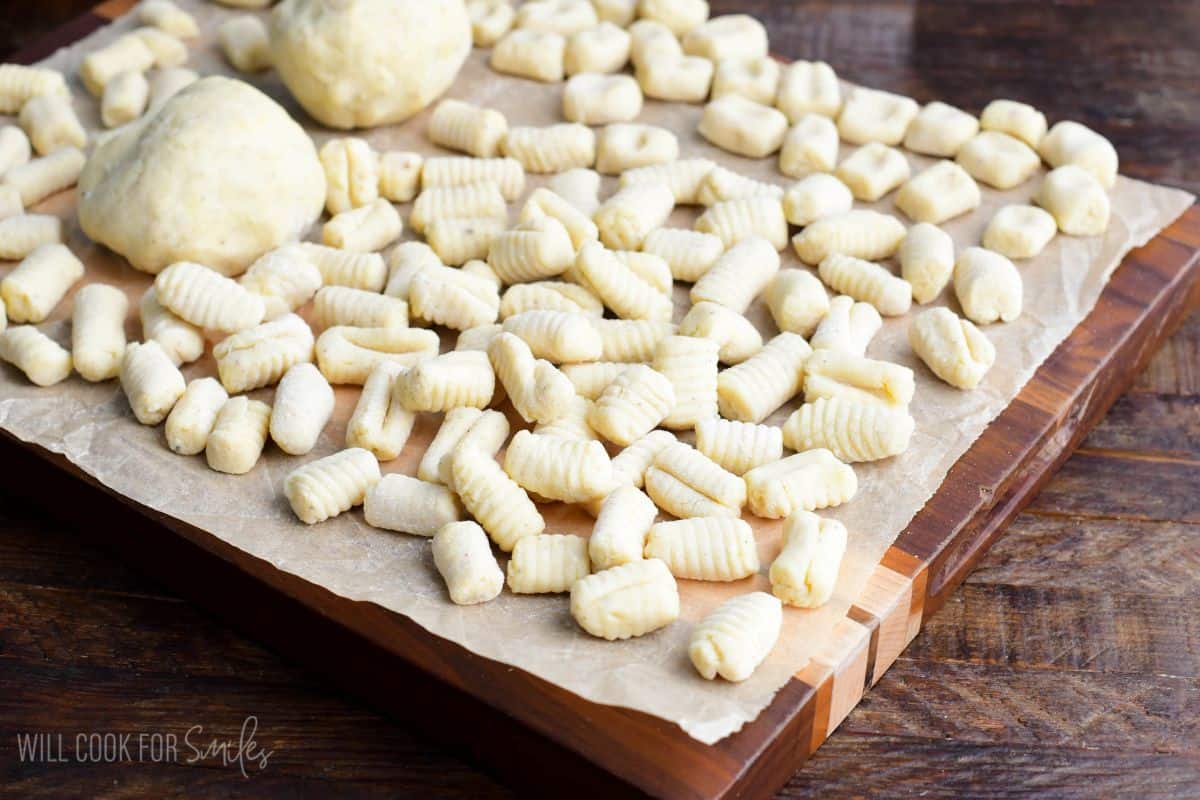
Homemade Gnocchi Recipe
Ingredients
- 2 lbs Idaho potatoes
- 2 cups all purpose flour* plus about 1/3 cup more for kneading and surface
- 1 egg
- salt
- pepper
Instructions
- NOTE: You will need plenty of work surface so clear out a counter.
Prepare Gnocchi:
- Peel potatoes and cut out all the dark spots and eyes. Cut them in half and add them to the pot of cold water with salt, pepper, and a bay leaf. Cook potatoes until fork-tender but not overdone to where it’s falling apart.
- Drain off all the water and transfer potatoes into a bowl. Mash each potato with a fork until it looks like small coarse crumbs. (Don’t over-mash it.)
- When potatoes are cooled enough to be handled, place them in a mount on your work surface.
- Add flour, salt, and pepper over the top. Make a well in the potato/flour mount and crack the egg in the middle.
- Use a pastry scraper (or even a metal spatula) to work flour, potatoes, and egg together, until incorporated enough to knead.
- Knead the dough, adding a little more flour if the dough is too tacky, until smooth. Don’t add too much flour, the dough should be moist but not sticky.
- Split the dough into several, workable pieces and roll each into about 1/2 inch – thick, long rope-like logs. Cut each into about 3/4 – inch pieces.
- You can use a fork to roll each piece of gnocchi with a design or leave it in a shape of little pillows as they are cut. (If you choose to roll the gnocchi, don’t push too hard, they are very soft and delicate.)
- Cook gnocchi right away or freeze it.
Cooking Gnocchi:
- Bring a pot of salted water to boil. Drop desired amount of gnocchi in it, a few at a time so they don’t stick. Once they float to the top, cook for about 1 more minute and take them out with a slotted spoon.
- Mix gnocchi with sauce of choice or saute.
- Saute: after boiling gnocchi, you can saute it in butter if you wish. To saute cooked gnocchi, preheat the pan over medium-high heat and melt butter in it. You can add aromatics like garlic and fresh herbs. Toss in gnocchi and saute until you see some browning.
Freezing Gnocchi:
- Line large cutting boards with parchment paper and spread a little bit of flour all over the bottom. Spread out uncooked gnocchi in one even layer (don’t crowd them) and freeze for about an hour or two. (Set a time so you don’t forget.)
- Once completely frozen, portion them into a freezer friendly, zip-lock bag.
- Cooking Frozen Gnocchi: don’t thaw gnocchi before cooking, add them to the boiling water frozen. Cook the same way as fresh.
Video
Notes
- Gluten free: use a 1:1 gluten-free all-purpose flour blend as an equal substitute. Work in one extra egg yolk (a whole yolk from a small egg or about half a yolk from a large egg) to make the dough easier to shape. Don’t use almond or coconut flour.
- Self-rising flour: it works, and the gnocchi turn out slightly fluffier and softer.
- Don’t refrigerate uncooked gnocchi: cook it right away or freeze it.
- Freezing: freeze uncooked gnocchi in a single layer until solid, then transfer to freezer bags for up to 3 months. Cook from frozen without thawing.
- Soup: if the soup will simmer, add uncooked gnocchi and cook for 4 to 5 minutes. If you’re only reheating the soup, cook the gnocchi first.
- Leftovers: toss cooked gnocchi with a little olive oil or butter and store in an airtight container in the refrigerator for up to 3 days.
Nutrition
Originally published on Will Cook For Smiles on August 17, 2014.
Would you like to save this recipe?
Categories:
Dinner Recipes, Gluten Free Recipes, Italian Dinner Recipes, Pasta Recipes, Vegetarian Recipes,All images and text ©Lyubov Brooke for ©Will Cook For Smiles. Please do not use my images without prior permission. If using my posts in collections and features, please link back to this post for the recipe.
Disclaimer: Nutrition information shown is not guaranteed to be 100% accurate as most ingredients and brands have variations.












I have adapted this recipe using gluten free flour (King Arthur) since premade gluten free gnocchi is basically impossible to find. It turns out pretty good. A little harder to handle than if made with regular flour but the end result is good.
That’s so great to hear! 😊 I’m glad the gluten-free version worked out well for you. King Arthur flour is a great choice, it’s so helpful to know it works for this recipe, even if it’s a little trickier to handle. Thanks for sharing your tip!
I just wanted to update since I’ve use the 1:1 Kind Arthur gluten free flour myself and few times. I add a little more egg yolk, just yolk and either from a small egg or partial from the large egg. It is a little easier to handle when you incorporate a little more binding and moisture from the egg yolk!
Could I use self rising flour instead of all purpose flour?
Yes you can but note there will be a slight texture difference in the end! Self-rising flour contains baking powder and salt, so you will get fluffier and softer gnocchi once cooked.
I love this recipe. I used a bit more potato and a lot more flour than listed in the recipe but it turned out sooo good. My first time making Gnocchi and next time I’ll work on my shaping. I placed these in an ice bath immediately after boiling and then cooked them in a few tablespoons of butter before topping them with a homemade vodka sauce.
I’m so glad you loved the recipe! 😊 It sounds like you made some perfect adjustments, and cooking them in butter before adding your homemade vodka sauce must have added amazing flavor! I’m sure they were delicious, and you’ll have that shaping perfected in no time. Thank you for sharing your experience!
Do you have to boil the gnocchi before using it in soup?
Hi Makenna,
It actually depends. If you have a few minutes to cook the soup, then you can add uncooked gnocchi right to the soup and cook them together for about 4-5 minutes. If you are only reheating the soup, you will want to cook the gnocchi first and then add it to soup.
How many does this recipe feed?
Hi, Shelly it makes around 8-10 portions depending on how big you make them.
Can you use a KitchAid mixer to combine ingredients and knead? I have serious arthritis and use my mixer for the kneading.
Hi! In your case, you can definitely try as it will be easier for just use VERY gentle stir and only until combined. You don’t want to overwork the dough. If you overwork it or blend it then you won’t get that soft pillowy texture. You want to mix it till just combined. You also want to make a rustic shape and if you don’t care much, don’t even bother shaping since it may hurt your hands.
Can you use gf flour?
Yes, you can use gluten-free and I recommend a 1:1 gluten free all purpose flour. I notice that when I use gluten free flour, the texture is a bit more crumbly so I work in another egg yolk from a small egg or half a yolk from a large egg. It really helps with the shaping and rolling.
My gnocchi turned out super mushy and didn’t turn out at all. I’m devastated, I spent an entire afternoon making it. After reading up on what I did wrong it seems as though you’re supposed to bake the potatoes to make them soft, not boil them. Never going to try making gnocchi again, at least for a while. This recipe was an incredible let down.
Also the same with my gnocchi. It wasn’t suuuuuper mushy but more so sticky before and after cooking. I added a lot more flour than recipe called for to make it not stick to my hands. After cooking the gnocchi was beyond sticky and only way to get it good was to mix it with a sauce. Once with a sauce it tasted good but hard to store it after cooking for the next days lunch.
Hey guys, I’m not sure what went wrong but I always boil my potatoes, drain all water off, and let them cool until cooled to warm or room temperature.
1. It’s possible that you needed a little more flour because the dough should not be sticky. It should be soft and just have enough flour to not be sticky anymore that way you can easily roll them.
2. It’s possible you used a waxier potato. Idaho (Russet) potatoes are the best ones to use and at the most, Yukon gold.
3. Potatoes were still hot and therefore had too much moisture still.
I used this recipe when I decided to make gnocchi for the first time ever. Thank you so much for the clear, easy-to-follow directions. I turned on some jazz, poured myself a glass of wine, and had a lovely time making them. They turned out so pillowy and delicious. Thank you for teaching me how to make gnocchi.
Sounds like a fun time! I am glad you enjoyed the recipe, Racheal!
these came out wonderful. great texture, easy to make, and my kids ate it all up and were begging for more. and i have very picky eaters! I will be tripling the recipe next time and freezing a bunch to have on hand for an easy, healthy lunch.
Wish you would consider making videos
Hi, Scott! I do them as fast as I can, but it’s just me doing them not a team so it does take me time! 🙂
Hi Scott, It’s coming! I just finished one!
When you cook potatoes, how are you suggesting I cook them, baked, boiled, I am assuming as I would cook mashed potatoes. I want to make this! Its been a minute since I read the whole post
Hello Barbara,
I’m so sorry for the late response! My cooking, I mean boiling the potatoes. I”m sorry for that confusion, I’ll make sure to make that clarification in the recipe.
Thank you!
this sounds so awesome, like all your recipes. I have very sore arms from health issues, could I knead the dough with my kitchen aid mixer that my great kids gave me for Xmas. I would love to make this but for now kneading it would be painful for me. Thanks for all your great recipes
Hi Pam! You can definitely try using a mixer as it will be easier for you, just use VERY gentle stir and only until combined. You don’t want to overwork the dough. If you overwork it or blend it then you won’t get that soft pillowy texture. You want to mix it till just combined. You also want to make a rustic shape and if you don’t care much, don’t even bother shaping since it may hurt your hands.
I don’t know which I like better, making home made pasta, or eating it!
I would say both! Rolling gnocchi can be quite chill and relaxing. Or a fun family project.
I absolutely love gnocchi, an these look SO delicious!! wishing I wasn’t juicing still 🙁
Well you know, they can be frozen! 😉
Thank you so much!
Gnocchi has been on my list to make for like… EVER! I keep telling myself, I want to make homemade gnocchi, and I just never seem to get around to it. I think this was the reminder nudge I needed to get my butt in gear and finally try it! Thanks!
That’s me and Ravioli…I really need to make those! Thank you, Chris!
I hope you’ll make and share some soon!
Always wanted to try making this. I’ve made homemade pasta but never Gnocchi. Pinned
I hope you will soon, Lori! Thank you so much!
As a 100% Italian I give your gnocchi 5+ stars . They look delicious and making them with the sun dried tomatoes gives the dish a beautiful touch of color. We’ve made a lot of those little pillows. Freezing them is so easy — that way you always have some on hand. We usually start making our gnocchi in October. We do the same with ravioli and then freeze them. I’m looking forward to your cookbook. Rest assured I will definitely purchase it and I can imagine that the photos will be fantastic.
YAY! Thank you, Marisa!!
I’m saving some for a gnocchi soup late 😉
Ravioli is next in my book!
oh my goodness. . I love homemade gnocchi!!! I took a pasta class in Seattle last year and have been obsessed since then. . just take a little time and like you said, counter space! can’t wait to try your Rosemary Sun-Dried Tomato Gnocchi!! delicious! (ps: this post made me so happy today. . I love gnocchi!)
I hope you will, Alice! Thank you 🙂
Me too!!
Ok, now this sounds delicious! I have been wanting to make gnocchi forever! Loving the sundried tomato rosemary sauce with it, great idea, sounds amazing Lyuba!
I have a bit of obsession with sun dried tomatoes 😉
Thank you so much, Krista!!