Pan Seared Filet Mignon

This post may contain affiliate links.
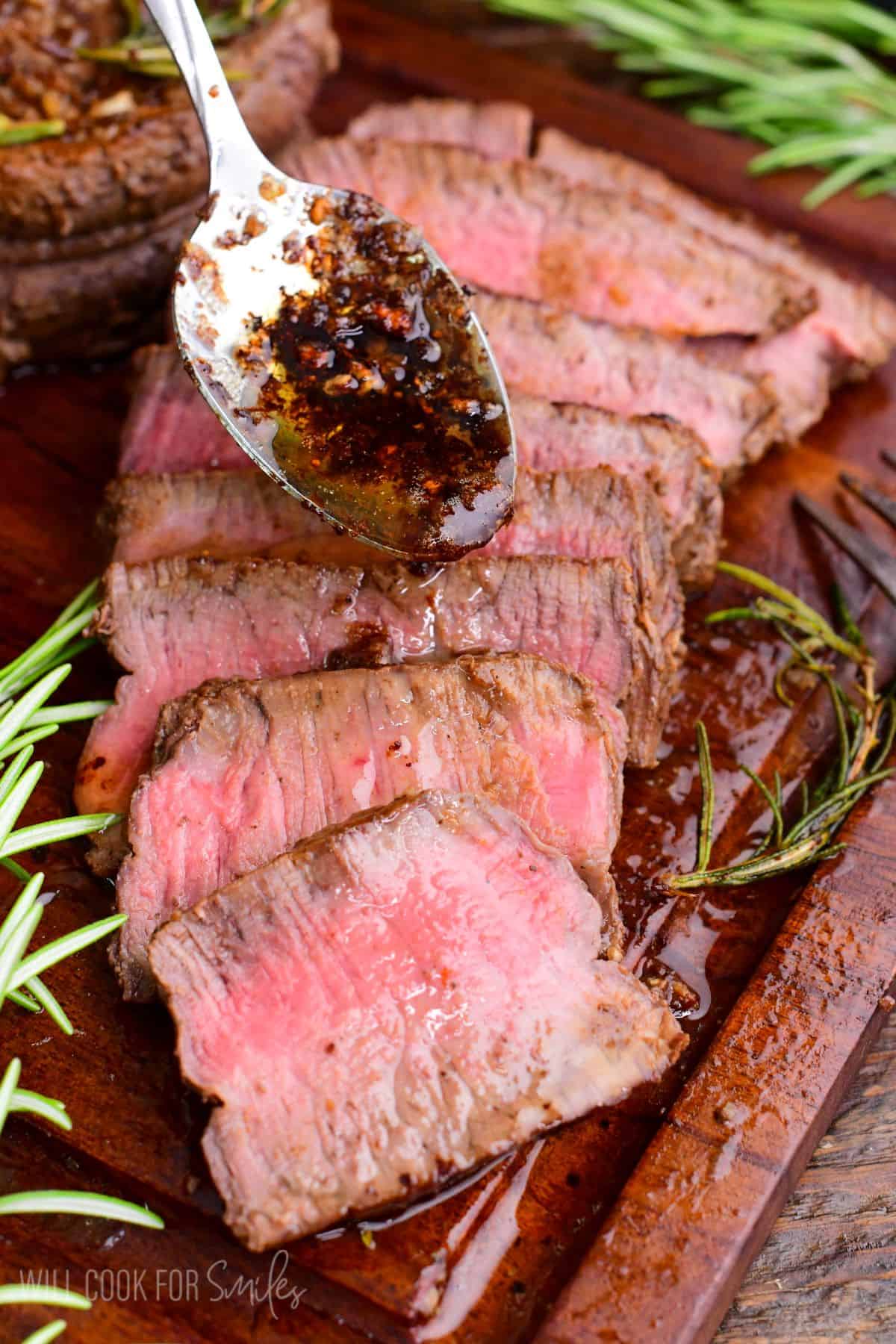
Quick Overview: Pan Seared Filet Mignon Recipe
- ⏱️ Prep time: 10 minutes
- 🍳 Cook time: 15 minutes
- 🕒 Total time: 35 minutes (including 10 minutes rest)
- 👥 Servings: 4
- 📊 Calories: ~644 kcal per serving
- 🔥 Cook method: Sear in a hot cast iron
- 👩🍳 Flavor profile: Deeply savory with a rich, buttery crust and a hint of optional bourbon. Tastes like your favorite steakhouse, made in your own kitchen.
- ⭐ Difficulty: Intermediate. The technique is straightforward, but a leave-in thermometer is your best friend here.
- 🥩What it is: Stovetop-only pan seared filet mignon with a butter baste.
- ✅Why it works: Cast iron delivers a deep, even crust; butter basting adds richness while you finish the steak to your exact temperature.
- 🔪Key equipment: Cast iron skillet, leave-in meat thermometer, kitchen twine.
- 🌡️Doneness target: Medium-rare (130-135°F) or medium (135-140°F).
Summarize & Save This Post:
Table of Contents
What You’ll Need To Cook This Filet Mignon Steak
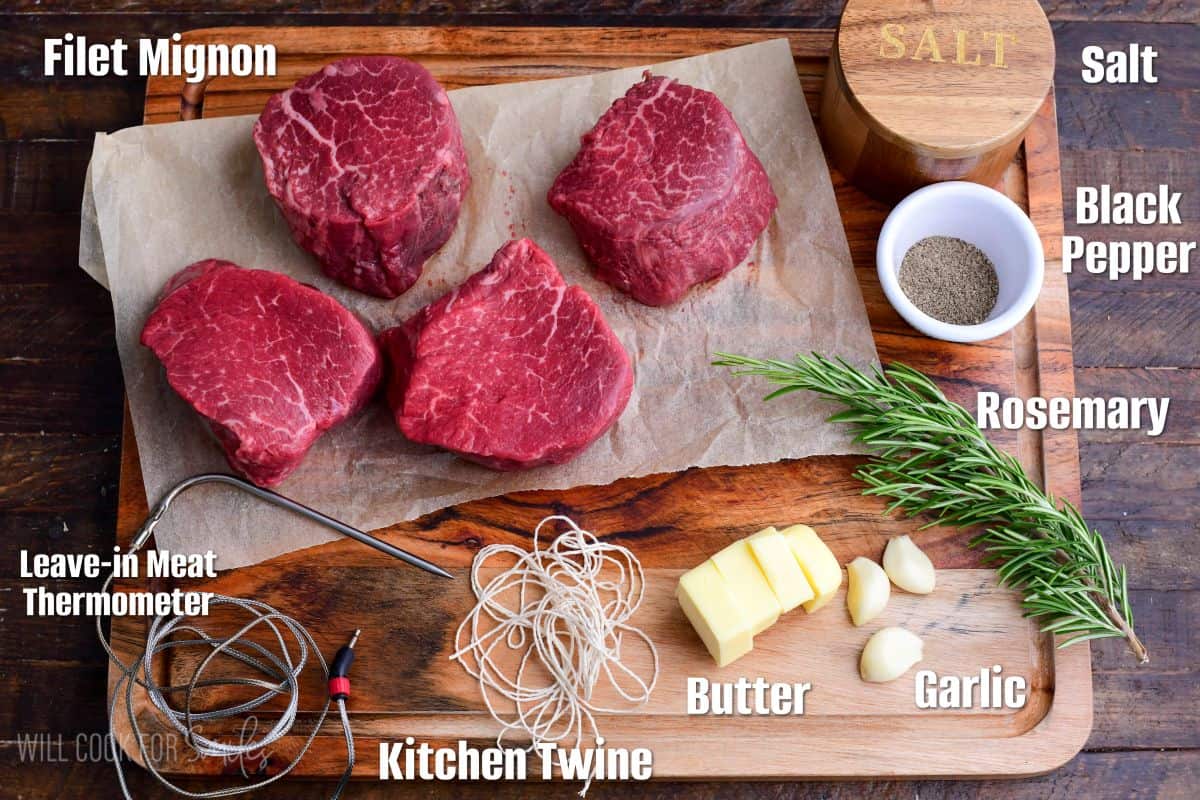
- Filet mignon steaks: Look for steaks that are about 1½ inches thick (can be 2 or even 2½ and will take a bit longer), 6-9 oz each is a good estimate. If you don’t see those on the shelf, ask the butcher for a better cut. If you’re paying premiere price, don’t be scared to ask! You can also ask the butcher to tie them if you’d rather skip that step at home.
- Kosher coarse salt: Kosher salt is the right choice for steak. The coarser grind adheres well and seasons evenly. Table salt is too fine, contains additives, and can over-season the surface. Through my years of of cooking steaks, I’ve tested with multiple seasoning combinations and kept coming back to salt and pepper only on a good cut of steak.
- Avocado oil: You need a high smoke point, neutral oil for the initial sear. Other options include canola oil or safflower oil.
- Unsalted butter: The butter is your baste, so you want to control the salt level yourself. European-style high-fat butter will give you a richer baste, but standard unsalted works well.
- Bourbon: Optional, but really good. Bourbon will work great to deglaze the pan as well as add another layer of flavor. You can swap in beef broth if you don’t want the bourbon.
- Garlic and rosemary: These go in with the butter and infuse it as you baste. They’re aromatics, not seasoning for the crust, so pressed garlic works better here than sliced. More surface area releasing into the butter.
When Is The Best Time To Season Steaks?
You have two good windows for seasoning filet mignon:
- right before it hits the pan,
- or 40-50 minutes before cooking. If you season and let it sit at room temperature for 40-50 minutes, the salt draws out a little surface moisture, then reabsorbs it, seasoning the meat more deeply.
- This is a simplified version of dry brined steak. If you want to go further, you can dry brine the steaks up to 2 days ahead in the refrigerator on a wire rack fitted baking dish uncovered. The crust you get from that method is exceptional.
How To Make Pan Seared Filet Mignon Steaks
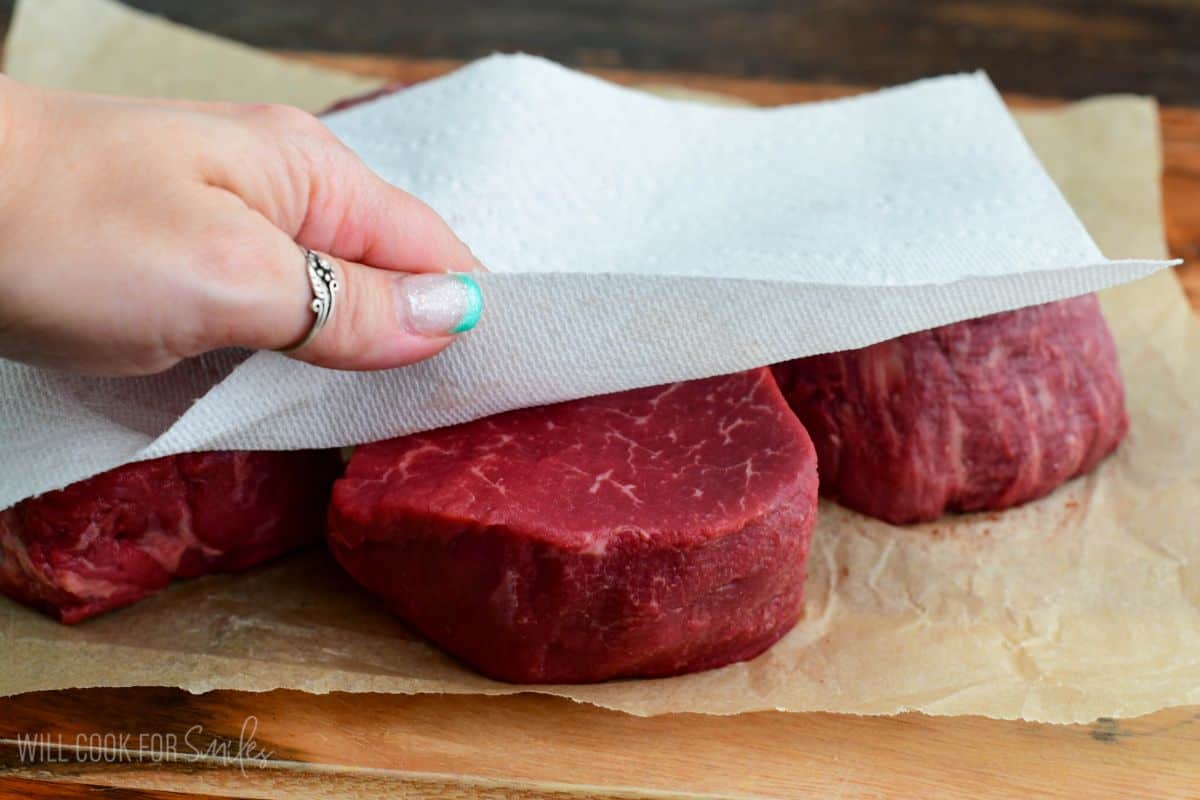
Pull the steaks out of the refrigerator and out of the packaging before you do anything else. Let them start coming toward room temperature while you gather tools and prep everything.
It’s important to pat the steaks dry before adding the seasoning, you don’t want any moisture on the surface or it will hinder the sear.
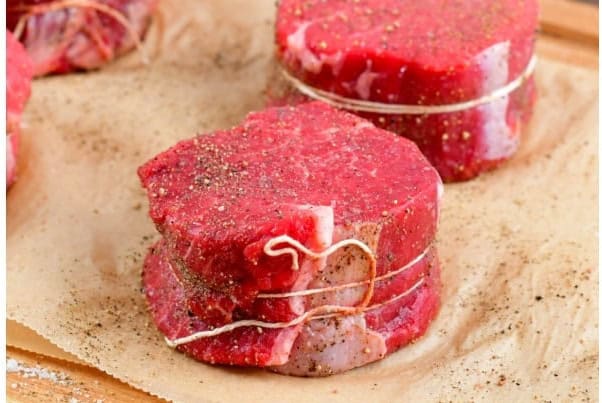
Season each filet on all sides: top, bottom, and all the way around the edges. Filet mignon is tall, and that side crust matters.
Tie a piece of kitchen twine around the middle of each steak. It should be snug but not so tight that it cut into the meat. If you have a leave-in thermometer, insert it through the side of the thinnest steak, probe pointing toward the center. That’s the steak that will hit temperature first, so it’s your early warning system.
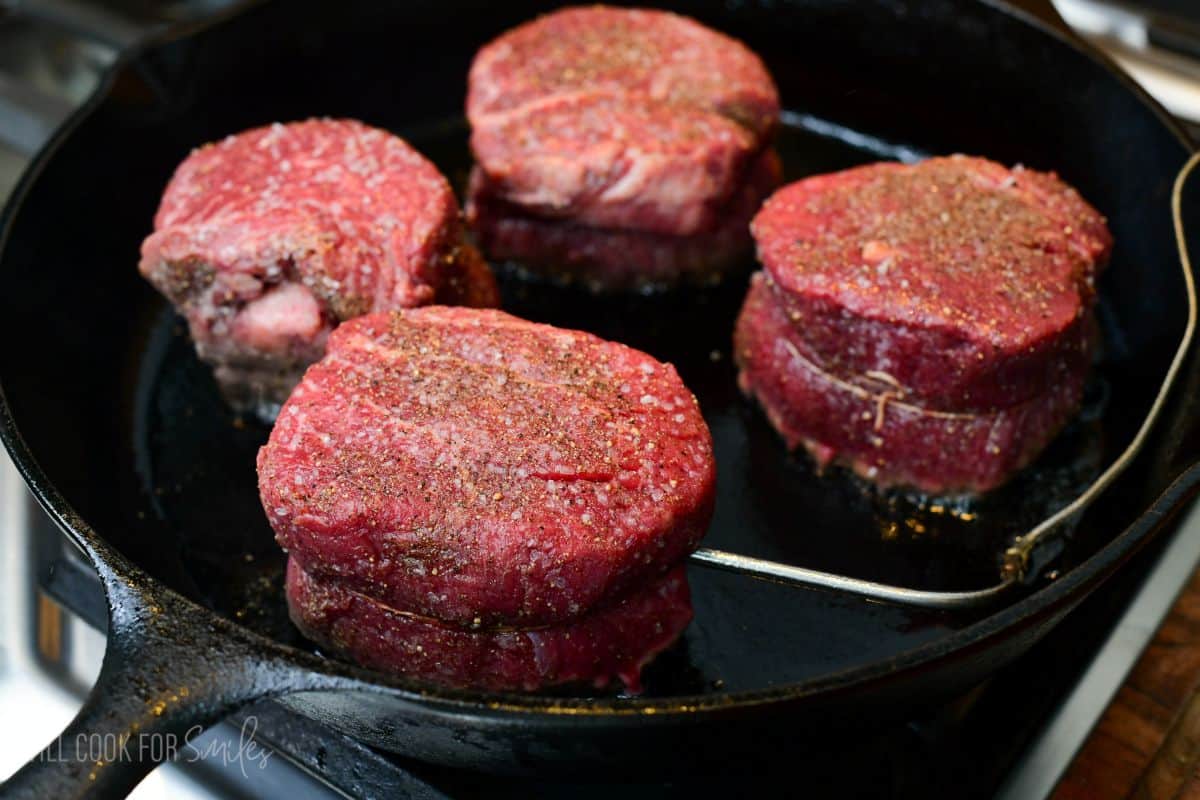
Preheat your cast iron skillet over medium heat for a full 3-5 minutes. This step is not optional. A properly preheated pan is the difference between a deep brown sear and a pale, steamed surface. You want the pan hot enough that the steaks start sizzling immediately when they go in.
Add the oil and then place the steaks in the pan. Let them sear undisturbed for about 1½ minutes, then flip. Another 1½ minutes on that side, then lower the heat so crust doesn’t burn while center cooks.
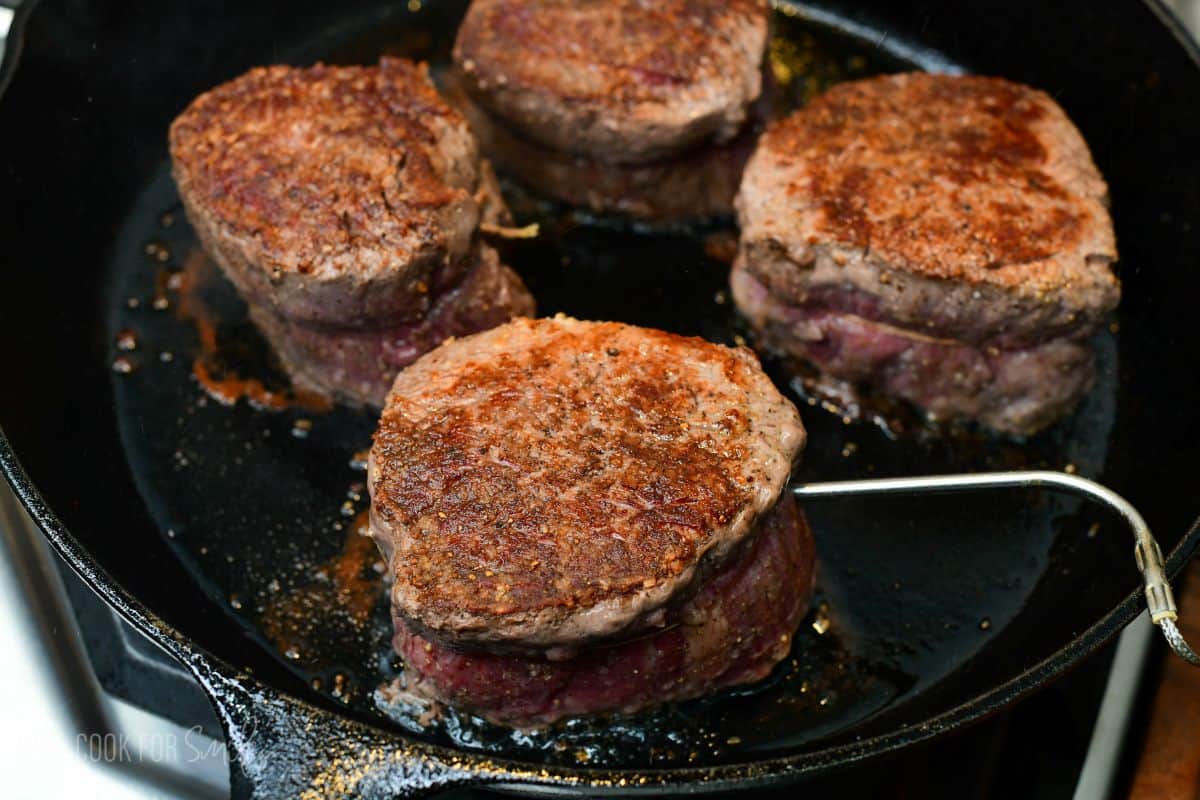
(Timer helps!) Now cook for about 2 minutes, flip again, and cook another 2 minutes. Keep going in this flip pattern until the thermometer reads about 15°F below your target temperature.
(If you don’t have a leave-in thermometer, pick up the steak with metal tongs and insert a handheld instant-read through the side toward the center.)
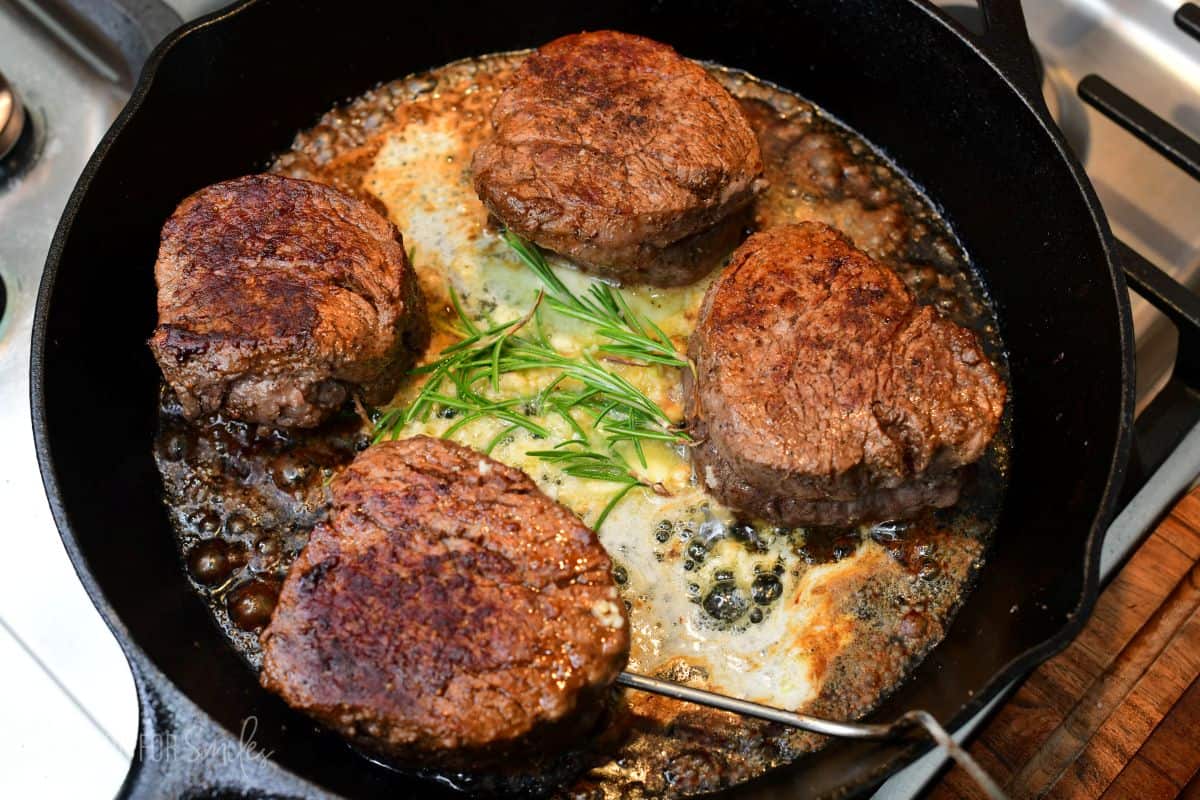
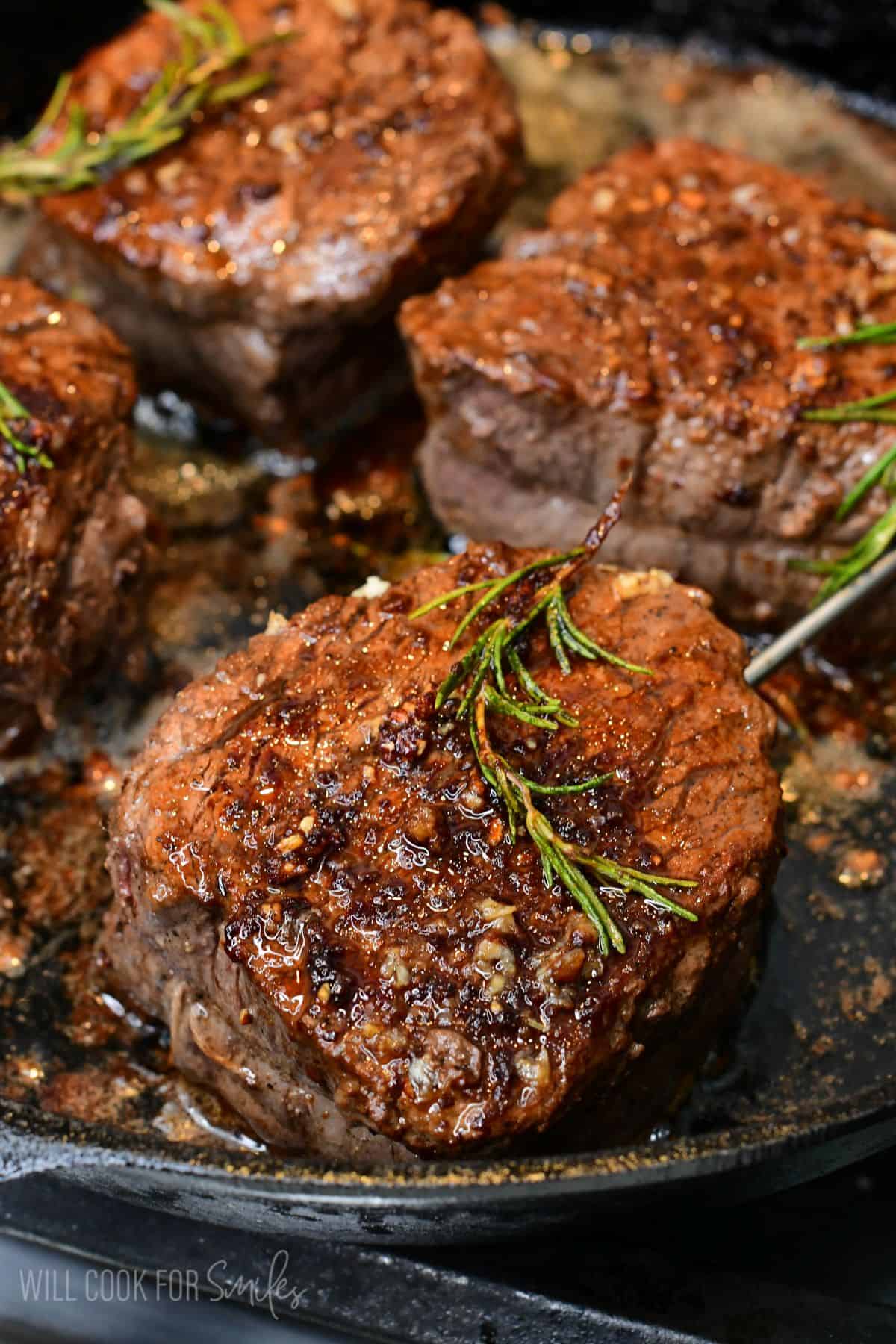
When the steaks are 15°F from your target, pour the bourbon into the pan. It will bubble up and steam. That’s normal. Let it sizzle for a few seconds to cook off the sharpness. Add the butter, pressed garlic, and rosemary. Don’t add garlic and butter too soon, you don’t want it to burn. It’s important to add it towards the end.
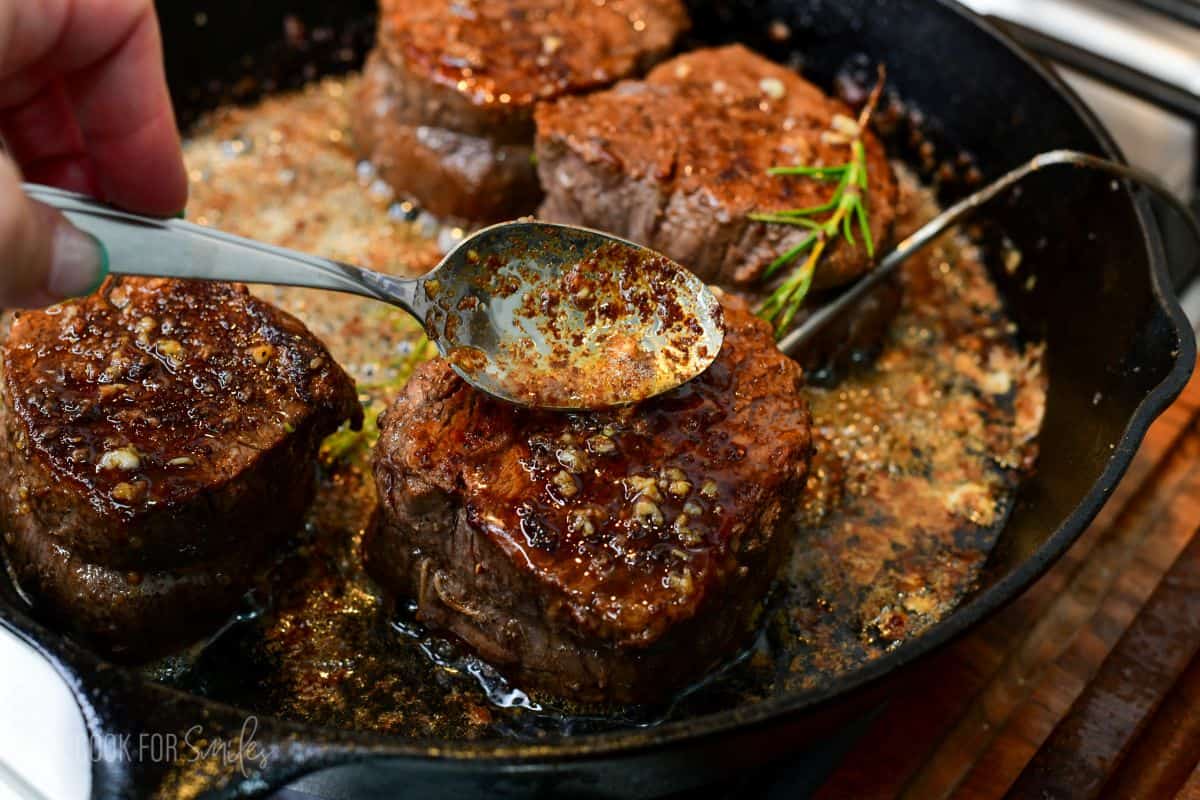
Gently shake the pan to help the butter melt and mix with the pan drippings. Then use a large spoon to continuously pour that butter over the tops of the steaks as they finish cooking. Tilt the pan slightly if you need to collect the butter in one spot. This basting process takes just a minute or two.
The moment the steaks hit your target temperature, get them off the heat and onto a platter. Cut off the twine immediately so it doesn’t keep compressing the meat.
Let the steaks rest for 5-10 minutes, completely undisturbed. Do not cut into them early. Resting lets the muscle fibers relax and the juices redistribute. If you cut too soon, all those juices run out onto the cutting board leaving the steak dry.
Steak Temperature Guide
These are the internal temps to pull the steak from heat, accounting for a few degrees of carryover:
- Rare: 120-125°F
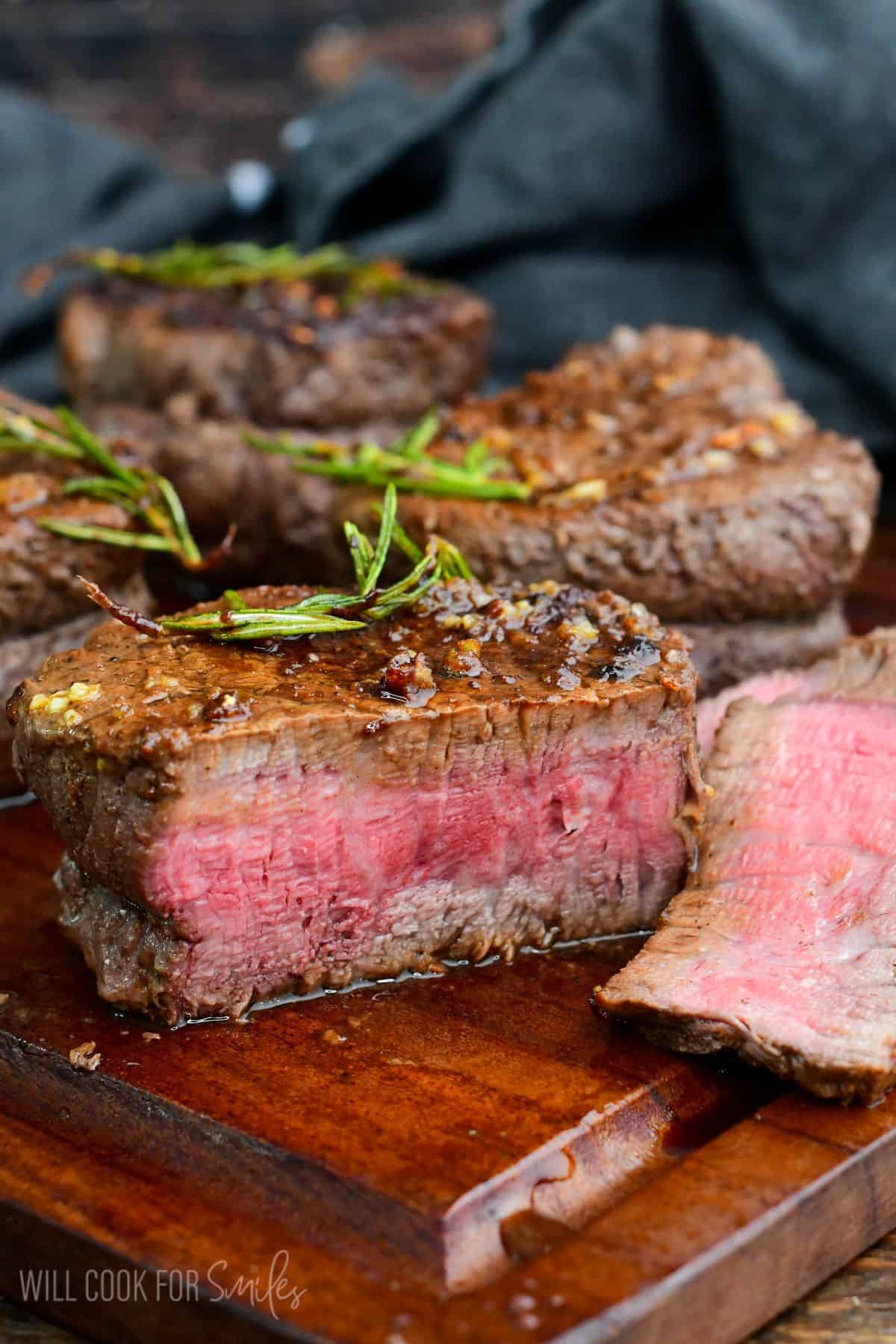
- Medium-rare: 130-135°F
- Medium: 135-140°F
- Medium-rare is the top recommended and my personal preferred temperature for filet mignon. The texture is the softest and most buttery at this temperature. Because filet is such a lean cut, cooking it past medium starts to work against you. Without enough fat marbling, the muscle fibers tighten and the steak dries out.
Expert Tips
- Make sure you get center-cut filets. The center cut is the thicker, most uniform part of the tenderloin and is what proper filet mignon should be. End cuts taper on one side and cook unevenly so one edge will be done long before the center is.
- Check for silverskin. If you notice any thin, silvery connective tissue on your filet mignon, that’s silver skin and should be taken off. It doesn’t break down with heat and will cause the steak to tighten and curl in the pan. If you need help with it, look over my guide to break down a whole beef tenderloin.
- The fond is flavor. Those dark bits stuck to the bottom of the pan after searing are concentrated beef flavor. The bourbon deglazes them and pulls them into the baste. Don’t skip that step if you want the richest possible results.
How To Store Leftover Filet Mignon
- Store leftover filet mignon in an airtight container in the refrigerator for up to 3-4 days.
- To reheat, use the stovetop method: preheat a pan over medium-low, then warm the steak just until the center is no longer cold. The goal is to heat through without cooking further. I personally like to slice my steaks when reheating, sliced steak reheats faster and more evenly than whole.
What To Serve With Filet Mignon
A steak this good deserves sides that let it stay the center of attention. Here are some favorites:
- Creamy mashed potatoes or my creamy and cheesy scalloped potatoes
- Try it with my sautéed mushrooms recipe or roasted mushrooms recipe
- Italian roasted asparagus or sauteed green beans with bacon
- A simple arugula salad with balsamic vinaigrette
Common Mistakes When Cooking Filet Mignon (and Avoiding Them)
Two most common causes: overcooked past medium, or not rested long enough. Either one causes the muscle fibers to tighten and squeeze out the juices. Pull the steak earlier than you think you need to and always rest it a full 5-10 minutes before cutting.
Gray meat means the steak was overcooked. This usually happens because the pan wasn’t hot enough and the steak steamed instead of seared, or the cook time ran too long. You need a genuinely hot pan before the steaks go in.
Three most likely reasons: the pan wasn’t preheated long enough, the steaks weren’t patted dry before cooking, or they were moved too soon. The sear starts the moment the meat hits the pan. Any moisture on the surface creates steam and kills the crust. Let the steaks sit undisturbed for the full sear time before flipping.
Pan Seared Filet Mignon Recipe FAQs
They come from the same muscle. Beef tenderloin is the whole muscle, and filet mignon is what you get when you slice it into individual steaks. At the butcher counter the names are often used interchangeably. If you want to cook the whole thing for a crowd, check out my beef tenderloin roast.
Because there isn’t much of it. Each cow only yields about 4-6 pounds of tenderloin total, and filet mignon comes from the smallest, most tender section. High demand and very limited supply drives the price.
I use both, but at different stages. Oil goes in first for the sear since butter burns at high heat. Once the bourbon deglaze brings the heat down, that’s when I add the butter. It adds a richness that oil can’t match at that stage.
I always recommend medium-rare (130-135°F). Because filet has so little marbling, there’s nothing to keep it moist if you push it past medium.
Yes. Without the twine, loose edges cook faster than the center and you get uneven doneness. It takes 30 seconds, or just ask your butcher to do it for you.
A heavy stainless steel or carbon steel pan both work well. Just avoid non-stick. It can’t reach the temperatures you need for a real sear.
It all depends on the size of the pan. When steaks are too close, the temperature drops and they steam instead of sear. Make sure there is a little room around each steak.
No, steaks should be thawed completely first. By the time the center reaches temperature, the outside will be overcooked. Thaw overnight in the refrigerator and let the steaks come to room temperature before cooking.
More Steak Recipes to Try
If you want to take the flavor profile of this steak further, try it with my coffee steak rub approach or look at my coffee rubbed filet mignon post for a bolder crust variation. For a full steak dinner game plan, browse my steak dinner ideas.
- Pan seared steak for a broader guide to stovetop steak techniques.
- The Best Grilled steak for outdoor season.
- Steak Diane recipe is perfect special occasion steak with sauce.
- Pepper crusted beef tenderloin roast for when you’re feeding a crowd
- Beef tenderloin with mushrooms and red wine sauce is a great holiday main course.
DID YOU MAKE THIS RECIPE? PLEASE leave a 🌟 star rating! Let me know how you liked it by leaving the 📝 comment below or share and tag me on social media @willcookforsmiles. DON’T FORGET to subscribe to my newsletter!
Pan Seared Filet Mignon
Equipment
- Kitchen twine
- Meat thermometer – preferably leave-in
Ingredients
- 2.3 lbs 4 – filet mignon steaks that a about 1 1/2 inches thick 6-9 oz each
- 1 Tbsp kosher coarse salt more or less to taste
- 1.5 tsp black pepper more or less to taste
- 2 Tbsp avocado oil or another high heat, neutral oil
- 4-5 Tbsp unsalted butter
- 3 garlic cloves
- 1-2 rosemary sprigs
- 1/4 cup bourbon optional – use beef stock for alcohol free option
Instructions
When To Season Steaks:
- This is a big question and you have two best options: right before adding to the pan or 40-50 minutes before cooking. If you plan ahead: you can even dry brine the steaks up to 2 days before cooking. (Follow instructions of that in my post or my dry brined steaks guide.)
Prepare the Filet Mignon Steaks:
- Take the steaks out of the refrigerator and out of the package and let them rest while you gather remaining ingredients and tools. Pre-cut your twine pieces.Food safety tip: remember to always pour some seasoning out into a separate small dish when working with raw meats. That way you don't touch anything but that dish and wash it right after seasoning the meat.
- Pat the steaks dry with a paper towel on all the sides.
- Season each filet with salt and pepper on all the sides. Make sure to get top, bottom, and all around the side.
- Tie a kitchen twine around the middle of each filet. Make sure it's tight but not too tight so it's cutting into the meat. This helps keep the filets uniform and cooking evenly.
- If using a leave-in meat thermometer, insert it into the thinnest filet (that way you know when it will be done first and can pull it off first). Insert the probe in the middle, through the side, to wards the center.
Cooking Filet Mignon in the Pan:
- Make sure to preheat the cooking pan (I prefer a cast iron skillet) over medium heat for several minutes. (I usually give it good 3-5 minutes).
- Add oil to the pan and add the steaks. Let them sear for about a minute and a half and then flip. Let them sear another minute and a half and lower the heat some.
- Cook the steaks for about 2 minutes and then flip again. Cook another 2 minutes on that side. Reheat until the steaks are about 15℉ away from your desired temperature. Note: if you don't have a leave-in thermometer, pick up the steak with metal tongs and check the temperature used a hand-held meat thermometer, inserting the probe through the side.
- When the steaks are about 15℉ from your desired temperature, deglaze the pan with bourbon if using. Add butter, pressed garlic, and rosemary sprigs to the pan. Gently shake the pan back and forth to mix. Let the butter melt and use a large soup to spoon the butter over the steaks while they finish cooking.
Rest the Steaks (Important!)
- As soon as the steaks reach your desired temperature, take them out of the pan and onto a platter or a cutting board with grooved to catch the juices.
- Cut off the twine and let the steaks rest for about 5-10 minutes undisturbed.
- Don't discard the pan drippings! You can spoon it over the steaks or make a quick pan sauce.
Video
Notes
- Steak temperature guide for filet mignon: medium-rare and medium are preferred temperatures for filet mignon.
- Rare: 120-125°F
- Medium-rare: 130-135°F
- Medium: 135-140°F
- Pan sauce options: The bourbon butter pan sauce in this recipe is delicious on its own, but you can also serve filet mignon with red wine steak sauce, peppercorn sauce, mushroom steak sauce, best cream sauce for steaks, or steak Diane sauce for a steakhouse-style finish.
- Reheating guide: I’ve tested numerous ways to reheat steaks and the best way I found is in the pan. Preheat the pan first to medium-low and then reheat a whole or sliced steak JUST until warmed in the center. The goal is not to cook but to just heat through.
Nutrition
Would you like to save this recipe?
Categories:
Beef Recipes, Dinner Recipes, Father's Day Recipe Ideas, Gluten Free Recipes, Mother's Day Recipe Ideas, Steak Dinner Ideas, Valentine's Day,All images and text ©Lyubov Brooke for ©Will Cook For Smiles. Please do not use my images without prior permission. If using my posts in collections and features, please link back to this post for the recipe.
Disclaimer: Nutrition information shown is not guaranteed to be 100% accurate as most ingredients and brands have variations.