
Pan Seared Steak Recipe

This post may contain affiliate links.
After almost 20 years of cooking steaks in the restaurants and at home, I have a wealth of knowledge to share. I broke down lots of tips and things to know and tried to make it as quick and easy as possible.
Why Is My Pan Seared Steak So Good!
- Cooked entirely on the stovetop in one skillet, no oven needed.
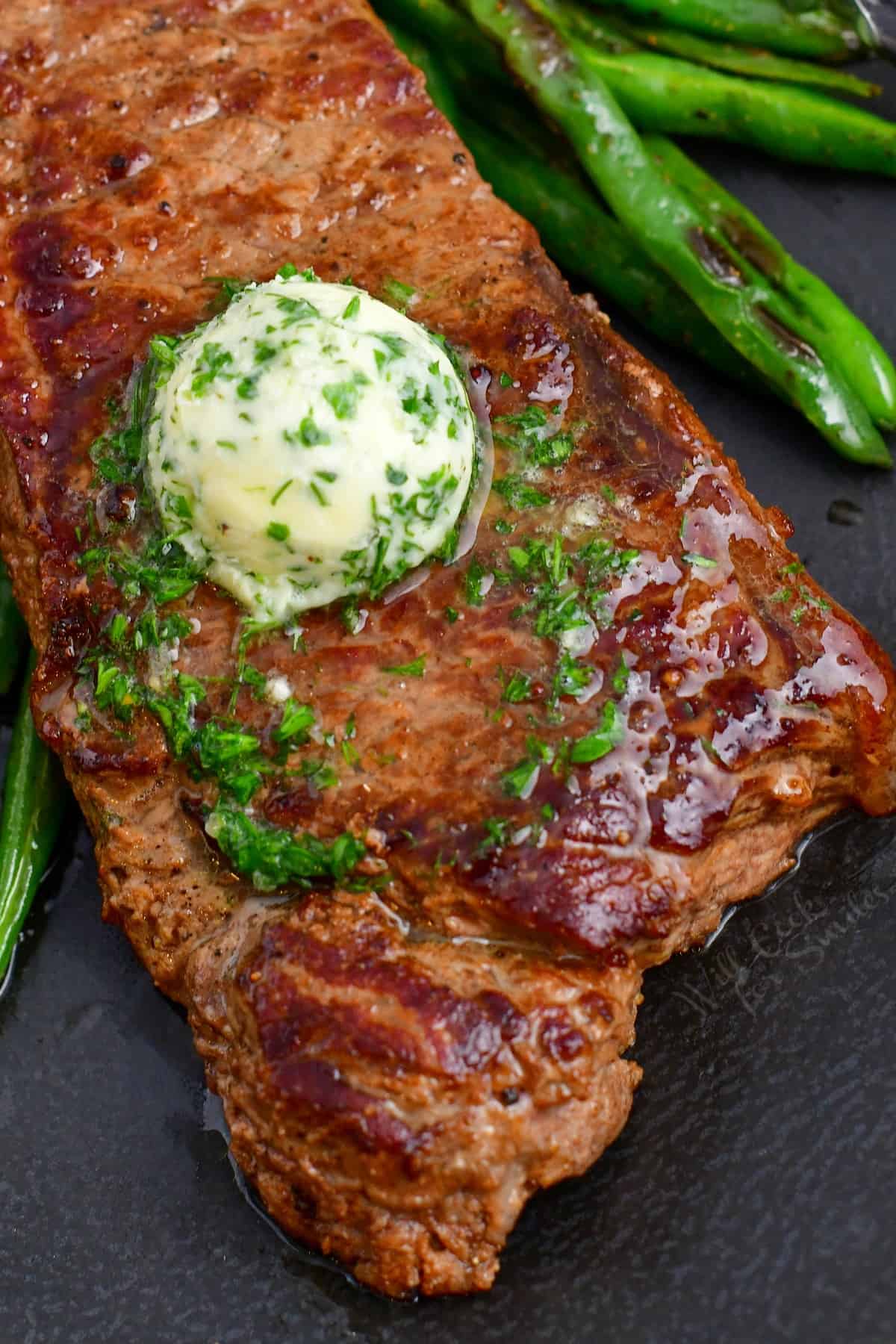
- Compound garlic butter with fresh herbs melts right into the crust as the steak rests.
- Technique-driven method built on 20 years of cooking steaks in restaurants and at home.
- Proper resting before and after cooking means every bite is juicy, never squeezed out.
- Works beautifully with any premium cut, from New York strip to filet mignon to ribeye.
Table of Contents
Guide Before Buying Steaks: Best Steak To Cook At Home
Pan searing works well with most tender cuts. Here is what to look for:
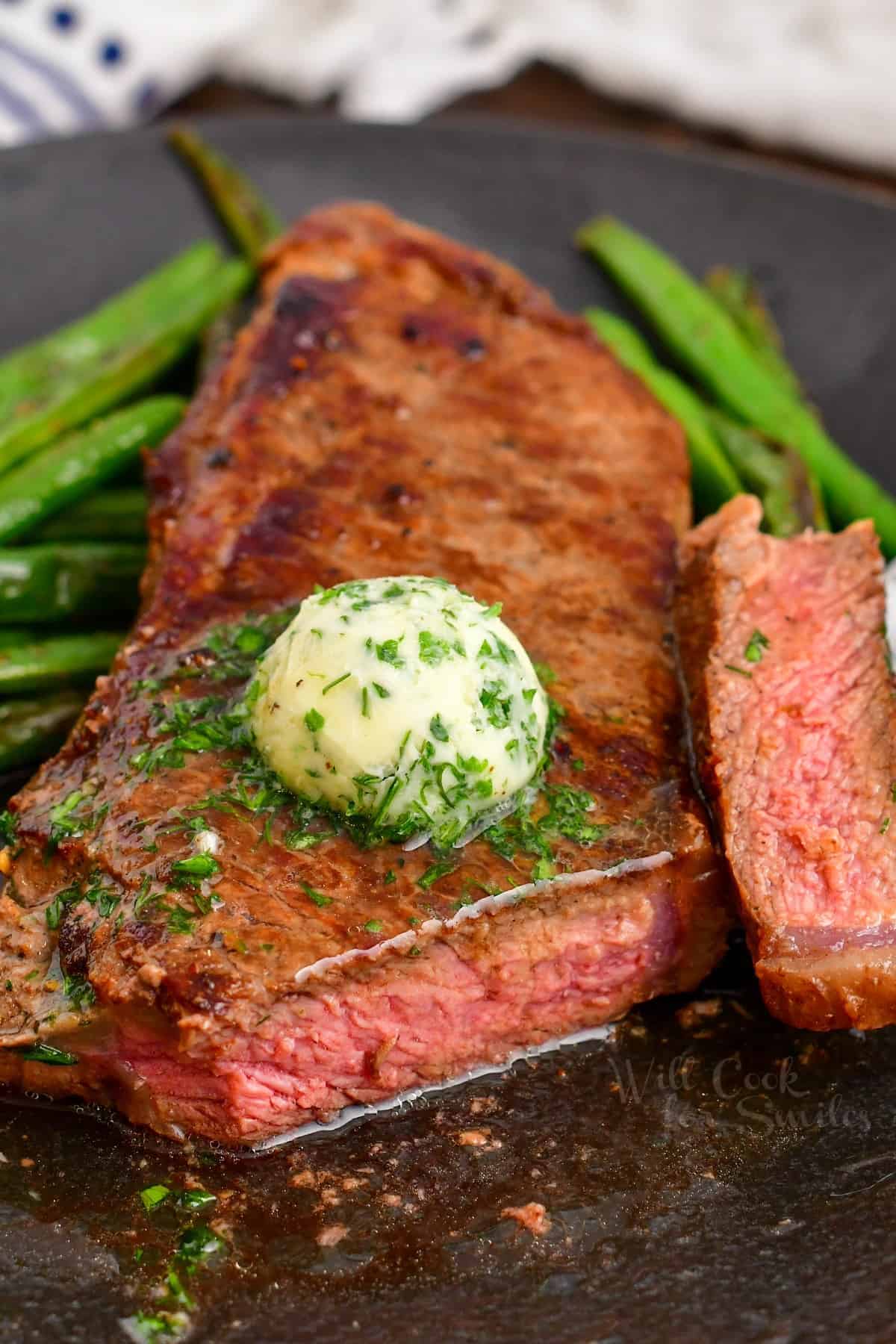
- New York strip is my most-used cut for pan searing. It is consistently tender, usually a uniform thickness (which makes cooking several at once much easier), and often the most budget-friendly of the premium options. Just buy from a source you trust since quality varies.
- Ribeye is the cut for maximum flavor and juiciness. All that marbling bastes the steak from the inside as it cooks. When selecting a ribeye, look for fine webs of fat distributed throughout the slice rather than thick isolated pockets. Learn how to cook it to perfection with this ribeye steak with cream sauce.
- Filet mignon is the most tender cut on the animal and has a clean, smooth beef flavor. Because it is lean, it benefits from a few extra prep steps. Check out my detailed guide on how to cook filet mignon for everything you need to know. If you want to take it even further, my coffee rubbed filet mignon is something special.
- Top sirloin is the value pick here. It is flavorful and just lean enough to stay out of the fatty-cut category without sacrificing too much juiciness. Always read the label carefully or confirm with the butcher since top sirloin is noticeably more tender than bottom sirloin.
- Strip steak is lean and tender with a clean beef flavor. Less marbling means less richness, but it still cooks beautifully in a screaming hot cast iron pan.
EXPERT TIP: Regardless of cut, aim for steaks that are 1 to 1.5 inches thick. Thinner steaks cook through before a proper crust has time to develop. Ask the butcher if what is on the shelf is thinner than that.
Ingredient Notes When Cooking Pan Seared Steaks
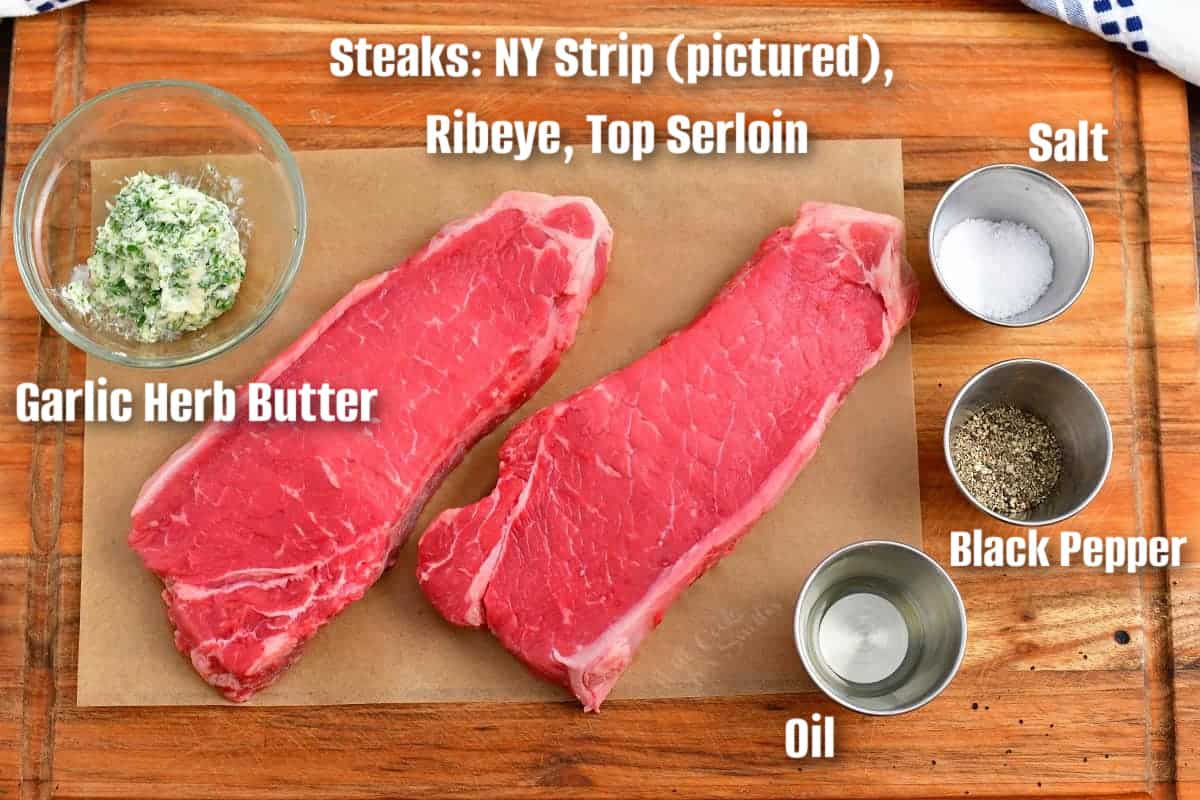
(See recipe card below for full amounts.)
- Steaks – NY strip, ribeye, top sirloin, or filet mignon. Try to get prime or choice grade. You really do get what you pay for with beef.
- Avocado oil – Use a neutral oil with a high smoke point for the sear. Avocado oil is my first choice. Vegetable oil or canola oil both work. Do not use olive oil or butter for the initial sear since they will burn at the temperature you need.
- Kosher coarse salt – The large crystals adhere to the surface of the meat and help build the crust. I use this over table salt for all steaks.
- Black pepper – Freshly cracked. Grind it right before you season.
- For the compound garlic butter: unsalted butter (soften it first), fresh garlic, fresh parsley, fresh dill, and a pinch of salt.
How To Make Pan Seared Steaks: Step Guide and Tips
- Choose well-marbled beef. You want lots of fine marbling distributed evenly throughout the slice, not thick isolated fat lines. The fat in well-marbled beef melts during the sear and keeps the interior juicy.
- Rest the steak before cooking. Take the steak out of the refrigerator 30 to 45 minutes before it hits the pan. Cold meat seizes when it meets high heat, which means uneven cooking and a tougher texture. This step takes almost no effort and makes a real difference.
- Pat it completely dry. Use paper towels to dry every surface of the steak right before seasoning. Moisture on the surface creates steam, which works against the sear you are trying to build.
- Season well. Season your steaks generously with salt and pepper on all sides, try to get the sides as well. (For even deeper flavor, try dry brining your steaks 12 to 24 hours ahead. I have a whole post about how to dry brine steaks.)
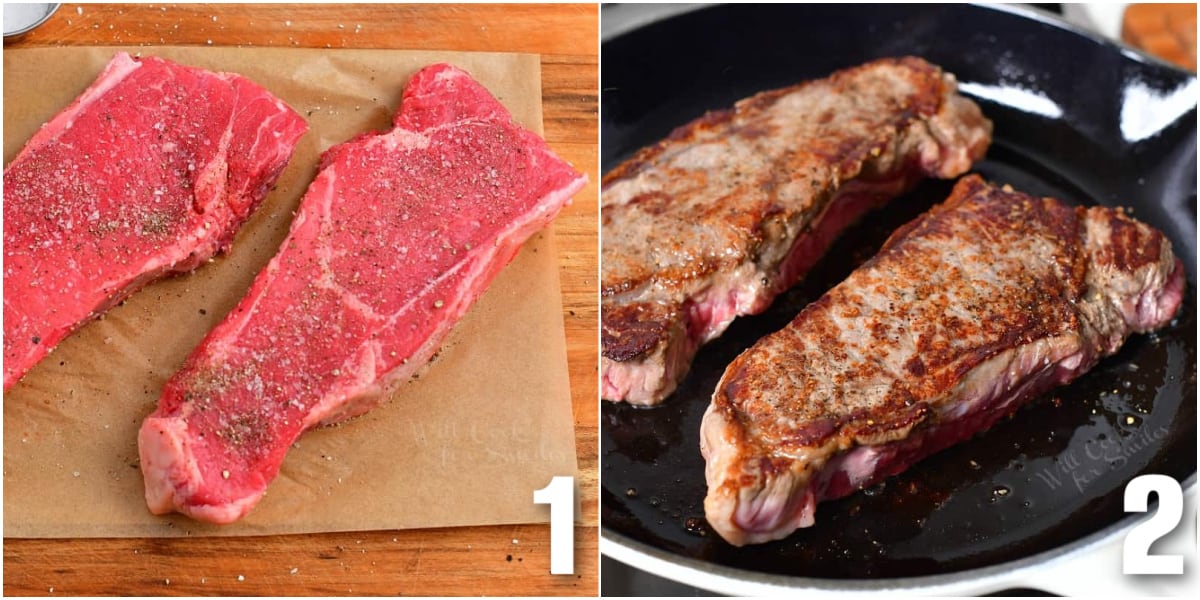
- Use a cast iron skillet. Cast iron holds heat better than any other pan and distributes it evenly across the surface. When the steak goes in, the pan temperature barely drops. That consistent heat is what builds a deep, caramelized crust.
- Get the pan hot first. Preheat the empty cast iron over medium heat for several minutes before adding oil. The pan should be very hot before the steaks go in.
- Do not move the steaks much. Once the steak is in the pan, leave it alone. Moving it prevents the crust from forming properly. You will know it is ready to flip when it releases from the pan cleanly without sticking.
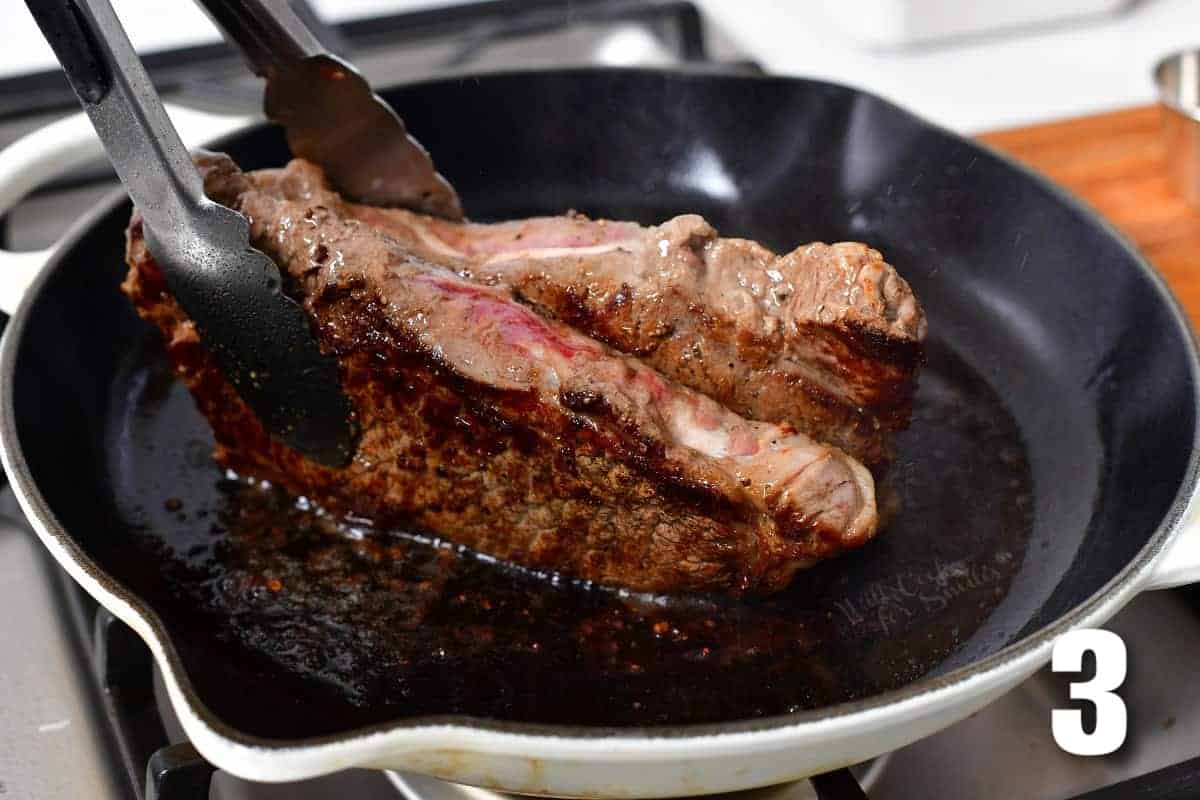
- Render the fat cap. If your steaks have a thick strip of fat along one side, use tongs to hold the steaks upright on that edge for a minute or two before finishing. Rendering the fat down adds flavor to the pan and makes that edge worth eating.
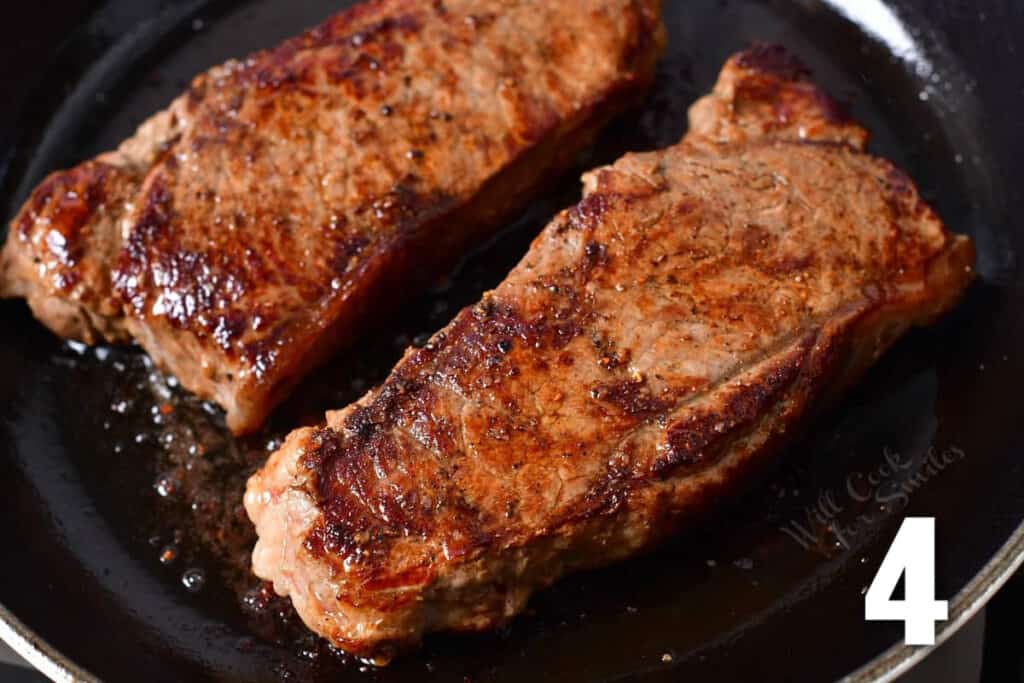
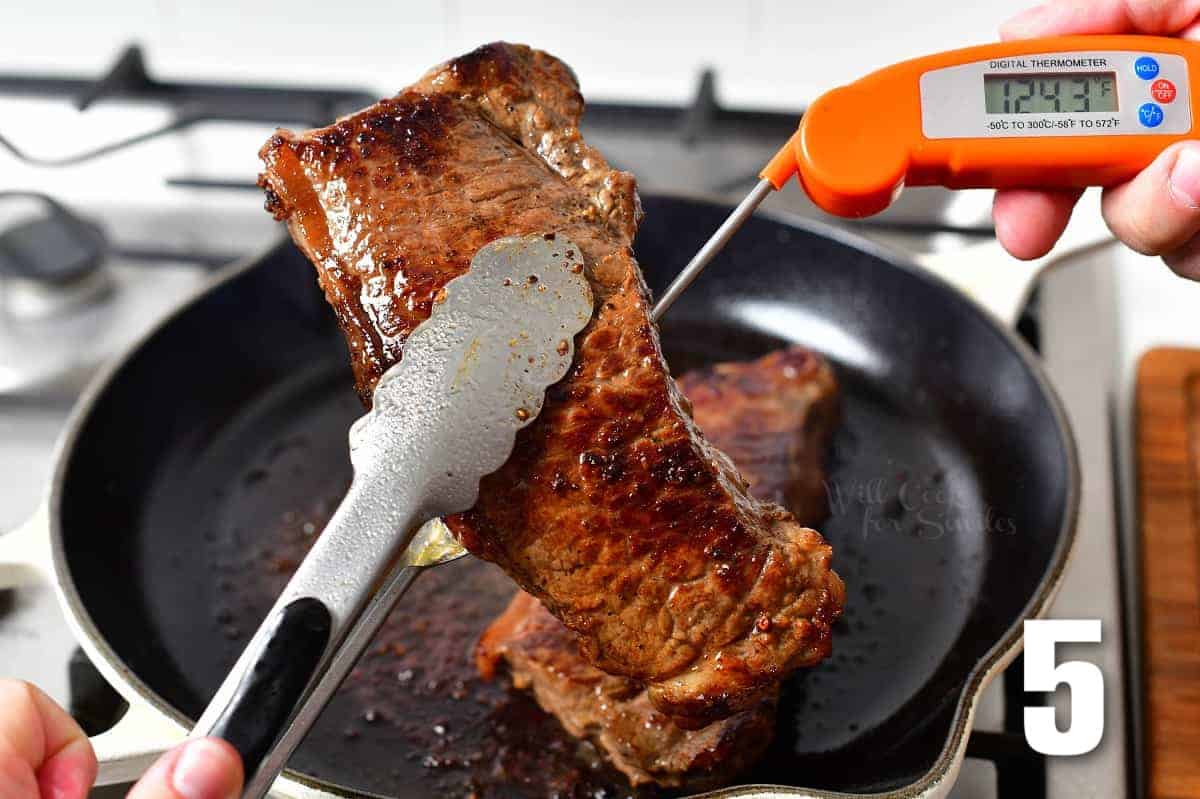
- Use a meat thermometer. There is no reliable way to cook steak to a consistent doneness by time alone. Every steak is different in size, thickness, and fat content. An instant-read thermometer inserted through the side into the thickest part is the only way to know exactly where you are.
- To take the temperate, lift it out of the skillet with a pair of tongs and insert the probe into the thickest part, through the side, towards the middle. This makes reaching the center easier and ensures that the reading doesn’t include the heat from the pan as well.
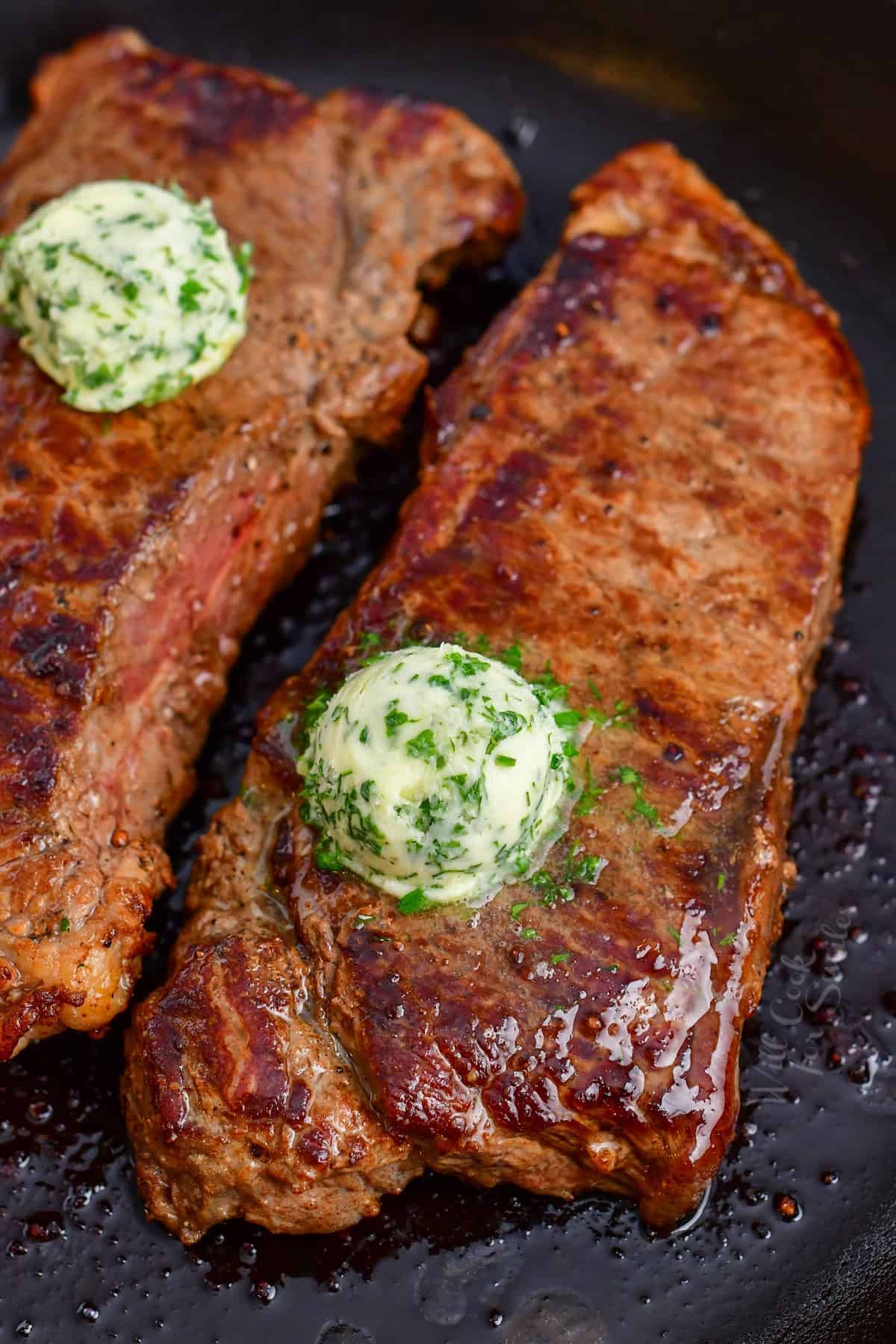
- Rest after cooking (one of most important steps!) Pull the steak when it is 5 degrees below your target temperature since it will continue cooking as it rests. Place on a platter or grooved cutting board and rest about 5-10 minutes. This good time to add compound butter. While the steaks rest, the juices redistribute through the meat. (Save the run off juices and add to sliced steaks.)
- Slice against the grain. Always slice across the muscle fibers, not with them. Cutting with the grain leaves you with long, chewy strands. Cutting against it gives you tender, clean bites.
Why Measure Steak Temperature
- Unfortunately, you can’t set exact time on a timer when it comes to cooking steaks. Every cut of beef is different, has a different amount of fat, and varies in size. For these reasons, steaks can take a different amount of time to cook. Taking the temperature of the steak is the most reliable way to know when it’s cooked the way you like it.
- Although medium-rare is most often recommended for good quality steaks, you can use the temperature to make sure it’s cooked exactly how you like.
- Time can vary for every steak, it could take as fast as 5-6 minutes or as long as 15 minutes. It depends on desired temperature and the steak itself, like thickness, marbling, and cut.
Steak Doneness Temperature Guide
| Doneness | Pull Temperature | Final Temperature |
| Rare | 120-125°F | 125-130°F |
| Medium-Rare | 130-135°F | 135-140°F |
| Medium | 140-145°F | 145-150°F |
| Medium-Well | 145-150°F | 150-155°F |
| Well Done | 155-160°F | 160-165°F |
Sides and Sauces That Go Well With Steaks
Vegetables: they add a nice balance to the richness of the pan seared steak and compound butter. Roast some roasted green beans, roasted asparagus, or broccoli. Other classic sides are sautéed mushrooms and haricot verts (French green beans)!
Potatoes: Mashed potatoes is the most classic way but think outside the masher, and try other comforting options like hashbrown casserole or loaded cheesy potatoes or roasted options like oven roasted potatoes and roasted fingerling potatoes.
Sauces: When you do want a nice steak sauce, you have several options like red wine steak sauce, a delicious creamy steak sauce, the classic mushroom steak sauce, and our favorite peppercorn sauce recipe. All are super fast and simple to cook right in the skillet after you take out the steaks.
Pan Seared Steaks Recipe FAQs
Yes. A heavy-bottomed stainless steel skillet will work. Cast iron is preferred because it holds and distributes heat more evenly, which gives you a more consistent crust, but a thick stainless pan can get the job done.
No. A good quality steak with salt, pepper, and proper technique does not need a marinade. Marinades are better suited for tougher, leaner cuts, think carne asada steak.
You can, but do not crowd the pan. Crowding drops the pan temperature and creates steam instead of a sear. If you need to cook several steaks, I recommend grilling steaks instead.
Yes, and I recommend it. This is called butter basting. After the initial sear on both sides, during the last few minutes of cooking, reduce the heat to medium, add butter and smashed garlic to the pan, tilt the pan so the butter pools, and use a spoon to continuously baste the steak as it finishes. It adds a nutty, deeply savory layer of flavor to the crust.
Some More Beef Recipes To Try
DID YOU MAKE THIS RECIPE? PLEASE leave a 🌟 star rating! Let me know how you liked it by leaving the 📝 comment below or share and tag me on social media @willcookforsmiles. DON’T FORGET to subscribe to my newsletter!
Pan Seared Steak Recipe
Ingredients
- 2 NY strip steaks that are about 1-inch thick or ribeye steaks, sirloins, filet mignon, or any other favorite steaks
- 1-2 tbsp avocado oil or vegetable oil
- coarse kosher salt
- fresh cracked black pepper
Compound garlic butter:
- 3 tbsp unsalted butter softened
- 1 garlic clove
- 1 tbsp fresh minced parsley
- 1 tbsp fresh minced dill weed
- pinch salt
Instructions
Before cooking:
- Take the steaks out of the refrigerator and out of the packaging 30-45 minutes before cooking. Cold meat will seize if it hits high heat suddenly so for the best results, always let the steak warm up before cooking.
- Take the butter out as well and let it warm up and soften on the counter. You can cut off the amount needed and leave it in a small dish.
Prepare the steaks:
- Mix butter with pressed garlic, minced herbs, and a pinch of salt in a bowl. Use a fork to work the butter and other ingredients together until evenly incorporated. Set aside.
- When ready to start cooking, set the cast iron skillet to preheat over medium-high heat. The skillet will have to be hot before you add oil and steaks.
- Pat each steak dry with a paper towel all around and season generously with salt and pepper on all sides.
- Add oil to the pan, swirl it all around carefully to spread the oil all over the bottom of the pan and add steaks.
- Let steaks sear for 3-4 minutes, undisturbed, and flip to the other side. Let them sear on the other side for 3-4 more minutes.
- (Take this extra step for the steaks that have a fatty side along one of the sides) Stack steaks and use long metal tongs to hold the steaks on the side, fat side down. This will render that fat down so you able to eat it if you wish and it will also add more flavor to the pan while the steaks finish cooking.
- Lower the stove temperature to medium and continue to cook the steaks for about 1 minute on each side, until they reach your desired temperature.
Taking steak temperature:
- Make sure to use instant digital read meat thermometer to check the doneness of your steaks. To do that: pick up the steak with long metal tongs and hold it while you insert the thermometer probe through the side of the steak, in the middle of the thickest part.
Rest steaks:
- Remember that steaks will continue to cook about 5 more degrees while they are resting.
- Pull the steaks out of the skillet when ready, place on the plates, top them off with a scoop of compound garlic butter, and loosely tent with a sheet of aluminum foil to let them rest.
- Rest them for about 5 minutes. (Tip: I like to let the steaks rest right on the plate that I will be serving them on so that the melted butter and juices don't get wasted.)If you don't want butter to be melted too fast over the steaks, you can add the scoop of compound garlic butter after the steaks are rested. Remember to slice your steak against the grain!
Video
Notes
- Nutritional information: note that nutritional information will vary widely based on the cut of steak, size of steak, and amount of fat in each steak.
- *When choosing steaks: try to get prime or choice grade and remember that you will get what you pay for. Also, try to get steaks that are about 1 to 1.5 inches in thickness. (Ask the butcher if none available on the shelf.)
- Rare = 125°-130°F;
- Medium-Rare = 135°-140°F;
- Medium = 145°-150°F;
- Medium-Well = 150°-155°F;
- Well = 160°-165°F
Nutrition
Originally published on Will Cook For Smiles in February 2021.
Would you like to save this recipe?
Categories:
30 Minute Meals, Beef Recipes, Dinner Recipes, Father's Day Recipe Ideas, Gluten Free Recipes, Steak Dinner Ideas,All images and text ©Lyubov Brooke for ©Will Cook For Smiles. Please do not use my images without prior permission. If using my posts in collections and features, please link back to this post for the recipe.
Disclaimer: Nutrition information shown is not guaranteed to be 100% accurate as most ingredients and brands have variations.











Love the butter compound! Delicious! I was putting it on Ritz crackers while waiting for steak to cook. Lol
Haha it is tasty! I am glad you liked it!
Nice recipe. Loved the butter mixture with the chopped up garlic- really nice flavor. I cooked my steak rare and when I checked, it had an internal temperature around 115°. That’s just my preference, but I thought the recipe was good.
My hubby loved these steaks thanks for the recipe